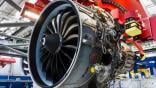
RTX posted double-digit revenue growth in the third quarter thanks to strong demand for its OE and aftermarket products.
RTX posted double-digit sales growth for the third quarter of 2025 thanks to robust demand for its aftermarket and commercial original equipment (OE) products.
RTX’s sales rose 12% year-over-year to $22.5 billion while earnings per share jumped 17% to $1.70. Both revenue and net income for the quarter beat Wall Street’s expectations.
“We continue to see positive OE production trends,” RTX CEO Chris Calio said in an Oct. 21 earnings call. He noted a significant increase in production at RTX’s Collins Aerospace business in the quarter as well as at Pratt & Whitney, which saw 6% growth in large commercial engine deliveries. The company’s commercial aftermarket business also remained strong, supported by RTX’s large and growing installed base, including more than $100 billion of out of warranty content at Collins and heavier shop visit content across MRO activities, Calio said.
He further noted that aircraft retirements have remained low, with only 1.5% of the V2500 fleet retired so far this year. Pratt & Whitney Canada, which has nearly 70,000 engines in service, has posted more than 15% growth year-to-date in the commercial aftermarket segment, he said.
With regard to commercial aircraft deliveries, Calio said that RTX feels “pretty good” about the situation. “We’re going to continue to work very closely with Airbus to make sure that they have what they need down the stretch of the year,” he said. As for Boeing, Calio said that RTX is pleased to see that the Seattle-based company plans to ramp up production of the 737 MAX narrowbody jet.
CFO Neil Mitchill acknowledged that at the beginning of 2025, “there was a little bit of inventory in the channel.” However, at this point, “a lot of that is behind us. And so we’re pretty synchronized with Boeing and delivery schedule.”
“Obviously, the mix of higher 787 [widebody jet], as you all know, on the Collins side, comes with some margin challenges. But longer term ... these rates are increasing back to levels that we’ve capacitized for,” Mitchill said.
In response to an analyst question about the effect of tariffs on Collins’ profitability, Mitchill said that the North Carolina-based RTX subsidiary saw about a $90 million impact in the third quarter. “A number of mitigations have been identified, but that’s really the key driver there and what’s dragging down the margins,” he said.
Given both strong market demand and the impact of tariffs, Pratt and Collins are pricing aggressively this year, Calio said. As RTX looks toward 2026, it will continue to be aggressive in terms of catalog pricing “because of the value that we bring and because of the demand that’s out there,” he added.
Thus far, investors have reacted enthusiastically to RTX’s third-quarter earnings report. The company’s share price had risen more than 8% as of 2:00 p.m. on Oct. 21.
Analysts, meanwhile, are optimistic about RTX’s near-term trajectory. “With the backlog growth matching the sales growth in 3Q, RTX looks well placed to continue this momentum heading into 2026,” Robert Stallard of Vertical Research Partners said in an Oct. 21 client note.

Related Content