This article is published in Aerospace Daily & Defense Report part of Aviation Week Intelligence Network (AWIN), and is complimentary through Feb 06, 2026. For information on becoming an AWIN Member to access more content like this, click here.

Rolls-Royce Begins Next Trent 1000 Upgrade Phase

trent 1000xe
Credit: Rolls-Royce

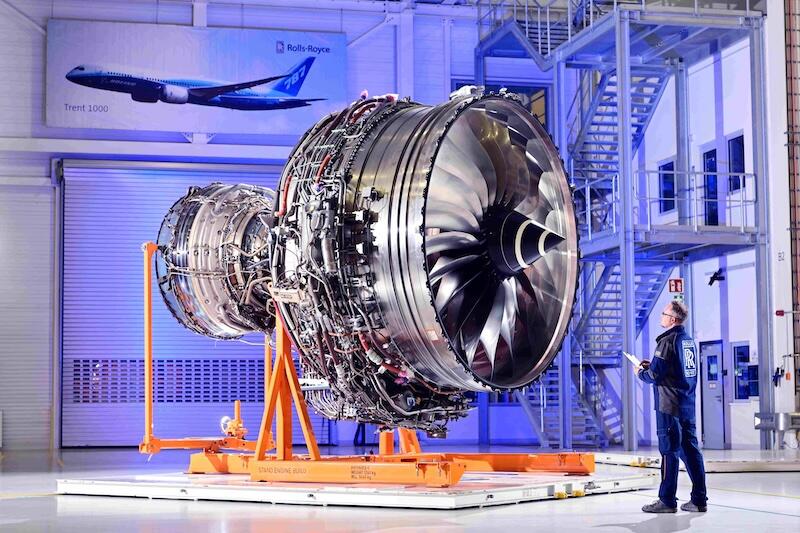
As the first Boeing 787s enter service powered by the upgraded Rolls-Royce Trent 1000XE version, the engine manufacturer has produced the first new-build engine incorporating a second phase of durability improvements.

The introduction of Phase 2 of the Durability Enhancement Package follows delivery of the initial upgraded engines with Phase 1 improvements on a 787-9 to Lufthansa in November. The package, which is also in service on the Trent 7000 sister engine powering the Airbus A330neo, is considered a critical element of Rolls-Royce’s battle to restore confidence in the engine and to boost market share on the 787 where the UK manufacturer competes with GE Aerospace’s GEnx-1B.

“The advantage that Phase 1 gives us is a 40% increase in the cooling flow,” says Rachel Walker, Trent 1000 program director. “Our experience on that so far on the Trent 7000 is we're seeing up to triple the time on wing for some of our high-pressure (HP) turbine blades, which is really encouraging. As of year-end in 2025 we'd already rolled 50 of our engines through the fleet, so that is moving at pace,” she adds.

The additional upgrades for Phase 2 include more changes to the HP turbine blade, as well as an advanced calcium-magnesium-alumino-silicate resistant coating on the combustor tiles for hot and sandy environments. Other changes include improvements to the film cooling on the HP nozzle guide vanes. Also included are Trent XWB-84 style design improvements to the combustor/HP nozzle interface for reduced wear.

The redesigned, lower-weight HP turbine blade shroud was certified in December by the FAA. “And it got approval through Boeing, so we're now ramping up production of that HP turbine blade, and due to incorporate it into an engine build through the first quarter this year,” Walker says. Reduced weight in the blade reduces the potential for blade cracking and creep.

“We'll also then start rolling that out through our MRO [maintenance, repair and overhaul] facilities at refurbishments from April onward, as well. So we are really pleased with the progress that we've managed to make on durability enhancements over the last year, and we feel that we're really turning the corner,” she adds.

Phase 1 incorporates a 40% increase in shroud film cooling airflow with added cooling holes in the mid-chord section and an enlarged hole in the root for higher flow from a redesigned combustor rear inner case. “Phase 2 will offer an additional 30% over and above the Phase 1. So we're saying it would be up to triple the time on wing,” Walker says.

Guy Norris

Guy is a Senior Editor for Aviation Week, covering technology and propulsion. He is based in Colorado Springs.