This article is published in Air Transport World part of Aviation Week Intelligence Network (AWIN), and is complimentary through Aug 24, 2026. For information on becoming an AWIN Member to access more content like this, click here.
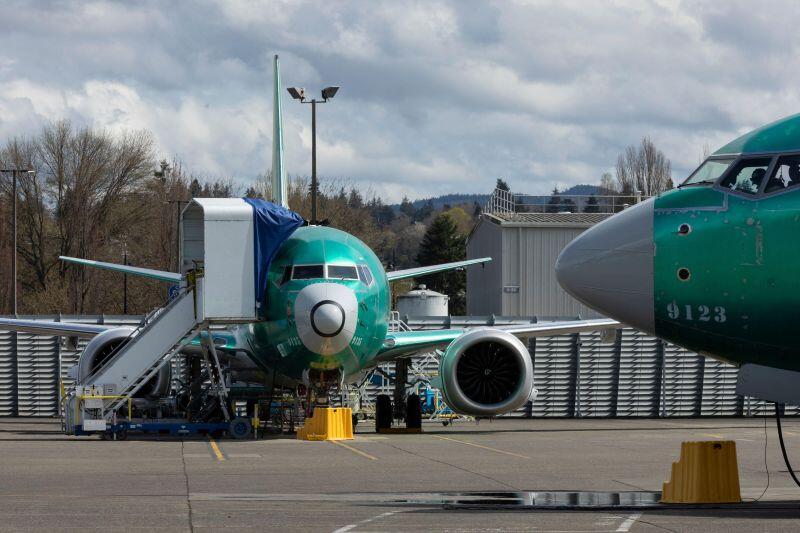
Boeing 737 MAX-9s in production at Boeing's factory in Renton, Washington.
Aircraft manufacturers fell further behind market demand in 2025 despite increasing deliveries by about 25%, according to Boeing’s latest Commercial Market Outlook.
Boeing estimates the industry delivered about 350 fewer aircraft than required to keep pace with traffic growth and replace aging fleets. Production remained 250 aircraft below the industry’s previous annual peak in 2018, while passenger traffic ended 2025 about 10% above pre-pandemic levels.
The assessment, published ahead of the Farnborough Airshow, comes as Airbus, Boeing and Embraer seek to raise output amid continuing pressure across supply chains.
Boeing forecasts that airlines will require 43,625 new commercial aircraft over the next 20 years, with replacement demand accounting for almost half of deliveries—the highest proportion the manufacturer has projected.
The total comprises 33,545 single-aisle aircraft, representing about 77% of demand, alongside 7,715 widebodies, 1,435 regional jets and 930 production freighters.
Boeing expects the global jet fleet to expand at an average annual rate of 3%, rising from about 28,000 aircraft today to about 50,000 by 2045. However, the composition of the fleet will change more sharply. Only 32% of aircraft operating today are new-generation models, compared with a projected 92% by the end of the forecast period.
China is expected to account for 21% of deliveries, followed by Eurasia at 20%. North America and South and Southeast Asia will each represent 19%, while the Middle East and Africa will account for a combined 10%.
Although Boeing has lowered its near-term passenger traffic expectations because of the Iran war and higher fuel prices, the manufacturer expects traffic growth to accelerate during 2027 and 2028, returning to its previous long-term trajectory by the end of that period.