This article is published in Aviation Week & Space Technology and is free to read until Aug 12, 2026. If you want to read more articles from this publication, please click the link to subscribe.

From The Editor: Commercial Aviation’s Innovation Dilemma

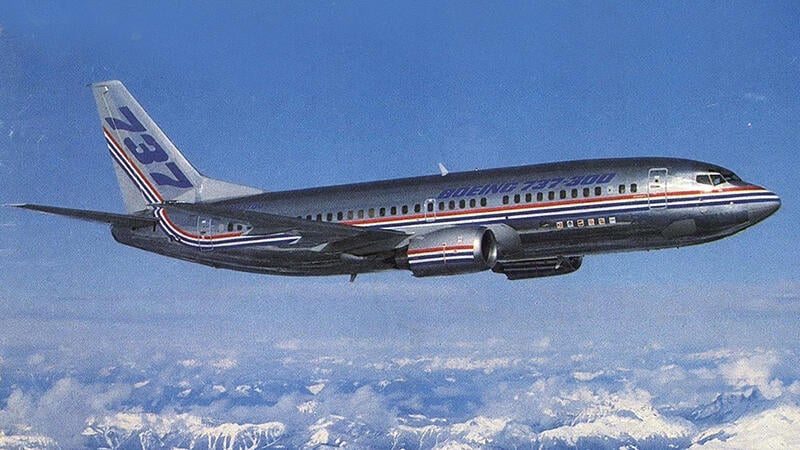
Boeing 737
Credit: Kenneth R. DeJarlais

Sixty summers ago, a single page in Aviation Week captured the frenetic pace of innovation in the passenger airliner business. A black-and-white photo showed the nose section of the first Boeing 737 being joined to the fuselage in Seattle. Above it was a write-up about Boeing President Bill Allen’s announcement that the company was commencing development of a revolutionary two-deck aircraft, the 490-passenger 747, after winning 35 firm orders from Pan American World Airways and Lufthansa. The most modern Boeing jet in service, the 727, had been operating for just two and a half years.

Boeing’s board last greenlit a new clean-sheet airliner, the 787, 22 years ago. CEO Kelly Ortberg recently told Aviation Week it is possible that the 2030s could draw to a close without another one in service. “It’s probably realistic in terms of what we could do, but I don’t think the market has matured at all in the last year,” he said. “There’s no question that the time frame is moving to the right” (AW&ST June 29-July 12, p. 32). In other words, it is highly plausible that Ortberg, who is 66, could be the fourth consecutive CEO to preside over Boeing without launching a clean-sheet airliner. Allen’s ghost must be shuddering.

On a brighter note, Airbus CEO Guillaume Faury insists his company is moving to launch development of a next-generation single-aisle in 2030 to replace the A320 family (AW&ST June 29-July 12, p. 36). However, a big question, which AeroDynamic Advisory’s Richard Aboulafia asks, is whether engine manufacturers will fast-track billions of dollars for the new powerplant that Airbus would need as a differentiator. Demand for CFM International’s current engines is so brisk that there is no obvious incentive to accelerate its next-generation RISE program. Pratt & Whitney is focused on making its geared turbofan (GTF) more durable. And while Rolls-Royce is looking to jump back into a single-aisle market it foolishly abandoned in 2012, where it would find the money and partners to do so remains a mystery.

The dilemma is that the market seems to be fine with the incremental improvements made every few years to the 1960s-era 737 family and the 1980s-era A320 family. The number of narrowbody passenger jets in operation worldwide has risen 34% in the last decade, according to Aviation Week Fleet Discovery, with thousands more on order. Ortberg says a new aircraft with a new engine is far down the list of customer priorities. Airlines want Airbus, Boeing and engine suppliers to focus on delivering their current orders on time with better on-wing performance. Fixing supply chains and making engines such as the GTF more reliable are top of order. The future can wait.

But Boeing and Airbus face risks if they sit on their hands for too long, as Faury seems to acknowledge. Each year of inaction opens the door a crack wider to a new entrant in the market. Embraer has looked several times over the past 15 years at developing a larger aircraft to challenge the duopoly (AW&ST June 29-July 12, p. 28). And China has come out of nowhere to stake leading positions in numerous fields, from hypersonics to electric vehicles. If Comac somehow finds a way to make inroads with a low-cost airliner, it will not be pretty for the duopoly.

Another risk is a market disruptor. Upstart JetZero recently broke ground on a production facility in North Carolina for its dual-use blended wing body jet, which would serve as both a middle-market airliner and a military tanker. Its success is still a long shot, but not unfathomable. Notably, JetZero would utilize unique aerodynamics while falling back on proven engine technology, an approach many airlines are applauding.

And then there is brain drain. How long can a company go without a new product before its commercial engineering muscle atrophies? A lot of the engineers who designed the 787 and steered it through certification have already retired. Who will be left to pass along know-how when Boeing finally moves forward with its next clean-sheet aircraft?

A quarter-century ago, after years of poor stock performance, Boeing decentralized its operations and moved its headquarters out of Seattle in an effort to emulate the stock market success of General Electric. Keeping investors happy became the top priority. Somewhere along the way, Boeing lost the magic that made it a great airplane company, culminating in the 737 MAX fiasco.

Ortberg wants to restore Boeing’s greatness, and he is off to a good start. But at some point, you cannot be a great airplane company without new airplanes.

Joe Anselmo

Joe Anselmo has been Editorial Director of the Aviation Week Network and Editor-in-Chief of Aviation Week & Space Technology since 2013. Based in Washington, D.C., he directs a team of more than two dozen aerospace journalists across the U.S., Europe and Asia-Pacific.

Comments

4 Comments
About 5 years ago when Boeing was in its depths of despair with the Max and Covid fiascos I mused that if Boeing doesn't launch a new airliner by 2030 its fate would be sealed like that of Douglas.

I still feel that way. When it does come time to launch nobody will be around that had done it before. That institutional knowledge only lasts as long as the employees.
Innovation must make money. And when technology evolves to make money and achieves an equilibrium, innovation pauses or stops. That’s why a sixty-one-year-old picture of a Boeing 737 can be seen in real life at any airport anywhere in the world today in 2026.
Upstart SpaceX has been able to dominate their part of the Aerospace industry by winning the mantle of innovation from the NASA-Industrial complex. Your argument about Boeing is exactly on point: complacent finance driven duopolies might wake up to find companies in other countries or upstarts with better financial models and better engineering approaches leapfrogging them faster than they could say Joe Sutter.
The key to success sooner with a new family may be to move to greater passenger capacity and range for a more capable single-aisle family, rather than focusing only on efficiency. The need for carriers to upscale is now outgrowing the E195 E2, the C919, the 737-10, and even the A321XLR.
For example, a new Boeing family may include:
838-7: 150+ pax, 4,600 nm
838-8: 180+ pax, 4,200 nm
838-9: 210+ pax, 3,800 nm
838-10: 225+ pax, 3,600 nm
Cabin width 150 inches, 3.81 meters for more comfort
Pratt and Rolls GTF engines under gulled wings
90 inch 2.3 meter fan, 14:1 bypass ratio
32,000 lbf thrust
100% SAF fuel, provision for LNG Jet-M tanks in cargo bays