This article is published in Aviation Daily part of Aviation Week Intelligence Network (AWIN), and is complimentary through Dec 16, 2025. For information on becoming an AWIN Member to access more content like this, click here.

Boeing, Airbus Close Acquisitions Of Spirit Aero, Take In Aerostructures
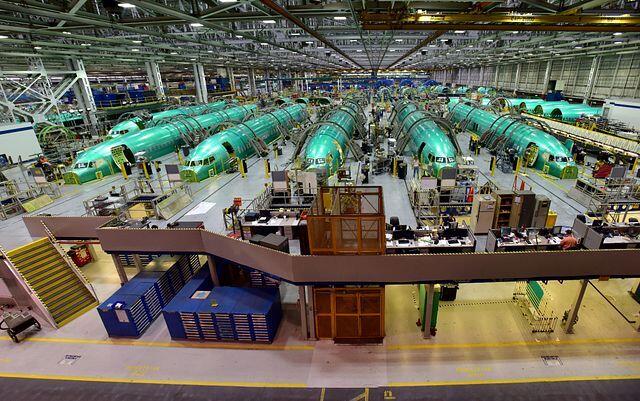
aircraft fuselages
Credit: Boeing

Boeing and Airbus announced the long-sought finalization of their complex splitting-up of Spirit AeroSystems on Dec. 8, sending roughly 15,000 workers to the former and 4,000 to the latter, and allowing the OEMs to start 2026 in full control of the single largest supply chain node in their respective business ecosystems.

The OEMs simultaneously announced acquisition closures of their respective parts of Wichita-based Spirit, once the largest independent aerostructures supplier in history. For Boeing, highlights of the breakout include:

  • A newly baptized “Boeing Wichita Plant,” with 12,500 employees and 12.7 million ft.2 of manufacturing space, that provided some degree of every major Boeing aircraft program, including 737, 767, 777 and 787 shipsets; and
  • A Tulsa, Oklahoma, plant with 1,200 employees and 1.7 million ft.2 of manufacturing that supplies 737, 777, 787 and KC-135 shipsets.

What is more, a new, wholly separate subsidiary called Spirit Defense based in Wichita will continue as an independent aerostructures supplier to industry rivals and partners. Those include the Northrop Grumman B-21 and Lockheed Martin Sikorsky CH-53K programs, as well as certain undisclosed defense programs and spacecraft. In addition, portions of Spirit’s operations in Belfast, Northern Ireland, will operate as an independent subsidiary branded as “Short Brothers, a Boeing Company.”

Meanwhile, at Airbus, the OEM has received the following from Spirit:

  • A site in Kinston, North Carolina, (A350 fuselage sections), which had occurred earlier but is now being renamed Airbus Aerosystems Kinston;
  • The factory of Saint-Nazaire, France (A350 fuselage sections), now called Atlantic Cadréan;
  • A facility in Casablanca, Morocco (A321 and A220 components), joining as Airbus Atlantic Maroc Aero;
  • Production of A220 wings and A220 mid-fuselage in Belfast, with the site now referenced as Airbus Belfast;
  • Production of wing components for A320 and A350 in Prestwick, an affiliate re-named Prestwick Aerosystems; and
  • Production of A220 pylons, which will be transferred from Wichita to Saint-Eloi, Toulouse, France.

Airbus was paid $439 million in cash to take on its related Spirit assets. Airbus leaders have already warned investors they expect to face a roughly €1.5 billion ($1.75 billion) cash-burn headwind over the next three years as they integrate Spirit assets and further invest to support increased air transport production levels.

“While the investments in Spirit are substantial, we believe this is a net positive as we look at Airbus’ ability to continue to drive production volumes higher, and ideally can improve investor confidence in its ability to hit its long-term production targets,” analyst Ken Herbert of RBC Capital Markets told his clients after the announcements.

For Boeing, the $8.3 billion acquisition was an all-stock transaction, with the equity payment portion worth $4.7 in Boeing stock, or $37.25 per share.

Boeing managers have yet to detail integration costs or plans, although its new CFO last week provided a broader financial outlook that ostensibly included integration of Spirit. More may be revealed when Boeing reports full-year financial results, expected in late January 2026.

Boeing Commercial Airplanes Chief Executive Stephanie Pope said in a letter to her division’s employees that the Spirit sites and employees will continue to operate largely as they do now and will be fully integrated over time.

“As we start this next chapter, I encourage you to keep an open mind, support your teammates, and give each other grace,” she wrote. “While our teams did extensive work to prepare for this transition, it is not easy to integrate two companies, multiple sites and more than 15,000 teammates.”

The transaction also brings Boeing’s largest supplier of spare parts in-house, expands Boeing’s global maintenance, repair and overhaul services footprint and adds to Boeing’s rotable, lease and exchange portfolio with Spirit’s aftermarket businesses, according to a Boeing statement.

Boeing said Sean Black will oversee all commercial operations in Wichita as site leader. Black joined Spirit in 2026 and later became chief technology officer and chief engineer. Justin Robinson is site leader at Boeing Tulsa. Previously he was senior director and general manager of Spirit’s Oklahoma operations. Finally, Keith Schrader is CEO and president of the standalone Spirit Defense. His Spirit role was VP for defense and space.

Closure of the complex Spirit divorce among Boeing, Airbus and others appeared to receive a final green light recently when the U.S. Federal Trade Commission gave its blessing, assuming already enacted and presumed divestitures. Other regulators approved it earlier. Reports about Boeing’s proposed takeover of Spirit emerged in the spring of 2024, and the deal, including Airbus’ part, was formally unveiled in July 2024.

“Completing the acquisition removes an operation overhang, and should allow Boeing management to focus on production execution, in our view,” RBC analyst Herbert wrote. “We believe the acquisition will be most impactful for 737 MAX production.”

His team expects around 442 MAX deliveries in 2025, then 520 in 2026 and 580 in 2027.

Michael Bruno

Based in Washington, Michael Bruno is Aviation Week Network’s Executive Editor for Business. He oversees coverage of aviation, aerospace and defense businesses, supply chains and related issues.