This article is published in Aviation Daily part of Aviation Week Intelligence Network (AWIN), and is complimentary through Jul 09, 2026. For information on becoming an AWIN Member to access more content like this, click here.

AI: Airline Retailing Friend Or Foe?

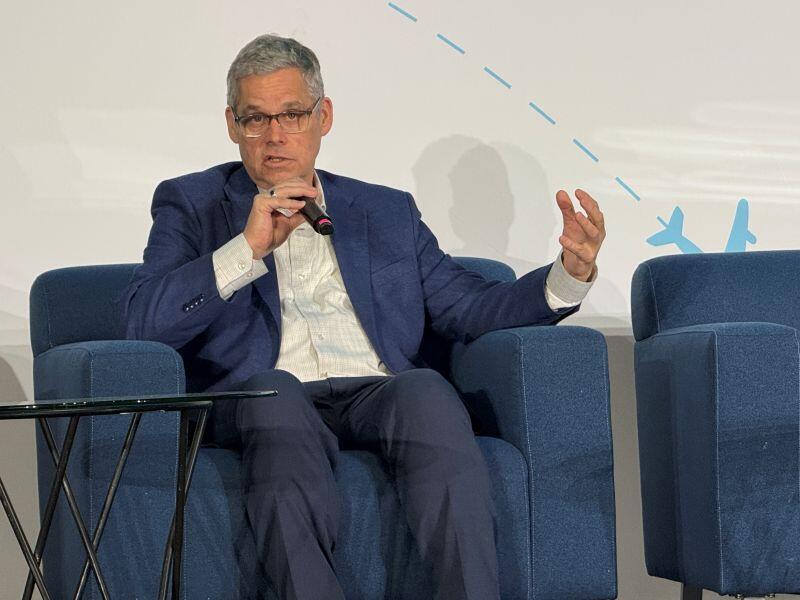
United Airlines VP of sales strategy Glenn Hollister.

United Airlines VP of sales strategy Glenn Hollister.

Credit: Chris Sloan

MIAMI—The significance of artificial intelligence’s (AI) impact on airline retailing centers depends on who ultimately controls it, a senior United Airlines executive believes.

United VP of sales strategy and effectiveness Glenn Hollister told the Aviation Festival Americas conference in Miami on June 3 that AI was both a major opportunity and a potential threat—a “frenemy” capable of helping airlines sell smarter while also threatening to weaken control over the customer relationship.

Airline retailing, Hollister argued, was entering a new phase as travelers increasingly turn to large language models (LLMs) like ChatGPT, Claude and Gemini to inspire vacations, compare destinations and plan trips before ever reaching an airline website. “There’s always been travel inspiration outside of our direct channels,” Hollister said, pointing to YouTube, Instagram and TikTok. But AI assistants represented something fundamentally different because travelers could now ask highly personalized questions and receive tailored recommendations instantly. “The LLM capability to answer that kind of question is a really new capability that is extremely appealing,” Hollister said. AI systems already have access to vast amounts of internet content including reviews, travel stories and destination advice, creating a level of trip planning capability that airlines were unlikely to replicate on their own.

The bigger issue for airlines, however, is what happens next. If AI agents eventually control shopping and booking decisions, airlines risk losing influence over pricing, ancillaries, loyalty and ultimately the customer relationship itself. “We’ve got to be super careful not to give away the keys to the kingdom as we figure out how to adapt to and use AI,” Hollister cautioned. Hollister pointed to the hotel sector as a warning sign, arguing many hotel companies surrendered too much power to online travel agencies (OTAs) decades ago by prioritizing short-term distribution gains over long-term customer ownership.

At the center of the airline response, Hollister maintained, was data. While AI systems could scrape the public internet for travel information, airlines still controlled proprietary inventory, operational and loyalty data that outside AI systems could not access unless airlines chose to share it. “That data is what creates our ability to shape the way AI plays out in retailing for each of our airlines,” Hollister explained. As global distribution systems (GDSs), OTAs and technology providers rush to integrate AI into travel retailing, Hollister said airlines are facing more requests for deeper access to internal data. “Every one of those players is coming and asking for more data than we’ve ever given them,” Hollister said. Airlines, he suggested, need to control AI rather than allow AI intermediaries to control them.

The opportunity side of AI is equally significant. Hollister described today’s distribution environment as fragmented and inefficient, often reducing airlines to commodity fare comparisons. AI, if managed correctly, could instead help airlines better showcase premium products, fare bundles and ancillary services. “How do I make sure that LLM gives the right answer about what United Airlines provides, and how United is different?” Hollister asked.

Accuracy already poses challenges. Hollister said travelers were increasingly receiving incorrect answers from AI systems that pull outdated or unreliable information from sources such as Reddit and Wikipedia rather than directly from airlines themselves. “We’re seeing customers get tripped up today by the use of LLMs,” Hollister said. The next phase of airline retailing, he suggested, would hinge on whether airlines could ensure AI systems recognize the airline as the “source of truth.”

Chris Sloan

Chris Sloan is a contributing editor covering air transport for Aviation Week Network.