This article is published in Aviation Daily part of Aviation Week Intelligence Network (AWIN), and is complimentary through Jul 09, 2026. For information on becoming an AWIN Member to access more content like this, click here.

SAF Availability A 'Disappointing' Fraction Of What’s Needed

trees jet
Credit: Avia Solutions Group

RIO DE JANEIRO—Sustainable aviation fuel (SAF) will likely account for less than 1% of total commercial aviation use this year despite massive industry efforts to make SAF a key component of its efforts to achieve carbon net zero by 2050.

In a statement released by IATA June 6 ahead of the opening of the association’s AGM in Rio, IATA director general Willie Walsh said it looked to be “another disappointing year for SAF production.”

IATA estimates show that global SAF production will reach around 2.4 million metric tons (2.6 million tons) in 2026, a fraction of what is needed. That will mean SAF will represent just 0.8% of total commercial aviation use at a cost of $4.3 billion to airlines.

“The path to meeting 65% of our needs in 2050 is growing more difficult with each year of ineffectively sequenced government policies and oil companies’ manifest lack of interest,” Walsh said.

“The current energy shock should add even more urgency to the development of renewables, including SAF. But we have yet to see either the energy shock, the need to develop energy independence and jobs, or the urgency to mitigate climate change materialize in the incentives needed to create a viable SAF market.”

Walsh led the industry-wide initiative to reach net zero by 2050 at the IATA AGM in Boston in 2021. That was his first year as IATA director general and the Rio AGM is expected to be his last as he has announced he will leave the association later this year to take up a new role as CEO at Indian airline IndiGo.

Given the lack of progress in scaling up SAF production—or reducing its cost, which is typically several times higher than regular jet fuel—IATA is calling for action across four areas:

• Expand renewable energy supply to underpin SAF production and ensure availability of sufficient feedstocks and clean energy;

• Ensure open access to fuel infrastructure, including pipelines, storage and airport fuel systems, to enable fair competition and efficient distribution;

• Strengthen policy support through sequencing of production incentives and investment frameworks before imposing SAF mandates; and

• Enable a global SAF market with sufficient volumes at commercially viable prices.

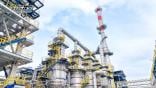
IATA estimates some 20 commercial-scale SAF refineries are needed to achieve target volumes and to meet government mandates that some regions are implementing, including the European Union (EU).

“The 2030 e-SAF targets by the UK and the EU are beyond unrealistic; they are utterly detached from reality. It is a reckless energy market creation strategy to impose mandates before production is enabled,” IATA SVP sustainability and chief economist Marie Owens Thomsen said.

IATA also announced it has launched an alliance to boost availability of eligible emissions units (EEUs) under the ICAO Carbon Offsetting and Reduction Scheme for International Aviation (CORSIA).

The Supporting Alliance for CORSIA EEU Supply aims to pool participating organizations’ resources; facilitate national management of the interface between each country’s nationally-determined contributions and the process required to make carbon credits available via CORSIA; and improve access to carbon markets.

The Supporting Alliance will provide implementation assistance to clear bottlenecks that prevent credits from coming to the CORSIA market, IATA says.

Karen Walker

Karen Walker is Air Transport World Editor-in-Chief and Aviation Week Group Air Transport Editor-in-Chief. She joined ATW in 2011 and oversees the editorial content and direction of ATW, Routes and Aviation Week Group air transport content.