This article is published in Aviation Daily part of Aviation Week Intelligence Network (AWIN), and is complimentary through Dec 22, 2025. For information on becoming an AWIN Member to access more content like this, click here.

Rolls-Royce Sees Positive Results From Trent XWB-97 Dust Tests

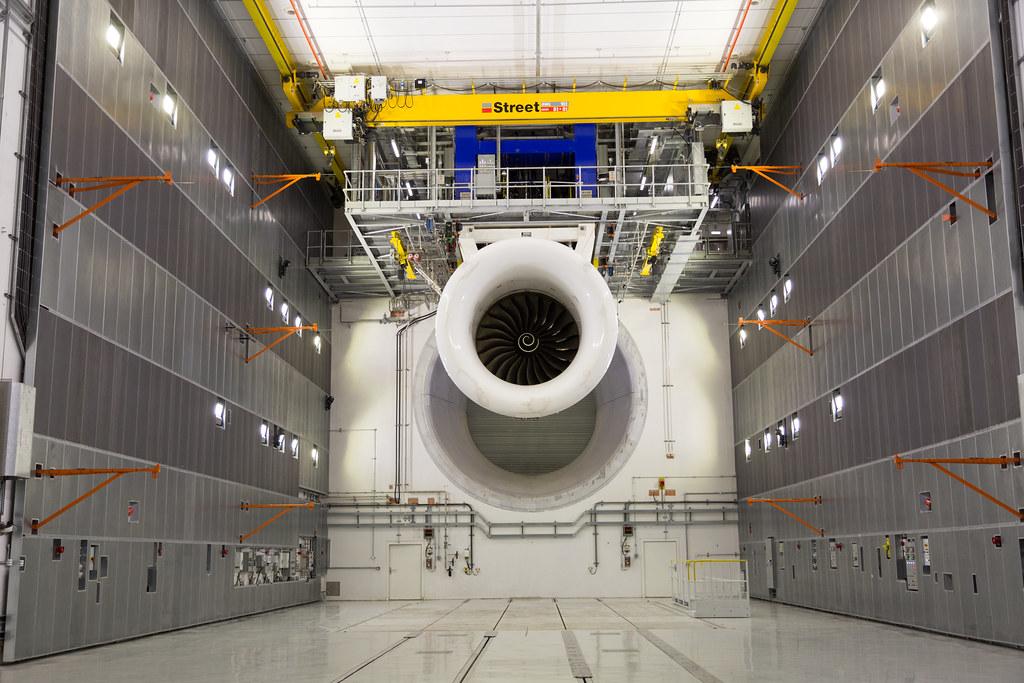
Rolls-Royce XWB-97 testing
Credit: Rolls-Royce

DUBAI—Rolls-Royce is on track to clear key durability upgrades to the Trent XWB-97 engine on the Airbus A350-1000 as it nears the end of the latest phase of dust-ingestion tests.

The tests, performed at its site in Derby, England, have been focused on high-pressure turbine (HPT) blade and related hot-section systems improvements. These are aimed at countering durability problems caused by atmospheric particulates in the harsh operating environment of the Middle East.

“What we're aiming to do in the Gulf and in the desert is double the time on wing,” says Phil Curnock, Rolls-Royce's chief engineer for the Trent XWB. “But we think with some of the changes we're making we can also get about a 50% improvement in time on wing in benign environments where the engine’s performance is already pretty good, frankly,” he adds.

Durability improvements to counter the dust-related—or calcium-magnesium-alumino-silicate (CMAS) issues, as they are collectively named—build on earlier upgrades for the A350-1000 engine. Phase one increased the temperature margin while phase two, which debuted in service in 2024, focused on HPT coatings.

“Phase three is a bigger degree of change,” Curnock says. Launched in 2023, the four-year effort is targeted at certification in 2027 and entry-into-service in 2028. The initiative is intended to improve time-on-wing for current operators in the region while simultaneously bolstering future sales campaigns for the A350-1000 in the Gulf.

The current phase follows an earlier test in which a factory-new Trent XWB-97 without any of the upgraded components was subjected to four months of dust-ingestion tests at the company’s Testbed 80 site in Derby. Following a close examination of the worn parts, the engine-maker is now repeating the exercise with an updated engine.

“We’re taking our new ideas, our technology, our designs, and pushing them through that same sausage machine. We’re doing that same test, and at the end, seeing if they look better or look worse,” Curnock says. “The good news is we're just getting towards the end of that testing this year. We'll finish in the next couple of months, and it looks good. The technology is turning up.”

As a result, Curnock says the company is confident in two things: “We've got a technological solution and—just as important—we've got a testing regime that represents the in-service experience. And that makes us confident going forward.”

Further testing in 2026 will focus on fine-tuning aspects of the design changes, particularly blade cooling patterns, as well as flight tests of the updated configuration. “The gap between the HP turbine and the casing opens up, and that's primarily because of coating loss on the tip and on the segment,” Curnock says. “So we're trying to improve the cooling in that region. So we're pushing more air up to the tip of the blade to keep that gap tight.”

Flight tests will check that none of the changes—which also include improvements to the intermediate pressure turbine—impact baseline engine operability. “Flight testing will confirm that modifications to the air system, and changes to the cooling air to the combustor, haven't inadvertently changed the relight performance or the transient performance,” Curnock says. “We want this to be invisible to pilots and airframers. It's about proving that I haven't caused any other issues by optimizing for durability.”

Guy Norris

Guy is a Senior Editor for Aviation Week, covering technology and propulsion. He is based in Colorado Springs.