This article is published in Advanced Air Mobility part of Aviation Week Intelligence Network (AWIN), and is complimentary through Mar 10, 2026. For information on becoming an AWIN Member to access more content like this, click here.
Albatross.Ai Advances Autonomous Flight System
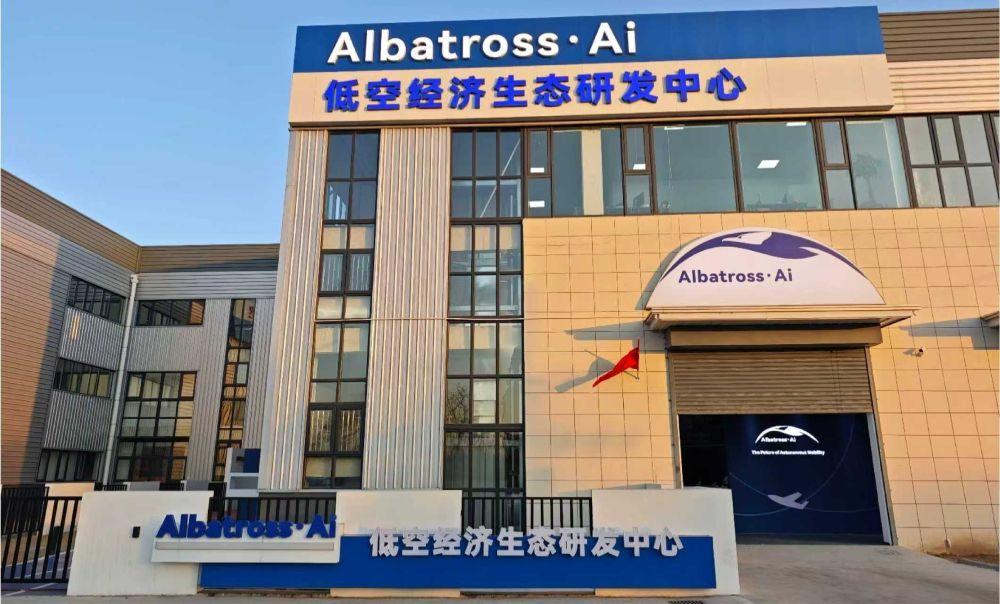
Sabrina Li, co-founder and chief marketing officer of avionics startup Albatross.Ai, will address the APAC Advanced Air Mobility (AAM) Summit in Singapore on Feb. 2 as the company positions itself as a potential Tier 1 supplier for China’s low-altitude economy (LAE).
Speaking to Aviation Week, founder and CEO Martin Ding discussed the firm’s core offering, an Autonomous Flight Assistance System (AFAS) designed to enable safe, high-density integration of crewed and uncrewed aircraft. The system’s foundational concepts stem from Ding’s early research into autonomous flight, drawing on principles explored by a NASA program.
“The motivation for creating Albatross.Ai and AFAS can be traced back to a seed planted in 2005, when I was doing my Ph.D. research at Texas A&M University,” he explained. “Back then, NASA had a research program called the Small Aircraft Transportation System (SATS), with the long-term vision of Free Flight, or fully autonomous flight, and a short-term goal to break the hub-and-spoke aviation model and enable point-to-point travel by making the best use of thousands of underutilized GA airports in the U.S. Most of these airports were outside standard air traffic control radar coverage, meaning aircraft needed advanced onboard systems for self-separation, self-organization and sequencing to operate efficiently.”
While SATS did not reach full deployment, Ding said it explored concepts that now inform AFAS, including digital flight rules, a decentralized air traffic management approach and necessary communications, navigation and surveillance systems. Two decades later, China offers a practical environment for the technology.
With headquarters in Tianjin and offices in Shanghai and Hangzhou, Ding said Albatross.Ai is “laser-focused” on developing an autonomous flight system that enables multiple aircraft—crewed and uncrewed—to operate in coordination, exchanging information and making real-time decisions. He described AFAS as moving beyond single-aircraft automation toward collaborative intelligence, capable of managing complex operations in dense, mixed airspace. It also operates across three levels.
At the maneuver level, AFAS combines data from ADS-B, air-to-air radar, electro-optical/infrared sensors and command-and-control links to detect and respond to immediate threats. The tactical level ensures self-separation, keeping aircraft at safe distances.
At the strategic level, AFAS monitors air-ground communications and integrates with low-altitude traffic management platforms and service providers to offer cross-checking and redundancy. It verifies instructions from traffic management systems and intervenes when commands are unsafe or lost, allowing both immediate collision avoidance and broader contingency management.
This coordination addresses three main safety challenges, Ding said—preventing midair collisions, mitigating air traffic control errors and managing total losses of air-ground communication.
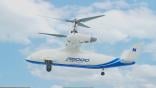
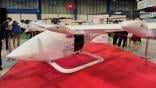
On the testing front, Vertaxi is a “valued and trusted partner,” with its E6 UAV rebranded as Albatross ONE, providing a platform for early AFAS testing. Together with a small DJI UAV, the aircraft have allowed Albatross.ai to validate situational awareness, collision avoidance and coordination across multiple aircraft under increasingly complex scenarios.
Meanwhile, the third-generation AFAS, designed to meet TSO-211 Detect-and-Avoid standards, is now entering formal certification for retrofit and new-build applications. Ongoing trials with partners continue to refine performance and reliability, testing the system in challenging operational conditions.
Ding acknowledges the team had to overcome several technical hurdles. As he put it, “LAE aircraft have to talk to each other,” making reliable communication between aircraft essential. This required building robust vehicle-to-vehicle and vehicle-to-everything networks capable of operating even if ground links were lost, integrating AI-driven conflict detection with conventional collision-avoidance systems, and establishing redundancy and cross-checking mechanisms between airborne and ground systems to safeguard operations.
A final challenge was “marrying AI decision-making with deterministic certification requirements,” with Ding emphasizing that careful calibration is needed to satisfy regulations while allowing the system to evolve.
“Albatross.Ai, as the initiating organization, collaborated with over a dozen leading Chinese aviation companies, listed firms and research institutes under the guidance of the Chinese Society of Aeronautics and Astronautics to draft and release the world’s first General Standard for Air-Ground Collaborative Autonomous Flight Assistance Systems (T/CSAA 43-2025).”
China’s relatively small general aviation fleet—just a few thousand aircraft with limited flight hours—offers an opportunity to leapfrog to a clean-sheet, low-altitude economy, Ding believes. Recent regulations, including CCAR-92 and the new powered-lift aircraft airworthiness standard (China’s counterpart to FAA AC 21.17-4), provide a framework for unified certification, oversight and safety management.
Still, he noted China cannot yet match the experience of the U.S. or Europe and questions how the global industry will define decision authority, assign accountability and allocate safety responsibilities across airborne systems, ground platforms, cloud networks, data links and digital infrastructure. He emphasized that large-scale AAM and LAE operations will only gain regulatory acceptance once these questions are addressed and called for deeper collaboration among global partners to establish shared standards.
“If I may add one thing—and one thing only—it’s to advocate for global harmonization and interoperability. We don’t ignore differences; we respect them. But for those of us committed to AAM and LAE as game changers, it’s crucial to find common ground and foster closer cooperation at all levels—for the greater good of humanity.”