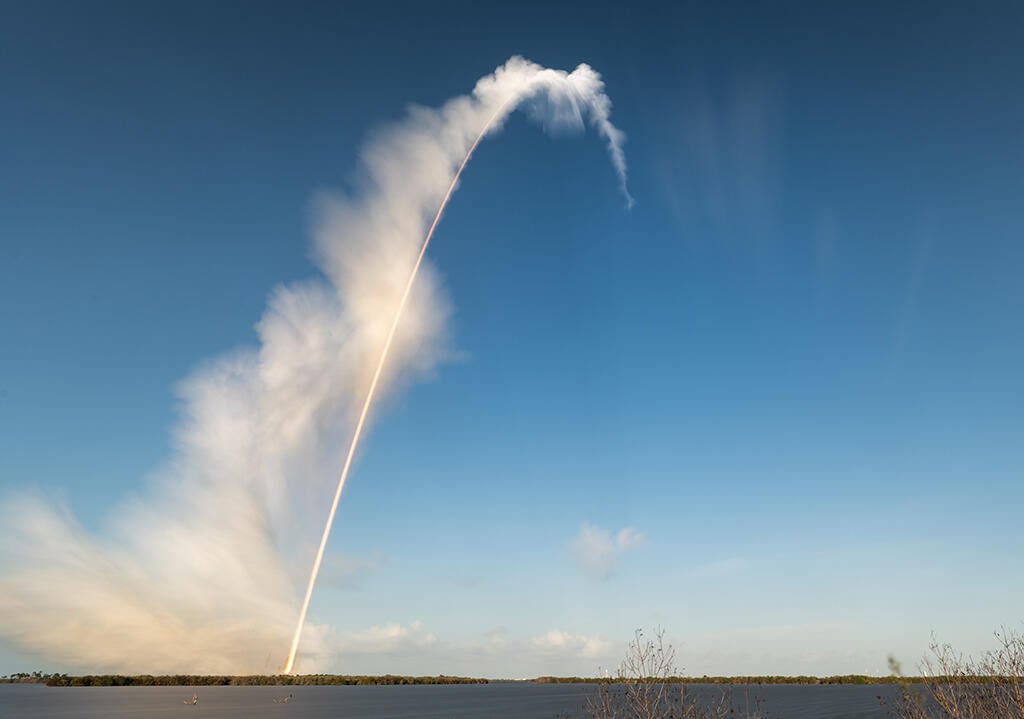
On its second flight, NASA’s Space Launch System carried the four-member Artemis II crew into Earth orbit on April 1 from Launch Complex 39B at the Kennedy Space Center.
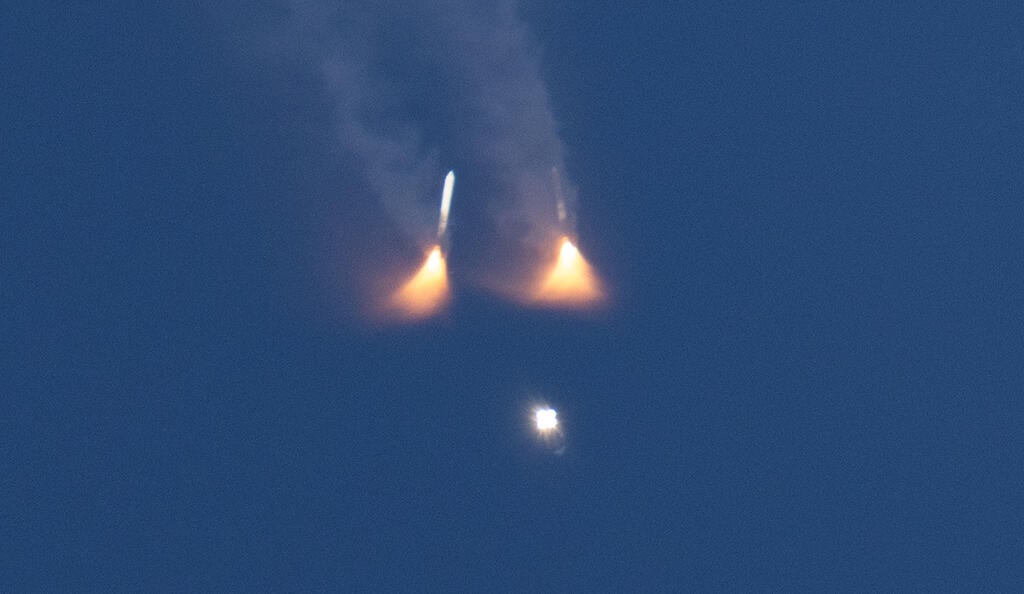
A pair of solid rocket boosters, made by Northrop Grumman, were jettisoned about 2 min. after the Space Launch System rocket lifted off at 6:35 p.m. EDT April 1 to begin the Artemis II flight test.
Following the 5 min. 50 sec. burn of the Orion spacecraft’s European-provided service module, the crew left Earth orbit and began an eight-day roundtrip beyond the far side of the Moon.
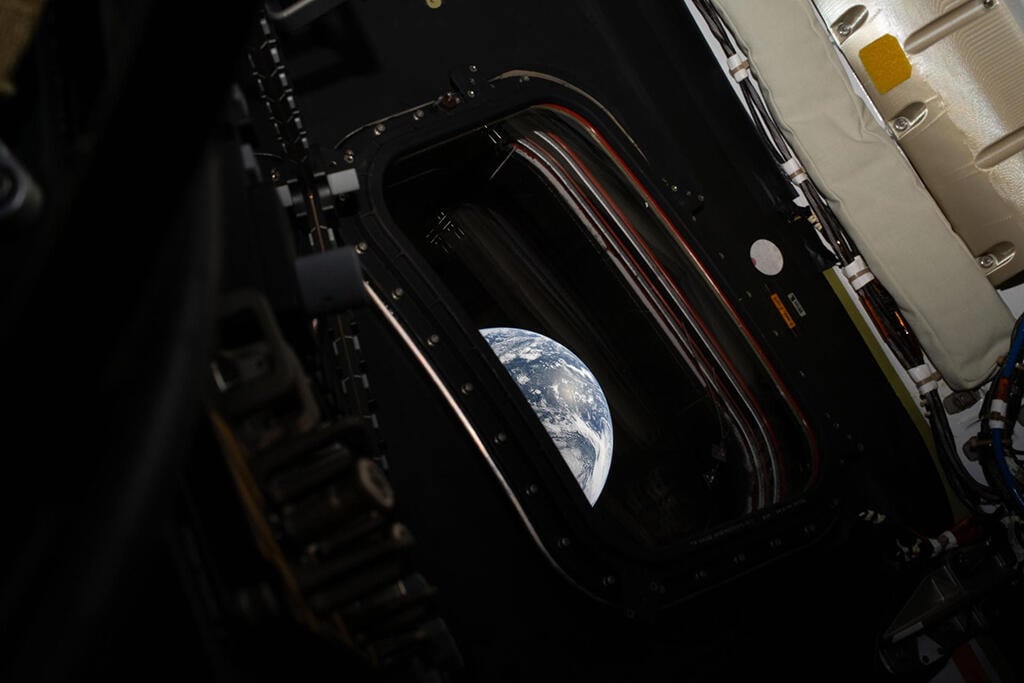
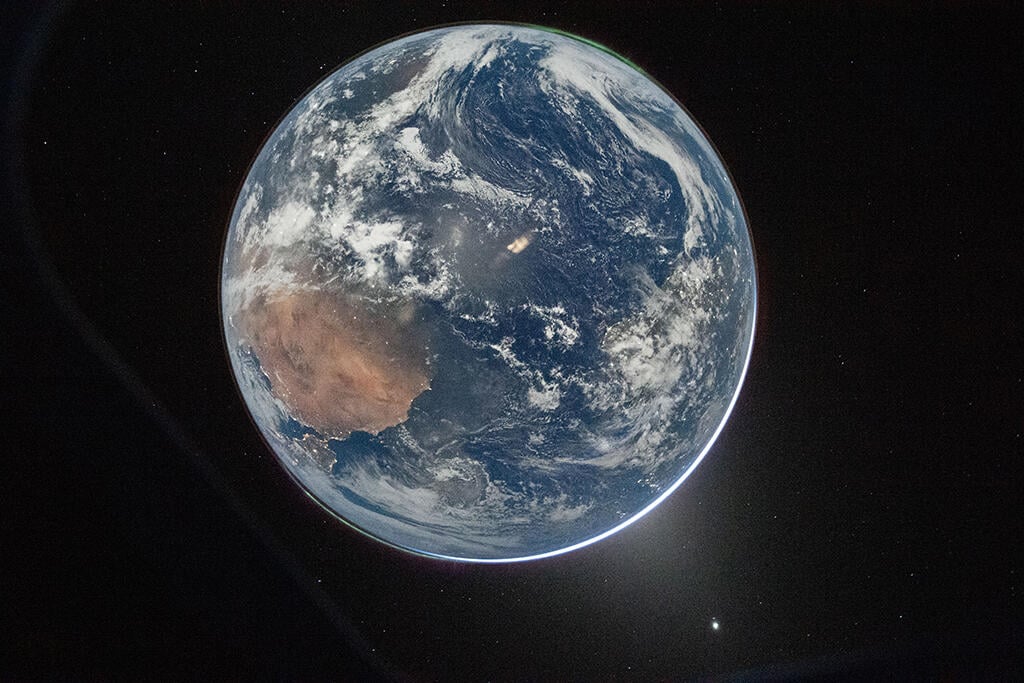
Reid Wiseman, Artemis II commander, shared a picture of our home planet after Orion became the first crewed spacecraft to leave Earth orbit since the last Apollo Moon mission in 1972.
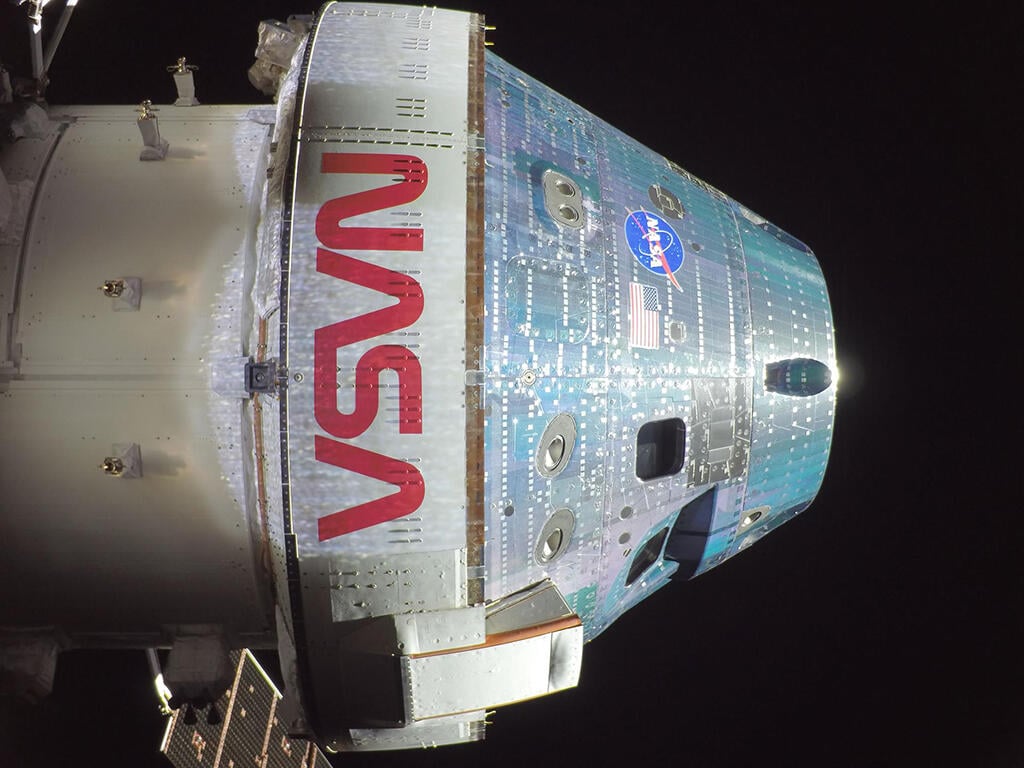
A view of the Lockheed Martin-built Orion spacecraft, flying with crew for the first time, taken with a camera mounted on one of its solar array wings during a routine external inspection on April 3.
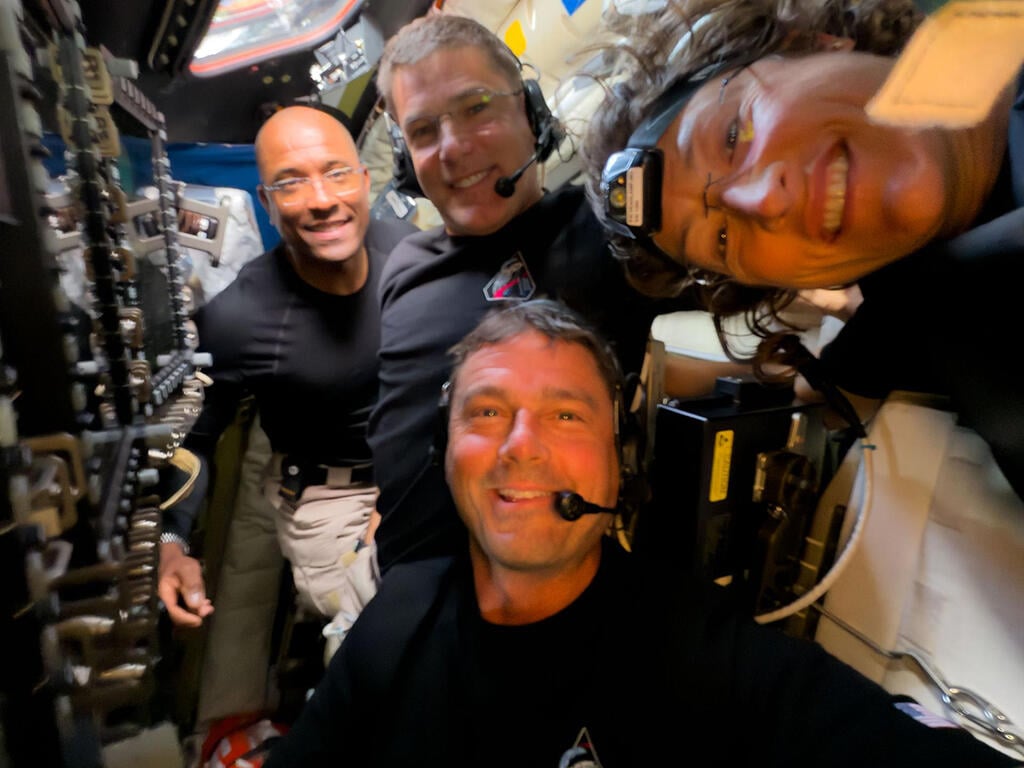
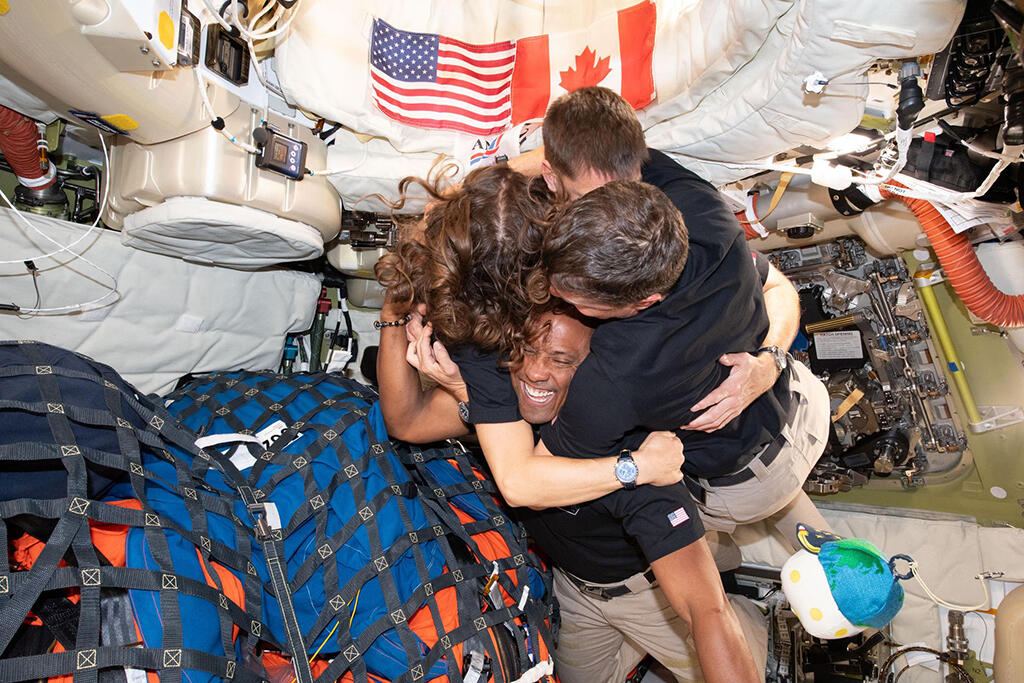
Artemis II crew members (clockwise from left) Victor Glover, Jeremy Hansen, Christina Koch and Commander Reid Wiseman pose for a group shot inside their Orion spacecraft on April 6, halfway through the Artemis II flight test.
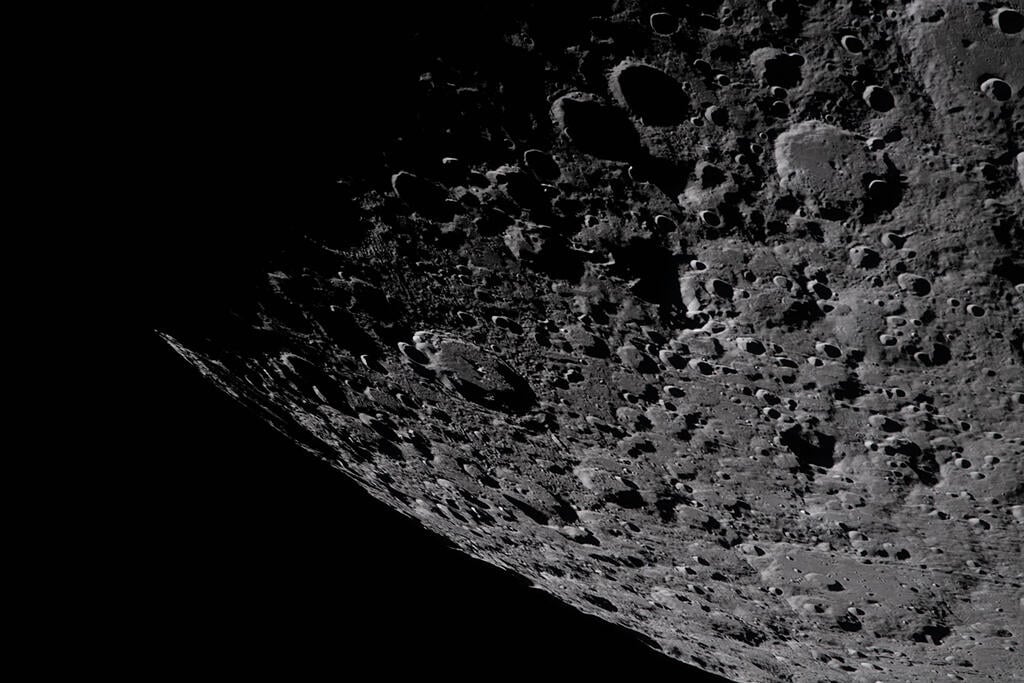
Among the high-priority science targets of the Artemis II lunar flyby was the area around the South Pole-Aitken basin. The crew captured an image of the basin’s heavily cratered eastern edge, seen with the shadowed terminator—the boundary between lunar day and night—at the top of the image. The South Pole-Aitken basin is the largest and oldest basin on the Moon. NASA is looking at the region to locate its planned Moon base.
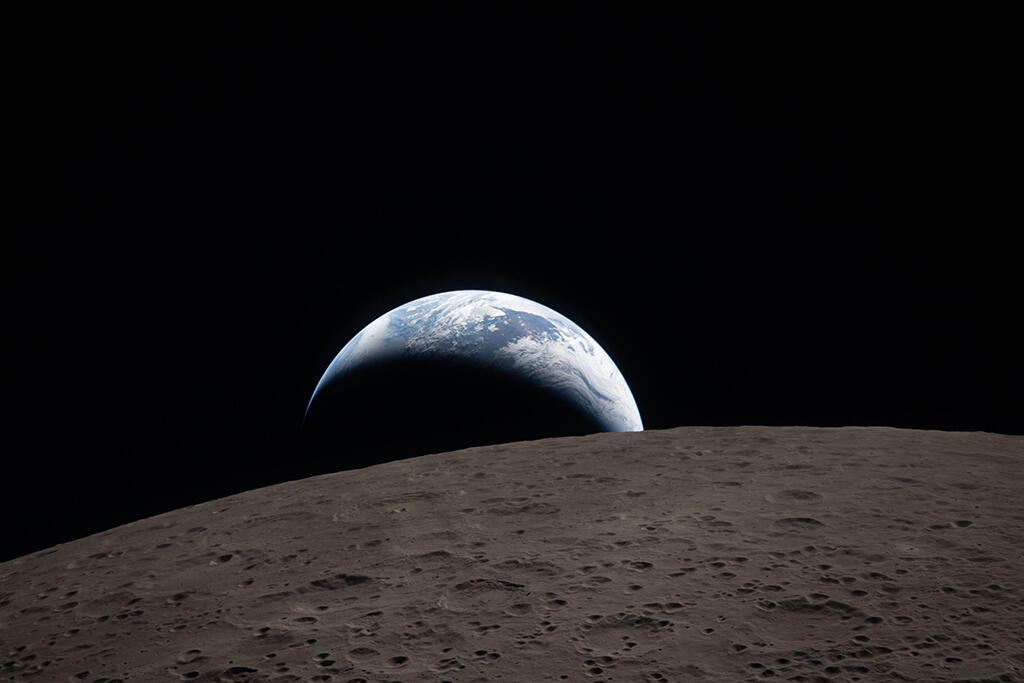
An Earthset shot was captured through the Orion spacecraft window at 6:41 p.m. EDT, during the Artemis II crew’s flyby of the Moon on April 6. A muted blue Earth with bright white clouds sets behind the cratered lunar surface. The dark portion of Earth is experiencing nighttime. On Earth’s day side, swirling clouds are visible over the Australia and Oceania region. In the foreground, the Ohm crater has terraced edges and a flat floor interrupted by central peaks. Central peaks form in complex craters when the lunar surface, liquefied on impact, splashes upward during the crater’s formation.
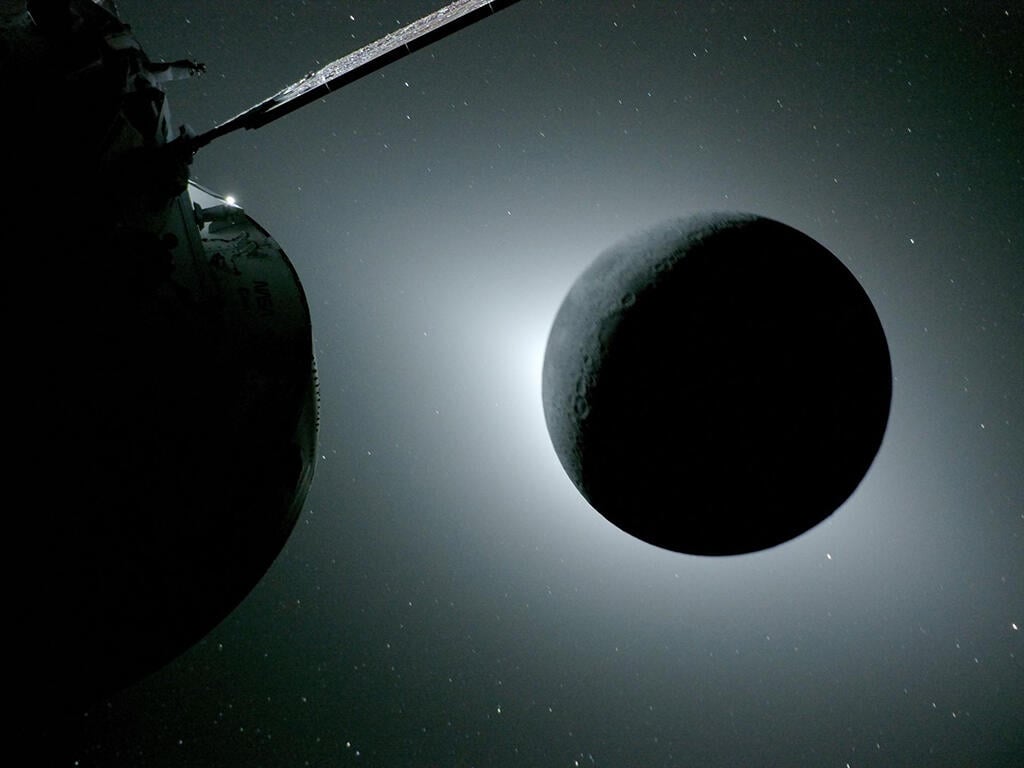
A camera mounted on one of Orion’s solar array wings captured an image of the Moon backlit by the Sun during a 54-min. solar eclipse the Artemis II astronauts experienced during the tail-end of a 7-hr. lunar flyby on April 6.
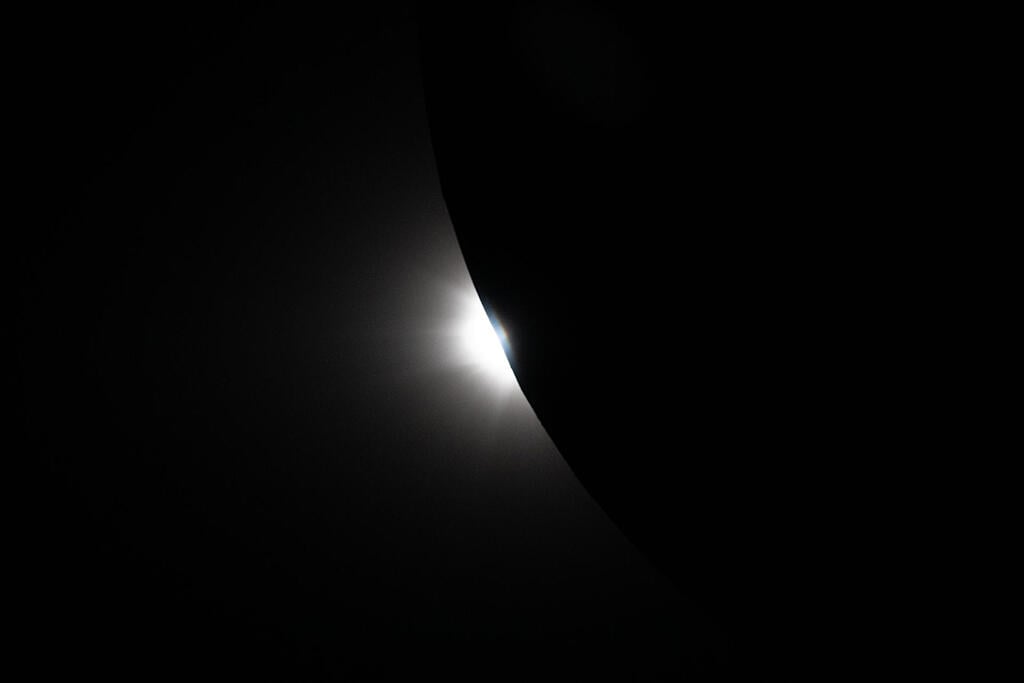
Captured from the Orion spacecraft near the end of the Artemis II lunar flyby on April 6, this image shows the Sun beginning to peek out from behind the Moon as the eclipse transitions out of totality. Only a portion of the Moon is visible in frame, its curved edge revealing a bright sliver of sunlight returning after nearly an hour of darkness. In the final moments of the eclipse observed by the crew, the reemerging light creates a sharp contrast against the Moon’s silhouette and reveals lunar topography not usually visible along the lunar limb. This fleeting phase captures the dynamic alignment of the Sun, Moon and spacecraft as Orion continues its journey back from the far side of the Moon.
NASA’s Artemis II mission lifted off on April 1 for a nine-day flight test of the deep-space Orion capsule. It was NASA’s first foray with astronauts beyond Earth orbit since the final Apollo Moon mission in 1972. The crew set a distance record for human travel and saw some features on the lunar far side that had never been viewed by human eyes.