This article is published in Aerospace Daily & Defense Report part of Aviation Week Intelligence Network (AWIN), and is complimentary through Dec 19, 2026. For information on becoming an AWIN Member to access more content like this, click here.
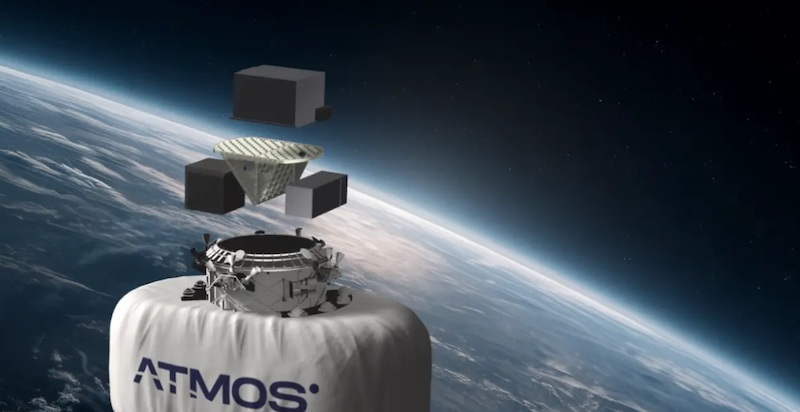
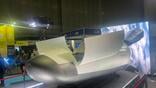
BREMEN, Germany—Atmos Space Cargo has embarked on the design of its next-generation Phoenix orbital transfer and reentry vehicle.
The company envisions the Phoenix 3 as a 2-ton vehicle with a more than 0.5-ton payload capacity, company officials said, noting they were responding to customer requests for greater mass for in-orbit manufacturing efforts and other activities. The current Phoenix 2 configuration can carry about 220 lb. of payload.
The Phoenix 3 would serve both commercial and defense customers, the officials said in an interview during Space Tech Expo Europe.
Atmos Space Cargo, which had already said its system could be used for defense logistics missions, this week also disclosed a partnership with MBDA to explore potential development and demonstration of a Precision Orbital Deep Strike Capability. The companies are in talks with defense officials in Europe about the concept.
The initial work will focus on the Phoenix 2 configuration, though it could evolve to Phoenix 3, the company officials said.
Under the concept, a Phoenix would be launched into orbit, where it could remain for an extended period, serving as a potential deterrent system. If called on for employment, Phoenix would reenter, deploy its inflatable atmospheric decelerator and could then deploy the MBDA-designed payload at subsonic speeds at altitudes between 230,000-262,000 ft. One of the benefits of the arrangement is the deployment could take place outside the engagement zone of an adversary’s air defenses, an official said.
The company continues to be in dialogue with European defense ministry customers for logistics missions, the official said, while stressing Atmos Space Cargo was still equally focused on serving commercial customers.
Atmos Space Cargo is also preparing for its next orbital mission, where a Phoenix 2.1 is due for launch in April 2027 on a SpaceX Falcon 9 rocket supporting a Space Cargo Unlimited in-space research and manufacturing of BentoBox. The mission will be the first to check out Phoenix’s on-orbit propulsion system and will also focus on validating its technology stack. Successful reentry would be a bonus, but not a core objective for this mission, one of the officials said.
The company then plans to fly Phoenix 2.2 in April 2028.
With demand for services rising, the company is looking to place a block order with launch service providers, while noting that prices have been rising given the current bottleneck in ride supply.

Related Content