This article is published in Aviation Week & Space Technology and is free to read until Sep 05, 2026. If you want to read more articles from this publication, please click the link to subscribe.
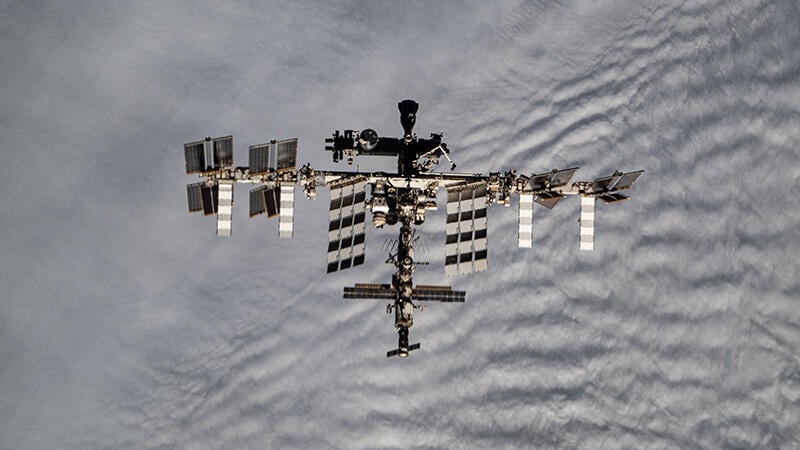
The International Space Station, which has been continuously staffed by rotating crews of astronauts and cosmonauts since Nov. 2, 2000, is approaching the end of its operational life.
Twenty years ago, in the wake of the Columbia accident and retirement of the space shuttles, NASA embarked on a bold experiment to turn over transportation services to and from the International Space Station to private companies, seeding SpaceX and other ventures.
Now, with the International Space Station (ISS) approaching the end of its operational life, NASA is preparing for a pivotal moment in the history of human spaceflight: the handoff of permanent U.S. human presence in low Earth orbit (LEO) to commercially owned destinations.
- Call for proposals is expected in late August
- Private industry is picking up the lion’s share of development costs
For more than a quarter-century, the ISS has been the centerpiece of humanity’s presence in orbit. The government-owned laboratory was assembled piece by piece over 13 years through a 15-nation partnership and sustained by an annual budget measured in billions of dollars.
The ISS hosts microgravity research, technology demonstrations and a wide variety of science and astrophysics experiments for five space agencies and a growing number of guests, including private companies. Rotating crews of astronauts and cosmonauts have staffed the outpost, which orbits about 250 mi. above Earth, since Nov. 2, 2000.
Technically, the ISS could remain operational beyond 2030, but NASA is planning to decommission and deorbit the outpost in less than five years to ease the transition onto a commercial platform. “We are building our plans for the retirement of the station at the end of 2030,” ISS Program Manager Dana Weigel tells Aviation Week. “We don’t want to compete with commercial industry or get in their way when their capability is ready.”
Under the agency’s draft Commercial LEO Destinations (CLD) Phase 2 solicitation, released July 6, NASA is calling for bidders to be ready to support a crewed flight test in 2029 as part of certification requirements to host agency astronauts.
NASA intends to award firm-fixed-price, multi-award, indefinite-delivery/indefinite-quantity contracts supporting the development, certification and services of a CLD.
The agency intends to select two or more contractors through early development, followed by a competitive task order for final design, test, evaluation, certification and flight services from one or more provider. The final request for proposals is expected in late August, and NASA plans to make its selection next spring.
The CLD program is the agency’s biggest ask of the burgeoning U.S. commercial space industry, which, in addition to taking over LEO cargo and crew transportation services, is tackling deep-space travel, spacesuits for moonwalks and lunar payload deliveries. Commercial companies also are lining up to provide tracking and communication services for more than 25 NASA spacecraft in LEO, including the ISS, the Hubble Space Telescope and a fleet of Earth-observing satellites.
For the predecessor Commercial Crew and Commercial Orbital Transportation Services programs, NASA shouldered the bulk of development costs, contributing about $8 billion, compared with an estimated $2-3 billion from industry partners. The programs produced SpaceX’s highly successful Falcon 9 rocket and Dragon capsule; Northrop Grumman’s medium-lift Antares rocket and Cygnus spacecraft; Boeing’s CST-100 Starliner, which remains in development following three flight tests; and Sierra Space’s Dream Chaser spaceplane, which has yet to fly.
Most of the CLD program’s investment dollars are coming from private financing and venture capital. Houston-based Axiom Space, for example, has been working with NASA since 2020 to attach a company-owned module onto the ISS. Prior to the station’s deorbit, the module, targeted to launch in 2028, would separate and become the foundation of the Axiom Station, one of several projects vying for the upcoming CLD Phase 2 contract.
Through three publicly disclosed financing rounds, Axiom has raised more than $1 billion. The company’s February 2020 contract with NASA has a maximum potential value of $140 million, although LEO destinations is not its only work for the U.S. space agency. The company also is developingspacesuits as a service for NASA’s Artemis Moon program under a separate agreement worth $228.5 million, including a demonstration mission.
Overall, NASA has awarded about $550 million to support commercial space station development, and private investors have added at least $3 billion, notes Marshall Smith, CEO of Starlab Space, another CLD contender backed by Voyager Technologies and Airbus.
NASA followed its 2020 award to Axiom with three contracts in 2021 for free-flyer commercial station concepts. Voyager’s Starlab station received $160 million, Blue Origin and Sierra Space’s Orbital Reef project received $130 million, and Northrop Grumman was awarded $126 million for its Cygnus-based station concept. Northrop later withdrew from the competition and joined Starlab’s team. NASA also supports work by other aspiring commercial station operators, including Vast, through unfunded Space Act Agreements.
“We need NASA’s commitment,” says Jeffrey Manber, founding CEO of NanoRacks, now owned by Voyager. “We need NASA’s selection, but we understand that the overwhelming expense is borne by the private sector, and we’re very confident that we can do that. . . . The only thing that impacts the CLD program is uncertainty.”
NASA intends to follow CLD Phase 2 development dollars with flight service contracts to host two U.S. government astronauts continuously on orbit with no more than a 14-day gap between missions. “With the ISS, we were very prescriptive with the architecture and what we were looking for,” Weigel says. “We had a lot of partners that had different pieces.
“In moving to this commercial model, it’s important that industry is driving the architecture and the base capabilities,” she adds. “NASA is going to define the pieces that we need, and industry is filling in the rest of those cases.For example, do they plan to have spacewalk capability? Those things are derived from their architecture and what is needed for support. So you could see differences just because of what the architectures really require.”
NASA’s approach to the CLD initiative incorporates lessons learned from the Commercial Crew and other programs, including safety and oversight changes following the troubled 2024 Boeing Starliner Crew Flight Test (AW&ST March 9-22, p. 28).
For the CLD program, “we’ve ensured we have the right insight at the supplier level—if it’s needed—and we’re really clear when it’s insight versus oversight of a safety-critical item,” Weigel says. “We’ve done a lot of work to discriminate and clarify that in this procurement.”
Industry feedback to NASA’s draft CLD Phase 2 solicitation, which was due July 27, was expected to include pushback on the sheer number and type of requirements for the station operators. “It’s got all the requirements, deliverables and clauses of a cost-plus contract stuffed into a firm, fixed-price bag,” Phil McAlister, former head of NASA’s Commercial Spaceflight Division, tells Aviation Week.
McAlister notes that the draft contains important improvements over earlier concepts but reflects a deeper institutional reluctance to surrender control—one that could undermine the commercial marketplace NASA hopes to create. “They want to have the cost savings associated with commercial space,” he says, “but they also want to have significant authority and control.”
With the CLD program, NASA is attempting to create a permanent LEO commercial economy in which the agency becomes an anchor customer of a space station rather than its owner, operator and financier. Success or failure of the effort will shape not only NASA’s future but also whether private companies can develop sustainable businesses beyond government contracts.
During Commercial Crew, NASA reduced the number of top-level requirements to about 300, which allowed companies to innovate while demonstrating that their designs met agency performance and safety standards.
SpaceX’s now-routine “load-and-go” fueling procedure—during which astronauts are onboard Falcon 9 rockets during fueling for launch—became one of the best-known examples of this. NASA and its safety oversight panel strongly preferred the traditional method of fueling sans crew, but the agency bypassed its engineering preferences and ultimately approved SpaceX’s operations plan. “They brought data to the table,” McAlister says. “Our job was only to say whether or not that met our requirements.”
By comparison, the draft CLD procurement document contains thousands of requirements and verification activities that could dramatically increase costs while narrowing industry’s design flexibility. Each requirement mandates testing and verification documentation, which in turn affects the station’s development cost. And while NASA may be able to swallow those costs, pharmaceutical companies, manufacturers and other nongovernmental CLD customers might not. “The sheer magnitude of the requirements drives up the commercial company’s cost,” McAlister says.
The draft CLD Phase 2 solicitation was delayed more than a year while NASA mulled alternative paths. In May 2025, the agency floated the idea that CLD contenders could host 30-day demonstration missions on their platforms rather than operate permanently crewed stations from the beginning. Ten months later, NASA announced it was considering buying a government-owned core module that would attach to the ISS with ports for commercial modules and then separate to become a free-flyer (AW&ST April 6-19, p. 16).
Weigel says those permutations reflected a market still finding its footing rather than agency indecision. “We’re doing something more aggressive and complex than what we have in a lot of our other commercial services campaigns,” she says. “There has been a lot of exploring about what is the right approach and the right path.
“We’ve also been watching this market . . . and were a little concerned about how mature it is, really,” she adds. “Industry did a great job giving us feedback, expressing confidence in their ability to continue to grow the market and grow demand.
“Ultimately we made the decision that we’ve got to move,” Weigel says. “Everyone is now aligned and competent to move forward with this plan.”
Path to Commercial LEO Destinations
It has been more than six years since NASA selected Axiom Space to connect a commercial module to the International Space Station (ISS), an early step to support industry efforts to develop one or more commercial space stations in low Earth orbit (LEO) to succeed it. Here are some major milestones in the Commercial LEO Destinations program.
February 2020 | NASA awards Axiom a firm, fixed-price, indefinite-delivery, indefinite-quantity contract to provide at least one habitable commercial module to be attached to the ISS’ Node 2 Harmony forward port. The first Commercial Destination Development contract has a seven-year ordering period and is worth up to $140 million.
December 2021 | Teams led by Blue Origin, NanoRacks (now part of Voyager Technologies) and Northrop Grumman win a round of funded Space Act Agreements (SAA) to develop free-flying platforms in LEO. Blue Origin’s Orbital Reef is valued at $130 million, NanoRacks’ Starlab at $160 million and Northrop’s Cygnus-based platform at $126 million. The awards mark Phase 1 of NASA’s Commercial LEO Destinations program.
May 2022 | NASA releases a request for information (RFI) on Crew Certification Requirements for commercial space stations, signaling the agency’s intent to certify commercial destinations instead of developing them directly.
February 2023 | NASA issues an RFI covering concept of operations and utilization for future commercial stations, expanding the agency’s focus from hardware development to long-term operations, customer mix, research utilization and business models.
June 2023 | NASA signs unfunded SAAs with seven companies including Vast, Sierra Space and SpaceX. Vast is developing the Haven-1, a crewed outpost scheduled to launch in 2027. Sierra Space, the primary partner on the Orbital Reef, also is working with the agency on its LIFE habitat and Dream Chaser spaceplane. SpaceX has a technical collaboration with NASA focused on Starship-derived commercial space station concepts and future LEO capabilities. The other awardees are Blue Origin, Northrop, Special Aerospace Services and ThinkOrbital, which is interested in in-space welding and orbital construction technologies.
September 2023 | NASA issues another RFI focused on requirements and standards for CLD certification.
October 2023 | Northrop withdraws from the program and decides to partner with Voyager on Starlab instead. NASA adds $57.5 million to Voyager’s agreement to incorporate development of Cygnus docking systems and additional milestones.
April 2025 | NASA postpones plans for an Industry Day to brief potential bidders on the CLD Phase 2 program.
Mid-2025 | NASA suggests that CLD contenders host 30-day demonstration missions on their platforms rather than operate permanently crewed stations from the beginning. The agency delays the CLD Phase 2 procurement.
March 2026 | NASA announces it is considering buying a government-owned U.S. space station core module to which commercial modules can attach, a significant strategic shift in the CLD program. The agency releases an RFI seeking industry feedback. In response, the idea is rescinded.
July 2026 | NASA issues a draft request for proposals for the CLD Phase 2. The final version is expected late August.