This article is published in Aerospace Daily & Defense Report part of Aviation Week Intelligence Network (AWIN), and is complimentary through Jun 04, 2026. For information on becoming an AWIN Member to access more content like this, click here.
FAA Orders Mishap Investigation Following Starship Flight 12
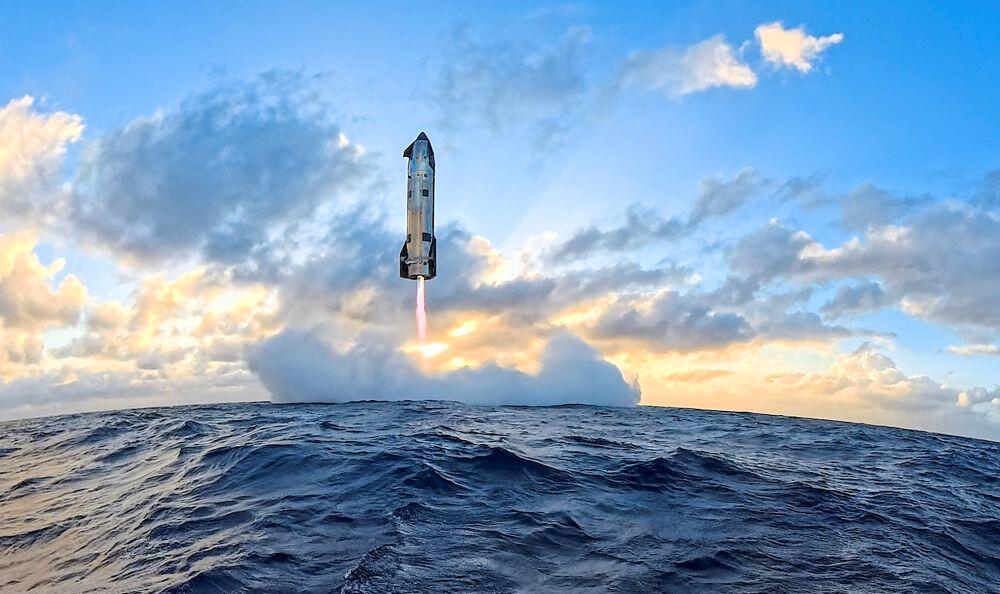
SpaceX must complete an investigation into the May 22 Starship-Super Heavy flight test, following a mishap involving the first-stage booster, the FAA announced May 27.
Although the company completed a full-duration test run of the new Starship-Super Heavy Version 3 (V3), following stage separation the booster failed to complete a boostback burn for a planned soft landing in the Gulf of Mexico due to several engines not igniting.
Instead, the booster performed a partial boostback burn that ended early. It attempted to reignite engines for the landing burn before experiencing a hard splashdown in the ocean, SpaceX said.
There were no reports of public injury or damage to public property, the FAA noted. Nevertheless, the FAA determined the launch resulted in a mishap, triggering an investigation. SpaceX will lead the probe, with oversight from the FAA.
“A return to flight of the Starship-Super Heavy vehicle is based on the FAA determining that any system, process or procedure related to the mishap does not affect public safety,” the FAA noted.
SpaceX’s current Starship license does not limit the number of flights using the Flight 12 vehicle configuration and mission profile, the agency added in an email to Aviation Week.
Flight 12 aimed to evaluate SpaceX’s newest iteration of Starship, known as V3. The Super Heavy launched at 6:30 p.m. EDT May 22 from SpaceX’s Boca Chica Beach, Texas, facility. One of the booster’s 33 engines shut down during ascent but did not affect the vehicle’s ability to deliver the Starship upper stage into its intended trajectory. Following stage separation, additional engines shut down—SpaceX has not disclosed how many—preventing the rocket from completing a planned boostback burn needed for a soft landing in the Gulf of Mexico.
The booster attempted to reignite its engines for a landing burn before crashing into the ocean.
Starship also lost an engine during ascent but successfully reached a suborbital trajectory for a full-duration flight. Demonstrations included deployment of 20 Starlink simulators and a pair of satellites outfitted with cameras that SpaceX used to survey the ship’s heat shield during flight. Starship made a controlled soft landing in the Indian Ocean as expected.
SpaceX began integrated flight tests of the Starship-Super Heavy launch system in April 2023. Seven of the flight tests have now triggered FAA-ordered mishap investigations, four of which required corrective actions prior to the next launch.
NASA is counting on a variant of Starship V3 to support a crewed landing on the Moon in early 2028.


Related Content