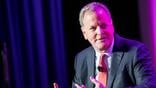
Listen in as David Pollard, the director of Tallahassee International Airport which serves Florida’s state capital, discusses the challenges and opportunities of managing a small market U.S. airport. Pollard was speaking with Aaron Karp on the sidelines of Aviation Week Network’s TakeOff North America 2025 conference in Florida.
Subscribe Now
Don't miss a single episode. Subscribe to Aviation Week's Window Seat Podcast in Apple Podcasts, Spotify or wherever you get podcasts.
Discover all of our podcasts on our at aviationweek.com/podcasts.
AI-Generated Transcript
Aaron Karp (00:10): Hello everyone, and thank you for joining us for Window Seat, our Aviation Week Air Transport podcast. I'm Aaron Karp, a senior editor with Air Transport World and Routes. Today we are in Tallahassee, the capital of Florida, located in the northern part of the state. Our guest today is David Pollard, the director of Tallahassee International Airport. David has been the airport's director since 2019. Tallahassee International Airport handles about 850,000 passengers a year and is connected to a handful of U.S. cities including major hubs via regional flights. Tallahassee is the host city for the Routes Conference TakeOff North America 2025, which is focused on air service development at smaller market airports across the U.S. and Canada. We thought it would be particularly interesting to talk to David about the challenges and opportunities of managing a small market U.S. airport. David, thanks for being with us here at TakeOff North America. Why don't you begin by telling us a little about Tallahassee International Airport?
David Pollard (01:11): Yeah, so thank you again for having me. We are not only home to Florida State University, we're also home to Florida A&M University, a number one HBCU in the nation here, as well as Tallahassee State College. So we've got a very strong academic base here in our community. Tallahassee International Airport is an airport on the move. We're currently working on the construction of a 40,000-square-foot international arrivals facility, international processing facility that's going to change the game here in Tallahassee and the surrounding region. Once we complete construction of that, we're also going to have a future foreign trade zone that will encompass, currently projected to encompass 11 counties that surround the Tallahassee International Airport. Again, if you imagine the availability to clear customs, the nearest one right now is over in Jacksonville, Florida, and if we travel the Interstate 10 corridor, the next one is over in New Orleans. And so if that gives you a magnitude of how we're going to make a difference in this region of Florida, I like to say the northwest Florida region of Florida and the north central Florida region, we're looking to stimulate economic development and jobs economic diversification with both indirect and direct jobs that are currently projected to create over a $300 million annual economic impact and create 1,600-plus jobs as that foreign trade zone matures over the next 10 years once it's approved.
Aaron Karp (02:58): Right now you're served by American and Delta, correct?
David Pollard (03:01): Correct. American Airlines and Delta Air Lines currently provide service to our capital.
Aaron Karp (03:08): Talk a little bit about some of the ways the airport has changed in recent years. There's a lot of technological development. How has that affected how the airport operates?
David Pollard (03:18): So I call it the airport transformation. Not only are we rebuilding the roads, working with the state to rebuild the roadway in front of the airport, we're also installing all new technology, fiber optic backbones, new runway infrastructure, new taxiway infrastructure, new airfield lighting infrastructure, all these things combined to give us a competitive edge over some of our other airports that address aging infrastructure and also prepare us for site readiness for future development. We happen to have over 485-plus acres of land available that we can develop with either aeronautical or non-aeronautical uses.
Aaron Karp (04:03): And one of the things that's been interesting lately is the security. There's a lot of changes going on. I flew out of BWI and Dulles recently, and with the CT scanners, it looks like they're letting people keep their liquids and their laptops in their bags, the shoes policy. Can you talk about how security is operating at your airport and whether you're seeing a difference in the throughput?
David Pollard (04:28): Yeah, so our highest priority is always on the safe, secure, efficient and customer-friendly environment that we provide for our travelers. So when it comes to security technologies, we know that we have to upgrade those technologies, both the airport technologies that we use from the airport standpoint, but also those of our stakeholders. And so whether it's the airlines we support upgrading the technologies and work with them to upgrade their technologies, and in this case, the TSA bringing in the latest equipment that provides the latest security technologies and can detect the most serious vulnerabilities that may be out there. And we're also working to expand our security checkpoint area and checked baggage screening areas to provide additional throughput in those areas as our traffic grows.
Aaron Karp (05:20): And you have the CT scanners, correct?
David Pollard (05:28): We do. And how have those changed things and what was the process for getting them into the airport? So we worked with our federal security director and the TSA and we embraced it. We were one of the first airports in Florida to bring in some of the latest, greatest technologies into our airport and passenger screening environment. It has come with some challenges as we work to implement it, but it provides for much higher levels of security. As I mentioned, we're going to be adding a third lane, so that triggers a space needs analysis and bringing up the space that's required to bring in that third machine and how it affects other spaces within the airport. So we're at the early stages of that, but again, adding an additional security checkpoint, passenger screening lane, and also an additional machine for the checked baggage screening.
Aaron Karp (06:16): And one thing I noticed coming into the airport is how compared to a major hub, how convenient it is and how quickly you can move through the airport and around the airport. Could you elaborate some on how it differs from say, going up to even Jacksonville or one of the bigger hubs?
David Pollard (06:35): Yeah, so we focus on making that passenger journey and experience as easy as it can be from roadway to runway. So we're looking for every little thing that we can do to keep that experience, that travel experience as special and easy as it can be. We understand we're not a larger airport, but we embrace who we are and we're a special airport, a special community, a special region in this part of Florida. And so we want to do and play our part as the airport and the economic engine that we are providing over $1 billion annual economic impact and looking to grow that by 25% as one of our strategic priorities.
Aaron Karp (07:16): One thing you talked about, you were on a panel here at the TakeOff conference, and one thing you talked about was advanced air mobility, and I know the airports in Florida particularly because of the weather and some of the geography have taken a very forward-leaning approach on that. Could you talk about that and the prospect of air taxis eVTOLs operating at your airport and what you've done to get ready and what kind of services they could provide?
David Pollard (07:40): So we continue to embrace the future of aviation, and that's the eVTOL aircraft, the electric aircraft. And so we are one of the first airports in Florida to install an electric aircraft charging station. And so we already have that on the airport and available as we look ahead with our planning efforts. We have an active request for proposal out right now for a hotel at the airport as well as an optional vertiport. We'll await to see if we get proposals for that. But whether we do or not, we intend to continue forward to embrace the future of aviation and be a partner. We want to put that convenience in the palm of the traveler's hand through an app that they're able to request air transportation to pre-approved destinations that we would work with the Florida Department of Transportation and the Federal Aviation Administration on. So we're at those planning stages now. We've conceptually put together a concept that shows multimodal travel so you can get off your commercial aircraft and transition through the terminal to the vertiport and get on that electric aircraft, go to a space within the community as we continue moving ahead.
Aaron Karp (09:00): And what sort of services do you potentially see with vertiport and do you see air taxis coming to and from the airport?
David Pollard (09:08): Yeah, so I certainly see air taxis coming to the airport. We understand certainly as the original equipment manufacturers get their aircraft certified with the FAA and where we're at in this part of Florida. We understand we might be a little behind some of the other larger communities, but again, we are Florida's capital and as that technology matures and the stage length of those aircraft and batteries matures, that stage length is going to grow. And that's where I want to be ready and have this community ready and positioned just in time for those opportunities of tomorrow.
Aaron Karp (09:49): And right now you have domestic service, as we said, provided by Delta and American, I think American to DCA, and where do the others go?
David Pollard (09:58): So American provides service to Washington, DCA, Charlotte, Miami, and Dallas.
Aaron Karp (10:07): And Delta goes to Atlanta, correct?
David Pollard (10:09): Delta.
Aaron Karp (10:09): That's how I flew in here actually. Could you talk about trying to expand that service and maybe attracting some international flights to the airport?
David Pollard (10:19): Absolutely. So we certainly intend to and will expand that service by using some different strategies, some lessons learned. And so putting together a very attractive incentive program, airport-sponsored incentives combined with community-sponsored incentives and potential revenue guarantees as we press ahead. So we're going to shape that out and release that here, but probably within the next 60 days, by the new year, we should have that out and available. So as we talk to the carriers here at this conference, TakeOff North America 2025 and move ahead. We're positioning ourselves for more destinations, more competition, lower airfares, and the things that we've heard from our community that they expect.
Aaron Karp (11:09): When you're talking to airlines at the conference here, what's your quick pitch to them about why they should fly into Tallahassee?
David Pollard (11:16): Take a fresh look at us now. Look at all the investments in infrastructure. Look at over $100 million of federal and state funding, what that has done for our airport. Take another look at us, understand the investments in pavements, runways, taxiways, lighting, markings, technology, all these things that the airlines certainly want to have a nice environment for their customers, our mutual customers. And so we're very committed to that. And whether it's as simple as adding more Wi-Fi access points to provide streaming, the ability for people to work on two devices at once. Yes, it's very common. Our travelers expect it. We have a very technology-savvy business traveler that comes through our airport, the academics, the students and the parents and the people that are using our airports. They're very smart with technology and so they expect it, they demand it and we want to provide it.
Aaron Karp (12:16): And how about air traffic control? I know there's always a lot of talk about the Jacksonville Center and some of the issues they've had there with staffing even prior to the government shutdown. What do you see in terms of the modernization efforts that are being talked about in Washington and what could be done to make air traffic control more efficient?
David Pollard (12:35): Well, I think I'm seeing a great start. We will soon be working with the FAA and some of their contract service providers to install some vehicle movement area transmitters and things that help provide a better picture to our air traffic controllers. We embrace technology upgrades. They contacted us just a few weeks ago and I asked them to put it on the fast track. And so any technology upgrades that are going to make the airport environment safer, whether it's in the terminal landside or on the airfield, we're going to embrace it and we're going to move forward at full speed.
Aaron Karp (13:13): And we really appreciate your time here. What are some of the, if you had to name two or three of the biggest challenges for particularly being director of a smaller market airport, what are the things that you have to confront on a daily basis that perhaps maybe a major hub might not have to look at?
David Pollard (13:31): Well, we certainly want to be very fiscally responsible with the ever-precious local dollar. And so as we look at that $1, we try to see how far we can take that $1. And if I can get a 50-50 match with the state of Florida or potentially a 90% grant with the FAA, combine that with a 5% from the state of Florida and pay a nickel on the dollar for these projects, that's a huge challenge. But opportunity for us to take that local dollar just as far as it can go. Other things are certainly getting the community to rally behind the airport. We want them to rally behind the airport so that we're sending a consistent message and always excited about the opportunities that are out there. This part of Florida is a great part of Florida that a lot of people don't see. And I'm a strong believer. I've been at this airport 31 years now, and I'm a believer I see the opportunity and I know the opportunity that's available to us. So getting that community to embrace us, getting out, giving the community discussions and talks and factual information about the airport and really positioning us to move ahead in the future to help our business, help our academic institutions and help our travelers have a better overall experience.
Aaron Karp (14:52): And one final question. As an airport director, if you're talking to airport directors, say around the country and you have a lot of experience, what would be one piece of advice you would have for what you've learned and what's important for running an airport?
David Pollard (15:07): Be prepared for change. Things are always changing at the airport, whether it's taxiway geometry standards, new taxiway improvements on the airfield, ever-changing regulatory environment, the economic climate, things of that nature. It's being nimble and being prepared for change.
Aaron Karp (15:27): Well, that's all the time we have for today. David Pollard, thank you for joining us for Window Seat.
David Pollard: Thank you so much. Appreciate it.
Aaron Karp: And of course, a huge thank you to our listeners. Make sure you don't miss us each week by subscribing to Window Seat on Apple Podcasts or wherever you like to listen. This is Aaron Karp, disembarking from Window Seat.

Related Content