Podcast: Will The Comac C929 Be The Next New Widebody?
Aviation Week editors are joined by guest columnist Richard Aboulafia of Aerodynamic Advisory to explore why Airbus and Boeing are dragging their feet on the next twin-aisle, leaving the Comac C929 as the only passenger widebody program formally in development.
Subscribe Now
Don't miss a single episode of the award-winning Check 6. Follow us in Apple Podcasts, Spotify or wherever you listen to podcasts.
Discover all of our podcasts at aviationweek.com/podcasts
AI-Generated Transcript
Joe Anselmo (00:06): Why are there no new widebody commercial passenger aircraft on the horizon? Welcome to Aviation Week's Check 6 podcast. I'm Joe Anselmo, editorial director and I'm joined today to have that question answered by two of our editors, Jens Flottau and Guy Norris. And special guest Richard Aboulafia, a managing director at Aerodynamic Advisory. Twenty years ago at the Paris Air Show, widebodies seemed to be hitting their stride. The A380 was the hit of the show. The A350 was just weeks away from being launched, and Boeing's new 787 was on the way. Two decades later, the 777X still hasn't entered service and there's nothing new on the widebody horizon. So Jens, let's start with you. You and Guy wrote a story on this. What gives, why has the fortune of widebodies declined so markedly in the last 20 years and why is there not a lot of hope that it's going to revive?
Jens Flottau (01:04): Well, it's the fortune of the large widebodies. We would probably have to say, well, the A350 and the 787 were so good that also in terms of unit costs that they made the large widebodies redundant. And that's a shock that still reverberates in the industry. Airlines found out that they don't have to take the risk of operating large widebodies to drive down unit costs because they might just as well take the 350 and the 787 that killed the 380, killed the 747. And people in the industry seem to have long memories. Now, you could say that it's about time to start thinking about new widebodies because the 350 is 10 years old, 787 is 14 years old. There is a question out there whether we do need a new very large aircraft, at least in the medium term. I know one person who absolutely thinks that Boeing and Airbus should build one right away, Emirates Airline president, Tim Clark. But the question is, are there many others in the industry who concur and would make that a viable business case?
Joe Anselmo (02:29): For our audience that aren't maybe commercial experts like you are, didn't Emirates end up taking about half of all the A380s that were built?
Jens Flottau (02:37): Yeah, they did take almost half of them. They currently fly 96. They are taking the remainder of the fleet through some wing repairs because of the cracks that have developed in storage. But yes, they are by far the largest operator. And they have recently said that they want to fly the aircraft until 2040, at least if they can get enough spare parts and don't hit the hours and cycles ceilings. But the question for them and maybe for others, is what's going to happen in the 2040s in that market space? And given how long it takes to develop aircraft, now really is the time to start thinking about it.
Joe Anselmo (03:27): Richard, you've been pretty blunt in saying there's no new widebody on the horizon because there's simply no demand for it. We've seen the 777X, which is a derivative, it's going to arrive it looks like in two years, but no re-engined A350, no re-engined 787, even though as Jens points out, they're very good aircraft. Why is this?
Richard Aboulafia (03:51): Well, in terms of a new large aircraft, that's Tim Clark and Emirates, and that's wonderful. They're a great airline, but they're unique in their demand. Whenever they get a slot, they throw in the very biggest thing they can to take advantage of that slot. That's a very different business model from, well, everybody else. Take you back a bunch of years. These were also the guys who thought the A380 NEO was just a dandy idea and were about to sign on the dotted line when Airbus said, wait a minute, that would just be for you, and that makes no sense at all. Now, okay, so there's no real market for anything bigger other than Emirates. You don't want a plane for Emirates, no offense to Emirates, but what about derivatives? I just say, what about an A350 NEO and plans for a 787 re-engineering, whatever?
(04:43): And here we've got a couple of issues. One, it's only now that we're getting to the kind of respectable rates for widebodies that we enjoyed for the past few years of this decade. Things were pretty grim, so nobody really felt enthusiastic. Maybe that'll change. But another problem is Pratt & Whitney doesn't seem to want anything to do with widebodies right now. There was the GP7200 about which the less said the better. The PW4000 is an obsolete type and they've got nothing in the pipeline. Rolls-Royce certainly does, but they're not in a financial position to launch a new engine. I'm sure they would love to bring UltraFan to market, but that's going to take some time. And then there's GE, which runs the show. Why would you disrupt yourself? That doesn't make a great deal of sense. So I think from a turbine standpoint that we're waiting and watching to see what they do, and I think it'll have to come from the turbine guys rather than the airframers.
Joe Anselmo (05:42): Well, Guy Norris, you're our turbine guy. You visit all of those engine makers that Richard just mentioned. What are you hearing?
Guy Norris (05:49): Yeah, well, I mean to sort of echo a little bit of what Richard just said, obviously the key really here is whether the engine makers themselves see this fact that they've reached a sort of asymptote in terms of propulsive power and whether they need to go a little bit further to really enable a lot of these sort of potential pipe dreams of re-engined or bigger engines. And the fact is they are all capable of doing this. I mean obviously Pratt & Whitney, as Richard said, has put their focus really on regaining market share in the single aisle and all their energies are with the GTF right now and continue to be so. GE, as you said, Richard, has pretty well got its market dominance squared away and it just needs to protect that. And I think Rolls is in the position where again, its focus recently has been to try and re-enter the single aisle with a smaller version of the UltraFan.
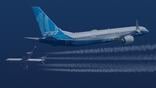
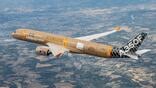
(06:58): So again, it's quite happy where it is in terms of the widebody market. It would like to do more on the 787 and regain some market share there. But I think the real focus for them is whether they can maintain their grip on the A350. They're doing well with the A330 NEO relatively. And I think it's worth remembering that when you look at the thrust growth, that's the capability within all of these current models. There's enough there. Rolls feels that it can meet the demands of, even if Airbus decides to go for an A351000 stretch that it can do this with the existing XWB and of course GE with the GE9X, even if Boeing does take the plunge and decides that it can go a step further and make the 777-10, as some people have called it, there's ample capability in the GE9X. It's only rated at about 105,000 pounds thrust for the 777-9, but it's already shown that it can run up over 130,000 pounds on the test stand. So it's not even breaking a sweat right now. So in terms of what's available, there's plenty to go around.
Joe Anselmo (08:20): Jens, there's one widebody I did not mention — one widebody development, which is the C929, the Chinese widebody. It was originally a Chinese-Russian joint project. The Russians have dropped out. I mean the Chinese are pulling a lot of surprises in a lot of industries like electric autos. Could they pull a surprise here and could the C929 be the next widebody the market sees?
Jens Flottau (08:45): It could very well be the next widebody the market sees. The question is how successful will it be? And if I look at what Richard writes and what we've been saying in the past, I would say it's probably going to be as successful as the C919. So it'll be an aircraft that's primarily used by Chinese airlines, but whether it's going to be an international success, I would have very, very serious doubts. But at least it's a plan. And they're not only talking about the C929, they're talking about several versions of that aircraft. There's also a C939, which is a larger aircraft, at least on paper. So I think the thing that strikes me here is among the Western manufacturers, everyone's talking about the next single aisle, and that's for the second half of the 2030s. So 10 years from now, maybe 15 years from now. So very far. And no one is even considering a new widebody. Well, the Chinese are different. They are looking at this. So they have this more strategic view. Of course, they don't have one right now, so if they want to get in, they're in a different position, they have to move. But yes, you're right, C929 could be the next one.
Guy Norris (10:12): Yeah, and Jens mentions obviously that part of the Chinese puzzle, if you like, with this is the propulsion side of it. And much though they would like to take advantage of the western power plants that are out there at the moment, the C929 is configured with the Aviadvigatel PD-35. So not exactly something that the western authorities probably would certify with any ease, disregarding any of the airframe aspects. So anyway, just another challenge there to throw in the path of a potential Chinese competitor.
Richard Aboulafia (10:50): Now that's really interesting, Guy. A couple of years ago we'd heard that for the Chinese, the CRAIC C929 was no longer — any kind of Russian content was regarded as radioactive in light of the Ukraine invasion or whatever else, and sanctions. But what you're saying makes a lot of sense if there really is no other choice. But the engine, well, maybe that corresponds to the rapprochement you're seeing between Russia and China that President Trump and others have remarked upon — basically kind of a pivot away from the west towards Russia for that matter, North Korea too, not welcome news. And of course it serves to make the C929 a lot less relevant.
Guy Norris (11:36): And of course, even if this does turn out to be some sort of false flag thing, it certainly has prompted China into looking at its own CJ-2000 engine, and that's certainly becoming a realistic possibility. They've made good progress on the CJ-1000 and it may push the PD-35 to be sort of like a prototype engine, a bit like we've seen in Chinese programs before. So fascinating if it's true.
Joe Anselmo (12:07): Richard, you have been reliably skeptical about China's ambitions in commercial aviation for the better part of two decades.
Richard Aboulafia (12:15): I share your — I don't want to say concern, but you look at their success in many other sectors of the economy, particularly cars, but increasingly other high-tech sectors, you have to be mindful. I mean, they're good when they turn their attention to it. I would argue they're taking a completely wrong approach when it comes to aircraft, but they could change that approach. And given the size of the market, the size of resources, and of course the sheer talent, there's no reason to believe they wouldn't be successful. But as Guy says, this is about propulsion right now. They're nowhere near developing a single aisle engine, let alone a twin aisle. I tend to think none of the U.S. and British primes, the three big engine guys are really enthusiastic about the C929, which as Guy says, leaves this Russian engine, which means it's not only a non-starter in export markets, even domestically, I think Chinese carriers are going to say, we have to compete with this on international routes. We might as well just throw the money into the turbofan directly so that way the engine gets fed and we lose the same amount of cash. I don't get it. I just don't get it.
Joe Anselmo (13:33): What about back to the duopoly? The four of us were chatting yesterday in preparation for this podcast, and I believe you thought, Richard, that ironically we could see Boeing go first ahead of Airbus in terms of developing a new widebody?
Richard Aboulafia (13:48): Yeah, at least a major derivative. I just think that in terms of potential for growth, the 777X is just really well placed and maybe they get through the woods in their certification challenges on the X, and of course on the MAX-7 and -10, and it's 2028 at this point. And they think, all right, why not just reinforce our position at the top of the market with a -10? Maybe the GE9X has the growth potential needed to not take too much of a range sacrifice with a, I don't know, a 40- or 50-seat stretch of the -9. I think it's an intriguing possibility. It certainly has I think a bit more growth potential than the A350 XWBs. And Airbus has no desire, no one has any desire to do a clean sheet. So I think 777-10, yeah, might ironically be the thing most likely to go.
Joe Anselmo (14:46): And what is a 777-10? Just one more size up?
Richard Aboulafia (14:50): Yeah, 40 or 50 seats more, but with whatever GE can eke out of the GE9X with as little range sacrifice as possible. I don't know what the art of the possible would be there, but it offers intriguing possibilities and maybe it does for the baseline 777X what the 777-300ER did for the -200ER. But that of course would require a lot of work. And hey, it gets back to the turbine question, doesn't it? Maybe conventional turbines like the GE9X are kind of running out of runway, I don't know. But if there's any potential of getting to 115,000 or 120,000 or whatever you need with commensurate fuel efficiency, maybe that's something to consider.
Guy Norris (15:38): Can I just jump in there? Actually to follow on from Richard there, it's a really interesting point in the curve where we are now. You'll notice that the engine, which of course the big daddy of them all up till now has been the GE90-115B developed for the 777-300ER. And of course that's rated at 115,000 pounds of thrust, which is what the -300ER needed. But when they went to the 777X, particularly the -9, they only needed 105,000 pounds. So even though that engine, the GE9X as we just mentioned, is easily capable of more, the interesting point is that the thrust requirement went down because the aerodynamic efficiency went up because the 777X of course makes use of this new composite wing, which even though it's actually heavier than the metal wing, it's more aerodynamically efficient and that enables you to do a lot more with less thrust.
(16:41): So I think as you look forward to, I don't know if that's possible really with another version or a derivative really of the family, but it just shows you that there is a little bit more somewhere in the locker. And if you do a cumulative increase improvement in aerodynamics and structures and propulsion, bring all those together, you can still eke out a little bit more from everybody's sort of corner to make these long-range, bigger capacity aircraft work and at a price point, which still makes sense on a per-seat basis. So if you think about all of the technology that's been developed really in the past 30 years, really since the big twins really came into existence, I think there's still a bit further to go. I think a bigger twin is still possible out there.
Joe Anselmo (17:36): Richard, you had noted that the 777X in your opinion is well positioned. I recall five years ago when COVID hit people saying, oh man, it's too big. Boeing's in trouble. There's too much fragmentation in the market, too many point-to-point routes. That's not really the case, is it? The 777X looks like it's going to hit a sweet spot when it finally arrives in 2027.
Richard Aboulafia (18:03): Yeah, it sure does. The order book's up to what, 500 to 565 jets? Pretty impressive. Well, part of that of course is a function of the very lengthy certification delays, but the way to view it perhaps is that there's a cyclicality in belief in size. You go back 35 years ago, Robert Crandall at American said nobody ever went bankrupt flying a plane that was too small and small is beautiful, and then in good times people think in market share, people think in terms of growth, then something whacks you on the back of the head, oh, right, small is beautiful and you keep going back and forth. In the aftermath of COVID as you say, there was this rediscovery of the virtues of small. And the truth is that fragmentation has been very strong, killed the A380 and 747 and dragged everybody's average size down. But eventually there are some routes and some ranges that really just need a bigger jet. And even if we have downsized from the great days of massive widebody production in the 2010s, hey, if we get 80% or 90% of the way back, that's a big market. And yeah, the 777X as a consequence I think is very well placed.
Jens Flottau (19:20): And it's not only about big widebodies by now, it's almost about any widebody. There's a huge shortage in capacity in the long-haul market because Boeing has had its issues on the 787 production. The 777X is seven years late as we all know. The A350 hasn't ramped up the way Airbus had wished and is still not there yet at this point. The A330 NEO is at a very small rate, and the in-service fleet is aging. A lot of 777-300ERs have to be replaced. The A330s are getting there. So by now any new capacity that becomes available is highly welcome. And if it happens to be the 777X, then so be it.
Joe Anselmo (20:14): Jens, I didn't want to end this podcast without addressing a point that you had brought up. There's so much less pressure on this industry for sustainability. We're not hearing about it almost at all anymore when it was a real buzzword a few years ago. But you point out that you can't solve aviation's sustainability problem without new widebodies.
Jens Flottau (20:36): Yeah, IATA comes up with this calculation that the vast majority of the CO2 savings have to come through sustainable aviation fuels. But the airlines are saying something like 20% has to come from new technology, and they're not talking about A350s, 787s, 777Xs. They're talking about new designs, and we're just not seeing that. We may be seeing it on the narrowbody side, but that doesn't help us very much because in terms of emissions, by far the biggest chunk is coming from long-haul flying. That's exactly where we don't see enough innovation. So from a sustainability point of view, I mean, I get what we're saying about other engines or what are the financials of Boeing and Airbus, are there enough incentives? But from a sustainability point of view, this is really a worrying issue.
Guy Norris (21:46): Yeah, I was just going to point out that I'm thinking about looking back a little bit in history, but I remember, and this is definitely going to sort of age me or date me. I was on a 747 delivery flight to Hong Kong with Cathay Pacific, and I remember this in the early 1990s. And Stuart John, who maybe some listeners might remember, he was the engineering director at the airline. And of course this is when the 777 — this was three years before it actually entered service. And he was saying, I've been trying to persuade Boeing that they need to do a stretch version of the 777. And it was absolutely shocking to everybody on that aircraft that they could even think about an even longer version of the 777 at that time with only two engines. And he was saying, this has got to be done because the 747, I know it doesn't seem likely, but it will eventually be outdated. And if you can put two engines on something about the same size as a 747, you're going to be burning two-thirds less fuel at least, even if those engines are huge. And I think as part of the sustainability argument, that's a fundamental aspect. It doesn't matter. Two big engines, if they're burning less fuel, then you're on the right way to start tackling the problem.
Joe Anselmo (23:14): Richard, do you want to take us to the finish line?
Richard Aboulafia (23:17): Well, that's very kind. All this point about sustainability is correct. Just remember my favorite maxim about fragmentation: the more you fly point-to-point routes rather than using dense routes to go through a hub, you're kind of doing great work. You're taking off and landing half as many times per passenger. If you're flying, say, directly from where I live to, I don't know, Nice, rather than changing at Charles de Gaulle, that's a huge reduction in emissions. And I think that's what's really driving demand for smaller and smaller jets down to the A321 NEO level.
Joe Anselmo (23:55): OK, well, on that note, we are out of time, but Richard, thank you as always for joining us. Jens, Guy, thank you for your time. And a special thanks to our podcast editor in London, Guy Ferneyhough. That is a wrap for this week's Check 6. Tune in again next week when you hear Jens, Guy and others on the ground at the Dubai Airshow. Don't miss it by following Check 6 on Apple Podcasts, Spotify, or wherever you listen. And if you found today's discussion helpful, please consider leaving us a star rating or writing a review. Better yet, share this episode with a friend or colleague. Thank you for checking in with Check 6, and have a great week.




Related Content