Check 6 Revisits: RTX's Pratt & Whitney Marks 100 Years
In this special anniversary episode of Check 6 Revisits, Pratt & Whitney President Shane Eddy and Aviation Week editors Guy Norris and Christine Boynton delve into the engine-maker’s achievements over its first century. This episode explores how Pratt & Whitney’s propulsion innovations have made it a global powerhouse, navigating highs and lows throughout the decades—and all dating back to a revolutionary little engine developed in a former Connecticut tobacco warehouse space.
Visit Pratt & Whitney's website to learn more about a century of innovation.
Check 6 Revisits delves into Aviation Week's more than 100-year archive. Subscribers can explore our archive here and read key Aviation Week articles relating to this podcast here:
- New Radial Engine Ready Soon (Jan. 11, 1926)
- The Pratt and Whitney Wasp Engine (Feb. 15, 1926)
- AF Permits First Look at P&WA J57 (Nov. 16, 1953)
- Pratt & Whitney Evolves Turbofan From J57 Program (Jan. 26, 1959)
- P&W Comes Back—Strong (March 13, 1950)
- Power Pioneer: Pratt & Whitney’s First Century (July 22, 2025)
- Pratt Powers Up Next-Generation Engine Plans (Dec. 16, 2025)
Don't miss a single episode of the award-winning Check 6. Subscribe in Apple Podcasts, Spotify or wherever you listen to podcasts.
Discover all of our podcasts on our Apple Podcasts channel or at aviationweek.com/podcasts.
AI- Generated Transcript
Christine Boynton: Welcome to Check 6 Revisits, where we comb through more than a century of Aviation Week and Space Technology archives. On this podcast, our editors explore pivotal industry moments and achievements of the past while considering how they might relate to the events of today. I'm your host, Christine Boynton, Aviation Week senior editor for Air Transport. And on this special anniversary episode, we're marking a hundred years of Pratt and Whitney.
Archive audio [narrator]: Lindbergh's Lonely Adventure gripped the imagination of the world. As one of man's most dramatic achievements, the nation turned from its casual cynicism to make the shy young pilot together with the airplane a shining symbol of the horizon, still beckoning for conquest. A vital factor in the ascendancy of American aircraft had resulted from the work of two companies concentrating on the intensive development of the radial air-cooled engine.
Archive audio [Leonard Hobbs]: In this country, Charlie Lawrence was the first one to go into the air-cool side and did some quite good work. His products being eventually taken over by the Wright company and it was really one of his engines after a couple of major designs, and they were really major designs, but one of his engines that powered the Lindbergh flight. Following this came one of the best of all of the power plant engineers George J. Mead with his famous Wasp and Hornets, which set up a new standard.
Archive audio [Frederick Rentschler]: The unusual engineering accomplishments of our American aeronautical industry began to bear fruit in the late twenties and early thirties. From a military point of view, for the first time our various types of combat planes were unmatched abroad. Moreover, we found the solid beginning of commercial air transport.
Christine Boynton: What you've just heard comes from "We Saw It Happen," a documentary presented by the United Aircraft Corporation in 1953 to celebrate the first half century of powered flight. Among the early industry pioneers it features are the two we just heard from: famed engineer Leonard Hobbs, who led development of the pivotal J-57 jet engine, and Pratt and Whitney founder Frederick Rentschler. And in the audio, Hobbs refers to the famous Wasp and Hornet, bringing us back to 1925 when a team led by George Mead and Andrew Willgoos were building Pratt's very first engines working out of an old tobacco building. Five months into that development, Aviation Week was allowed in for a fleeting view of work that would soon prove revolutionary. "Its striking appearance indicated something new and unusual in radial engine design," the January 1926 report reads. A follow-up that February provided a first detailed description of the Wasp, touting its high power and low weight. Not far behind would be the Hornet, and together the two engine programs would launch Pratt and Whitney on a path to becoming the powerhouse it is today. Joining me for this episode are Aviation Week senior editor Guy Norris and Pratt and Whitney President Shane Eddy. Shane, welcome and thanks for being here today to unpack some of this history.
Shane Eddy: Oh, thank you Christine. And nothing better than talking about aviation and Pratt and Whitney, so thanks for having us on today.
Christine Boynton: Well, to kick us off, let's go back into those early days to the first Wasp prototype inside Rentschler's experimental shop in 1926. "At first, at very first glimpse, it was obvious that there was something radically new." So what was so different about the Wasp and what gave Rentschler's young team the confidence to risk this design?
Shane Eddy: Well, I mean the big difference was this was an air-cooled engine and engines of the day were liquid-cooled. You have to remember, this is the early days of aviation. Rentschler had on a relative basis good experience not only with aviation but with aviation engines. And based on that experience, he knew the potential of aviation, connecting economies, connecting people, defending freedom. But he knew that to unlock that we needed better engines, more capable engines, more dependable engines, and really believed in the air-cool design as being superior. And I mean, he knew the Navy had a strong desire for more powerful, lighter engines that could power aircraft for new aircraft carriers. They had high confidence in the design and were able to secure investment from the Pratt and Whitney Machine and Tool Company in Connecticut who had the space that you mentioned. They also had the capital to invest and they were off.
Christine Boynton: And soon thereafter came the Hornet. And in August 1926, Aviation Week reported "continued development of both types of engines is being vigorously followed up with the idea of making still bigger improvements within the ensuing year. In addition, it is possible that a new type of engine may be undertaken. It is fully realized that aeronautics, particularly engine types can never stand still." And just to back up just a moment, let's talk more about Rentschler and the two engineering stalwarts at Pratt and Whitney's birth, who we've already mentioned, George Mead and Andy Willgoos. Who were they and where did they all learn their trade?
Shane Eddy: The thing that Rentschler and I would say George Mead and Willgoos had in common was that they were driven by this belief that the best airplanes were always going to be designed around the best engines. And they had secured this space, they had their idea and Rentschler and Mead, and Willgoos all were working at Wright Aeronautical. Rentschler was the president at the time and was becoming, I'll say increasingly frustrated. But they had this idea that the company's board was choosing not to invest in. So together they decided to go out on their own. Again, they end up paired up with Pratt and Whitney Machine and Tool Company who had the space and the capital to invest, but they will. Willgoos and Mead helped translate Rentschler's vision into this real working engine that outperformed competitor engines and became the new model for how they were going to collaborate and drive breakthrough innovation in the industry.
Christine Boynton: And Guy, I think you have a good anecdote here.
Guy Norris: Yeah, well I was just thinking Shane, how Frederick Rentschler managed to basically bring together this dream team, didn't he from he kind of raided Wright really and brought the best team over. But one of the things that I thought was interesting, and this is from Aviation Week in 1930, we found something that George Mead had written and he said, I thought it was quite interesting. He goes, "The satisfactory operation of a relatively complicated group of mechanical units always depends on cooperation between the designers of the various units and mutual understanding of each of these problems. Fortunately, the industry has reached a point where the plane designer appreciates the problems of the engine manufacturer, and heeds, in most cases, his advice. This situation has contributed quite considerably to the excellent performance of our commercial aircraft during the past year." So obviously an engineer ahead of his time, I would say.
Christine Boynton: And today, with the benefit of hindsight, it does seem remarkable that a young startup in the 1920s and into the 1930s Pratt would not only survive through the dark days of the Depression, but developed classic pistons like the Hornet, Twin Wasp and Double Wasp. Shane, what was the secret to their survival even in those early years?
Shane Eddy: Well, I think you're talking about a really important mix, a powerful mix of military contracts. But I'll come back to just strategic leadership, strong business alliances. And again, they have this incredible technology. So even with the Depression, the U.S. military continued investing in Navy aircraft and Army aircraft, and I think that steady income helped stabilize the business. The other thing that happened was just before things really turned downward in the financial markets in 1929, Rentschler managed to merge Pratt and Whitney into the United Aircraft and Transport Corporation. And I think that lent itself to additional stability. And they were able to not only focus on survival, but also build a long-term sort of innovation-driven company.
Christine Boynton: And let's not forget that these were the very earliest days of the industry. And Guy, you have a memoir of something Rentschler said in 1927 to that effect.
Guy Norris: Yeah, that's right. In fact, yeah, thanks to Christine's diligent research, and this is an autobiography by Eugene Wilson, who of course, going back into the sort of relatively recent past of Pratt and Whitney, he was of course former Naval Aviator, worked at the design section of the Bureau of Aeronautics in the Navy Department and effectively became the president of Hamilton Standard, Sikorsky, Chance Vought Corp. and finally the president of United Aircraft during World War II, which is astonishing, but he remembers of he was right there in the early days. There was a couple of things. One is he was once walking with George Mead into the Smithsonian Institute, the museum, and they looked around their collection and there to their absolute shock having thought they'd come up with the original classic radial, they saw a design of Charles Manley who developed the engine for the Langley airplane that Professor Langley notoriously put into the Potomac River, I think.
But he looked, there was a five-cylinder single row air-cooled radial, and they looked at each other and he said, George grinned sheepishly at me and said, effectively, "There's nothing new under the sun, is there?" But early days, I think he also talked about when Rentschler decided that aviation was a real business, and he'd said to them, they were all sitting on the balcony. There was Eugene Wilson, Frederick Rentschler and Chance Vought, I guess himself, and he said, "This aviation business" and Chance Vought said, "Whoever said it's a business? The best you can say is that it's a game, but it's still a lousy racket." So Fred Rentschler was a bit upset by this, and he said, "Aviation is no longer a game or a racket, it's a serious business. And the sooner some of you airplane wood butchers wake up to that fact, the better." And I thought technical technological development was the key to economic security and an enterprise like aviation, the way to keep to the forefront was to stress your engineering. Once you got behind, you'd never catch up unless the other fellow broke a leg and fell down. Yes, he thought aviation was a funny business at this remark. Chance Vought woke up. So it really is a serious business.
Christine Boynton: And ultimately it took Pratt and Whitney less than two decades to grow from a tiny operation with only 20 employees to a mammoth one with over 40,000 workers and a staggering wartime production output along with its licensees of more than 360,000 engines. Shane, was Pratt and Whitney just lucky, kind of a case of the right engines at the right time, or was there something else behind this particular stage of its success?
Shane Eddy: Pratt and Whitney's success wasn't just luck. Timing played a role, but the business growth really came from a combination of visionary leadership, engineering excellence, and smart partnerships. And these are the days I think back to William Knudsen's "Freedom's Forge," like when we really learned how to produce at rate. But I think it wasn't only the timing and maybe Guy, tying back to your words a moment ago, the growth came from a combination of this visionary leadership and engineering excellence. The Wasp was a very deliberate, calculated innovation based on a clear understanding of what aviation needed: more capable, more dependable, lighter, getting rid of the liquid cooling. And so their team set out to solve real aviation problems. And out of that sprang quite honestly dependable engines. And from the beginning, Rentschler had these close relationships with the U.S. Army Air Corps and the Navy, tailoring engines to their requirements. And then finally, I would say they were not only building the engine, they were building this scalable production system and then with United Aircraft, Pratt had the access to capital and suppliers and customers. So yes, timing was important, but there was a lot more to it.
Christine Boynton: Well, it was around this time that the company experienced some challenges as well and ones that just preceded a turnaround of sorts, which will bring us into the jet age. But looking back in our archives, it was Aviation Week's view that things really didn't look good for Pratt in 1945. At the end of the war, the company didn't see any signs of turbojet contracts ahead, but then came the announcement of its new J-48 power plant. A March 1950 Aviation Week brief states, "Pratt and Whitney should be proud of its comeback. This is a far cry from 1945 when Pratt and Whitney wondered whether the future held anything for it." And Guy, maybe you can give us a little more color around what was happening at this moment in time.
Guy Norris: Yeah, thanks Christine. I mean, it does seem remarkable, doesn't it, Shane, that looking back on it, who would've thought that at the end coming out of the war when Pratt had led the sort of arsenal of democracy fight for propulsion for the allies, that it would find itself actually out of this new jet club bonanza that was suddenly emerging because of the unusual circumstances of World War II. Radial engines, as you've mentioned, were critical to the war effort, but because of that, the government had basically said, "Just stick at it. You stay at what you're good at and keep producing." In the meantime, GE was selected for early jet development because of its experience with the turbo supercharger, which had been used to boost the altitude and performance of bomber and fighters during the war, the piston engine-powered aircraft. So it was kind of very pragmatic reasons that this history evolved in this direction. So as a result, Pratt found itself a bit behind. So I guess here we are in 1945, hundreds of millions of dollars worth of contracts canceled by the government abruptly after the war ended. And the question was what now? So I guess the question to you is how did it catch up?
Shane Eddy: Well, I should point out Guy, it was really the government for, I guess we'll say all the right reasons at the time that were sort of holding Pratt back from getting into this, but I think Pratt and Whitney management, including Rentschler who's president of the United Aircraft Company at this time, they realized the potential that the gas turbine engine had and what that would mean for aviation. And so they established a new engineering department dedicated to its development and were able to catch up relatively quickly. I mean, production and development of radials continued. They still had an important role, a source of revenue to keep the company going. Initially, I believe we focused on a turboprop for a Douglas cargo aircraft and some limited success, but the company knew that the only way to really secure a position in the jet age was by doing what they had done with the Wasp, introducing revolutionary technology to catch up and not only catch up, I'll say jet past the competition and then this is what led to the J-57 and the JT-3.
Guy Norris: Yeah, and in fact, as you Christine mentioned, Pratt would learn a lot through its development of both the J-42 of course, as well as the J-48. But really the big moment came with the J-57, wasn't it? That was the big breakthrough engine. And the great thing about that of course, was it was designed around this caveman radical twin-spool axial configuration. It was 10,000 pounds of thrust, which was pretty darn perfect at the time. It was great because it was the right size and it was also the right timing for this new generation of fighters, bombers, and even airliners. And it was all done under a really tight security. The first time Aviation Week got to even report on it wasn't until November of 1953 when they described the J-57 as the "blue chip engine." Of course, it then became famously known as the JT-3 in its civil guise. So when you look back on it, Shane, how key was the development of the J-57? I mean quite a pivotal moment really, wasn't it, in the company's history?
Shane Eddy: Oh yeah. I mean certainly in terms of scale. I mean ultimately I think 21,000 combined J-57/JT-3 engines produced. But I mean, as you said, pioneering technology, the twin-spool design. So a huge increase in power, fuel efficiency is what we're always bringing in. I like also that it was understood that there was risk around the twin-spool design. And so again, Andy Willgoos as an engineer insisted that it be designed so that the spools could be bolted together in case it didn't perform as intended. So interesting. But yeah, obviously first run in 1950, I think 25 years after the Wasp, which is interesting, but then goes on to power the B-52, the F-100, the U-2 on the defense side, and then of course the Boeing 707 and DC-8 on the civil side.
Guy Norris: Yeah. How famous, sorry, Christine, you were just going to mention something.
Christine Boynton: Oh, no. Just to say that this is one of those really cool pictures I found in our archive, so I'm going to make sure that we post a link to that in the show notes, including a photo of, I think one of the flight tests.
Guy Norris: Oh yeah. And I think that one of the things that you saw, for those that don't remember, Mark Sullivan, who's like Mr. Comms at Pratt and Whitney for years, the name that is associated with the public outreach of the company on dependable engines. He wrote the book, in fact, "Dependable Engines." And the story that we've dug out from there is it's the amount of design work required of the Wasp versus what would become the J-57 in the first four years of their development, 730,000 design man-hours versus 1.3 million. So it just goes to show you how things did in fact change. So just going forward then, building obviously on the J-57 and the JT-3, Pratt's dominance would continue to grow, particularly in the commercial world with the JT8D and famously the JT9D, the world's first commercial high bypass ratio turbofan designed for the 747, and of course proposed as well for the Air Force's CX-HLS heavy lift contract.
Obviously Pratt being a pioneer in that inevitably came face-to-face with these development issues that nobody had encountered before, ranging from the control of the fantastically sophisticated variable stators in the compressor to high temperatures as it struggled to keep up with the weight growth of the 747. And of course, the sheer size of the engine led to this problem of ovalization, which nobody had ever encountered before. A new phenomenon in the engine world at that time. So Shane, could you touch on the challenges that Pratt encountered and what did this sort of technology represent for the next phase of innovation at the company? You were literally dealing with things that nobody had seen before.
Shane Eddy: And I think that these are lessons that are, I'm sure very well learned and hard learned at the time, but they go on to shape how we approach design moving forward. So I mean something like ensuring that the engine centerline has margin for growth to support what I'll call the inevitable evolution as you're designing a new airplane, certainly one of the scale of the Boeing 747, the queen of the skies, and then the complexity of dealing with engines for a large and rapidly growing fleet, you've got to be prepared to, because once the production machine starts and you're working on catching up with some of the technical issues of the program, you've got to be able to ultimately adapt with that and pull it through for the customers. I think in the end, the JT9D proved to be a very reliable engine. And in solving those issues, it also created the opportunity for Pratt's first entry into Airbus, powering the A300 and the A310, and began a new relationship for us.
Guy Norris: Totally pivotal, another of those pivotal engines, I think in the history of the company. I do remember though that it was an awkward time for Pratt and for Boeing. They had a phase where there was lots of aircraft sitting at Everett famously without engines.
Shane Eddy: Yes, incredibly complex development programs and it's a complex and high-stakes, high-leverage industry.
Guy Norris: Of course. And through all of these experiences, every company grows, doesn't it? I mean, you develop this cadre of hardened engineers who begin to every time learn a valuable lesson. And of course during this time Shane, the company was also in the background mostly doing some famous mostly secret at that time, military programs. And the two I was thinking that is so fun to talk about would be the J-58, which of course is still considered one of the pinnacles of propulsion engineering to this day for Lockheed's Skunk Works SR-71/A-12 program. The Blackbird as the SR-71 is also known, and the Project 304 hydrogen-burning engine for Project Suntan, which was again, Kelly Johnson's attempt to build a hydrogen-burning supersonic aircraft for the Air Force. Could you kind of talk a little bit about those two amazing programs?
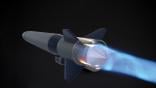
Shane Eddy: Yeah, I mean I love the fact that when you walk into the Hazy Pavilion at the Smithsonian, you see the Blackbird and of course the J-58s that powered it when you get in there, but it has to be one of the most iconic examples, powering the aircraft to Mach 3, a turbo-ramjet engine. So a hybrid acting as a turbojet at low speed, transitioning to ramjet at Mach 2. I just think it's one of these pioneering examples also, not only of our innovation, but it was an example of an adaptive engine and of course the first engine designed to operate with afterburner for extended periods and then qualified at Mach 3 for the Air Force. Of course, it was the successor to the U-2 spy plane, which was also a Pratt and Whitney-powered aircraft. And then, yeah, Project Suntan is interesting. As you said, the Project 304 version of the J-57 was selected for this program to run on hydrogen in the mid-fifties. We're talking about the first hydrogen fuel jet engine successfully tested. We carry that experience through today. We're still looking at hydrogen as a potential more sustainable fuel for the future. And we have projects going on today on the technology side that takes some learning from that program.
Guy Norris: And I think Christine, you were going to ask about another sort of focus for Pratt and Whitney further north, where today of course they are developing a lot of the helping to develop a lot of that technology that Shane just mentioned.
Christine Boynton: Right. Well, Pratt's focus shifted a bit as aircraft and engines grew in size, and actually Pratt and Whitney Canada took on much of the old business really addressing the market that Pratt and Whitney initially served. Pratt and Whitney Canada was first set up to build and maintain Wasps in 1928, but its breakthrough design was the famous reverse-flow PT6 turboprop, and today Pratt and Whitney Canada's range covers numerous turboshaft, turboprop and turbofan engines. So Shane, did anyone expect Pratt and Whitney Canada to become the force that it did and with its work on hybrid-electric and other advanced propulsion concepts, where do you see its future?
Shane Eddy: Great question, Christine. And yes, as you said, originally set up in '28 as a maintenance and production site for Wasp engines. It's hard to imagine when you look at the enterprise today, more than 16,000 customers globally, that it was going to grow into this powerhouse. But I have to believe that James Young and some of the early team there did have a vision, much like Rentschler who saw the potential for aviation. I think they did have a vision for what was possible at what was then Canada Pratt and Whitney Aircraft Company. But the experience catering to the Wasp engine in sort of the after-war mode really got a lot, gave the team a lot of insight into general aviation and the potential to revolutionize general aviation again with turbine technology. And out of this comes the PT6, first chosen for the King Air. Now fast forward more than 500 million hours flown on PT6 and PT6 derivatives across the business.
So as Guy mentioned, they are primarily Canada is an incredibly prolific design house. We design a new centerline and then derivatives for the new centerline, but that's kind of the nature of business, general aviation, helicopters that they play in, regional turboprop. But they've developed this unrivaled breadth of technology in the portfolio and are OK to lead in that space and including things like hybrid-electric, which is coming in at that end of the industry and that's where we're focusing our development along with the RTX Research Center, bringing that collection of technology together for the future.
Christine Boynton: Well, moving into the mid- to late 1980s through the mid-1990s, Pratt and Whitney ventured into partnerships with former key rivals to form successful new-gen engine companies, IAE and the GE Pratt Whitney Engine Alliance. Still to come was Pratt's huge gamble with the launch of the geared turbofan engine. Shane, what lessons were learned from these ventures when it came time to launch the GTF?
Shane Eddy: As we've talked about, we had experience in partnerships, Pratt and Whitney Machine and Tool Company was the first one. But I think as we worked through IAE with the V and Engine Alliance with the GP, we learned what the advantages were of these partnerships. The power of strategic collaboration, working with these large industrial partners, global supply chain integration because our supply chains are complex. And then of course these are risk- and revenue-sharing partnerships. So pooling the financial and technical resources just helps reduce each individual company's exposure. So I think a lot of advantages of partnerships on these large programs.
Christine Boynton: And just to dig into the GTF a little bit more, obviously it was hugely important for Pratt's ambitions to reestablish itself in the commercial engine market. And as we've addressed in previous podcasts, it hasn't been a smooth road, but how did this engine mark a sea change of sorts for Pratt, Shane?
Shane Eddy: Yeah, I mean I think the decision to, I'm going to say refocus into the high-volume single-aisle segment is really what started the sea change in and of itself. And we developed the GTF with many of the principles that had underpinned our success: push technology that can drive a real step change in engine performance and efficiency. And the GTF is delivering on 20% improved fuel consumption, 50% reduction in NOx, 75% lower noise footprint. So the GTF selection to power the first was the Mitsubishi Regional Jet really is what triggered this generational shift in single-aisle design. And we also secured positions on the A220, the A320 and the E2, but I think that engine has proven that the geared architecture is the architecture of the future for single-aisle aircraft.
Christine Boynton: And Guy, you just wrapped up a two-part feature for Aviation Week and Space Technology's latest issue looking back at the past 100 years of Pratt and Whitney, but also peering ahead into its future.
Guy Norris: Yeah, thanks Christine. I think it's remarkable, isn't it, to think that this is going to, we're recording this on the 12th of December. I think it's going to go out shortly before the end of the year, but it was a hundred years ago this Christmas Eve, that first Wasp sort of barked into life for the first time. And here we are sort of a hundred years on the GTF is now the Advantage version of the GTF is now nearing entry into service. So the first real block change version of the engine in the military market, continued production of the all-important F135 for the F-35, Lockheed Martin F-35, and obviously the B-21 engine, which you haven't really been able to talk much about yet, but we look forward to hearing from that when you can. Flying on the B-21, the new stealth bomber, you mentioned Shane, the importance of how you pioneered the adaptive cycle really on the J-58. Well here we are all these years later and you're doing the same again now for the future of adaptive propulsion for the military. So can you sort of talk to us a little bit about all of these programs and really what does this next chapter represent for Pratt and Whitney as it kind of enters its second century?
Shane Eddy: Yeah, thanks Guy. Certainly a lot to unpack there and maybe I'll start with the GTF Advantage. As you say, we are FAA-certified on the engine or EASA-certified on the engine and expecting to be delivering the engine to customers next year. We should have CS-25 certification in the first half of the year, more thrust, 4% at sea level, 8% at altitude and better fuel efficiency. But as you know, for this generation of engines, the big thing is two times greater time on wing compared to the current engine. And I think if you want to just say what's coming in the future, I think that we see a generation, second generation of the GTF engine as being where we would go. But the Advantage will be out soon and it's benefiting from all the experience that we have and significant testing, I think a hundred thousand hours of engine and rig testing across all GTF programs, 45 million hours if you can imagine today on the installed fleet. On the military side, as you imagine, we have been the leading provider of fighter engine technology with the F100 and then the F119, the F119 an incredible engine.
The only engine out there with supercruise. So Mach 1+ without afterburner, 65,000-foot altitude capability in its own right. But it was really the first fifth-gen engine and now we have the F135, the most powerful, safest, most capable fighter engine. There is 40,000 pounds of thrust and really we're delivering it to a global enterprise and includes all of the U.S. services and 20 allies around the world. We have a core upgrade in flight for the F135 engine that will allow that aircraft, the F-35 Lightning II, to stay ahead of our adversaries, enable capability, but really a lot coming on F135. And then as you say, the B-21, which we can't talk too much about. And I just cap it off, you mentioned the XA103 next-gen adaptive propulsion program, and again, we talked about J-58 and the first engine with an adaptive architecture, but that's what we're bringing to sixth generation and to future fighter capability. So yeah, a lot going on and bright future ahead.
Guy Norris: Beyond this, you're looking at next-generation technologies such as constant volume combustion, rotating detonation engines, hybrid-electric, hydrogen, perhaps even new materials potentially unlocked through the use of AI. Where do you see the most promise?
Shane Eddy: Well, thank you. We have a wide-ranging technology roadmap. I think we're really well positioned on hybrid-electric propulsion collaborating with Collins, and we have several demonstrator programs on different platforms, primarily Canada and Collins recently selected for a Clean Aviation hybrid-electric demo building on our PW127 engine. Really, I think I have to reflect on being now part of RTX, just this huge technology expertise and capability to innovate with 80,000 engineers that we have. We talked earlier about Project Suntan. We're working on advanced concepts like HySIGHT that look to optimize, take full advantage of liquid hydrogen as a fuel potential there to save 35% or be 35% more fuel efficient than a modern GTF. Aside from hybrid-electric and hydrogen, we see great potential to continue driving propulsive and thermal efficiency further. And I mentioned Gen 2 GTF, I think we can do that with the geared architecture for the single-aisle.
Christine Boynton: And Shane, what lessons will Pratt and Whitney pull from its first hundred years to operate into the future?
Shane Eddy: We talked about a few, and I think Guy had some interesting remembrances, quotes from the past, but pushing the boundaries in aviation, pushing the boundaries of propulsion requires bold thinking. And I would say just deep cross-functional collaboration. When you look at our history from the Wasp to the J-57, you mentioned the PT6, the GTF, there's dozens of examples where our engineers have challenged the status quo to meet customer needs and worked across functions to harness the right technologies and get them to our customers to solve their problems at the speed they needed. I think one of the really lessons for Pratt and Whitney is the importance of listening to our customers. And we have more than one example. Guy was talking about the 747 development. I could also talk about the late seventies and eighties and the Great Engine War. When the F100 was initially fielded, it met the primary goal of doubling the thrust-to-weight ratio.
But we experienced a couple of issues and stall was one of the issues and lower than expected time between shop visits and the U.S. Air Force ended up going another way there because we weren't listening. So this period in our company, the Great Engine Wars, is something that we share regularly across the company and in particular with new employees to underscore the importance of having these strong collaborative relationships with our customers and of course relationships that are grounded in our values and trust and respect. I think the last one I would just point to, and I've mentioned a couple of times here, the great leadership from the early days, and I think culture, culture is what sets companies apart. And you've got to have a company that's built on core values that employees not only buy into but live by every day. And I think I'm just right back to Rentschler's vision and where this all started and a hundred years later, it still endures the idea of growing economies, connecting people, defending freedom, the idea that the best aircraft are always going to be designed around the best engines. It unites us, the 45,000 women and men of Pratt and Whitney brings us together and we're all working to uphold this legacy of safety and innovation and dependable engines. That's where this company started.
Guy Norris: When you think about Frederick Rentschler looking back, do you feel like he'd be kind of happy to see where the company is now?
Shane Eddy: I'll tell you this, I would love to see where this company's going to be in a hundred years. And I think that on balance, if Frederick Rentschler was here today, he would have an awful lot to be proud of for what he started with George Mead and Andy Willgoos back at the beginning of Pratt and Whitney. So I hope he would say that we're carrying on the legacy and the vision. You know this, Guy, in this industry, the development cycles are long. We all know we're standing on the shoulders of those that came before us. I would like to believe that, yeah, he would be proud of what Pratt and Whitney has become.
Christine Boynton: Well, on that note, thanks for joining us today, Shane. We had a lot of ground to cover, but just some really incredible history. So thanks to you and Guy for being here today.
Shane Eddy: Christine, thank you so much. Thank you for what you're doing with the series here and for our industry and Guy, always a pleasure, enjoyed spending time with you. Thank you.
Christine Boynton: That is a wrap for this episode of Check 6 Revisits. Special thanks to our anniversary episode sponsor Pratt and Whitney and to our podcast producers Corey Hitt and Andrea Copley-Smith and podcast editor Guy Ferneyhough. For links to the archive pieces mentioned in this episode and Guy's two-part feature package on Pratt's anniversary, check the show notes on aviationweek.com, Apple Podcasts, Spotify, or wherever you get your podcasts. To delve into our archive for yourself, Aviation Week subscribers can head to archive.aviationweek.com. If you enjoyed the episode and want to help support the work that we do, please leave us a star rating or write a review. Thank you for listening and have a great week.


Related Content