Czech Airlines Technics (CSAT) CEO Petr Dobersky
Addressing longstanding company culture challenges and operational inefficiencies have been key drivers behind the revived fortunes of Czech Airlines Technics (CSAT) and returning to profitability, the company’s CEO said.
Speaking at Aviation Week’s MRO BEER in Prague on May 14, Petr Dobersky said around two years ago, in mid-2023, the company was facing hardships both financially and in its workforce. Following the pandemic, its staff count had dropped to around 600 people. “We started losing people, partly due to financial reasons but also because of their feelings about the company itself,” he said. Two years ago, CSAT started the change process by conducting a companywide survey identifying internal problems as part of a process that took around three months to complete.
“After a year of implementing this new strategy, we stopped losing people and the mentality was slowly changing. Which meant we then started to hire new people,” he said. Dobersky added that its staff count is back in ascendance as of May 2025, standing at 700 people, despite cross border competition from Smartwings, which has its technical division in Prague, and cargo giant DHL, which has its main operation in Leipzig, Germany.
At the heart of its plan was engaging the workforce, Dobersky said. “For us, it was getting people engaged and being part of the team,” he said. An example of this is in company projects, which were typically implemented by management and passed down to the workforce. Now, Dobersky said it actively seeks engagement from staff to implement their ideas into projects—despite sometimes leading to extended times on projects. “We could do these projects much faster but including the employees and project teams in discussions around them creates the better engagement,” he said.
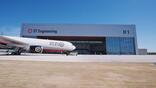
One major project of the past year was CSAT setting up a new aircraft painting hangar at its base close to Prague’s Václav Havel Airport. The hangar opened at the end of last year and CSAT inducted its first aircraft in February, with a capacity for 25 aircraft annually. It is located at “Hangar S,” which CSAT constructed in 2018 and used for line maintenance activities. To date, Dobersky said it has finished five paint projects, with the first four being purely paint jobs despite originally envisaging the facility being set up for base maintenance activities.
A key driver behind the paint facility is CSAT seeking more activity in the summer months, a time when its base maintenance hangars are less full in comparison to the busier winter period and the work will typically focus on government or cargo aircraft. Dobersky said conducting transitions for leasing companies was also an important factor in the paint hangar’s creation. “In the past, the aircraft would have to fly away for painting and then return, which added extra costs, and the overall cost of the project became too much. Since announcing the hangar, we’ve had projects come to us because we had the capability.”
Dobersky has set a five-year return on investment period for the €3 million ($3.3 million) it has invested into converting the facility into a paint shop by installing air conditioning and other necessary equipment in the hangar. CSAT’s wheels and brakes business is also performing strongly, and Dobersky said it is considering adding second shifts at its shop in Prague to accommodate more work.