This article is published in Aviation Week & Space Technology and is free to read until Oct 11, 2026. If you want to read more articles from this publication, please click the link to subscribe.
Opinion: Technology Changes MRO Efficiency—Not Who Is Accountable
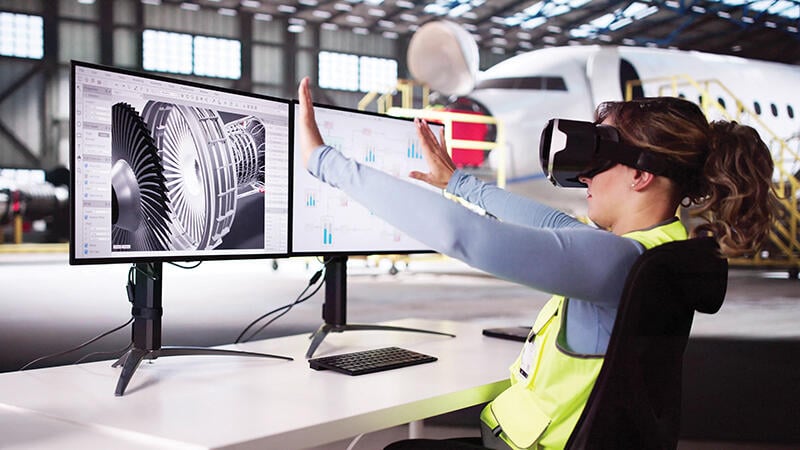
New technicians are likely to be comfortable using technology in MRO workplaces.
The panel I moderated at the June FAA-EASA International Aviation Safety Conference, “Digital Maintenance and the Aviation Supply Chain: From Data to Deployment,” explored how maintainers, design and production approval holders, operators and regulators are incorporating new technologies—including artificial intelligence, digital tools and automation—and their effect on continued airworthiness, safety and oversight.
The panelists were experts from government and industry, representing the FAA and European Union Aviation Safety Agency (EASA), of course, as well as Heico and the International Air Transport Association. As moderator, my task was to gather a lot of interesting content into a single theme. At an event always attentive to technology, the panel was generally optimistic about these tools and the opportunities they represent.
New technologies are reshaping aircraft maintenance and the supply chain in exciting ways. Technology is helping us move from reactive to predictive maintenance. That includes artificial intelligence (AI), digital twins (virtual replicas continuously updated with real-world operational data) and Internet of Things connections that share data among aircraft parts and monitors on the ground. Quicker analysis of that data with AI tools will enhance safety.
The advent of new technologies is making our workforce more efficient. Drones can inspect aircraft more rapidly and safely than people can. Augmented reality can reduce technician training time and errors. Electronic manuals enable efficient searches and review of instructions while significantly reducing the number of trees this industry destroys.
Additionally, technologies can make the supply chain more resilient. Additive manufacturing reduces the need to stockpile stores. Predictive data can help better anticipate needs and demand for parts. Electronic records will make it easier to share data with suppliers, customers and regulators. Blockchain will improve traceability.
The panelists agreed that there are significant opportunities to enhance efficiency and safety, but each new development comes with risks and challenges. Technology is not the change in and of itself; humans are using technology to change the MRO industry. As the workforce continues to experience generational turnover, younger entrants are expected to be more comfortable and confident about using new technology in new ways.
Changing tools might make workers more efficient, but knowledgeable professionals remain essential. We need to stay focused on the human element and remember that we are not just in charge of deciding what technology is being used—we are also accountable for how it is used.
Whatever the technology, we humans are always ultimately responsible for the safety outcome.
Christian A. Klein is the managing member of Obadal, Filler, MacLeod & Klein, overseeing the firm’s policy advocacy practice. He represents trade associations as a registered federal lobbyist and provides strategic communications and legal counsel services to clients. He is executive vice president of the Aeronautical Repair Station Association.