This article is published in Aviation Week & Space Technology and is free to read until Jan 01, 2026. If you want to read more articles from this publication, please click the link to subscribe.
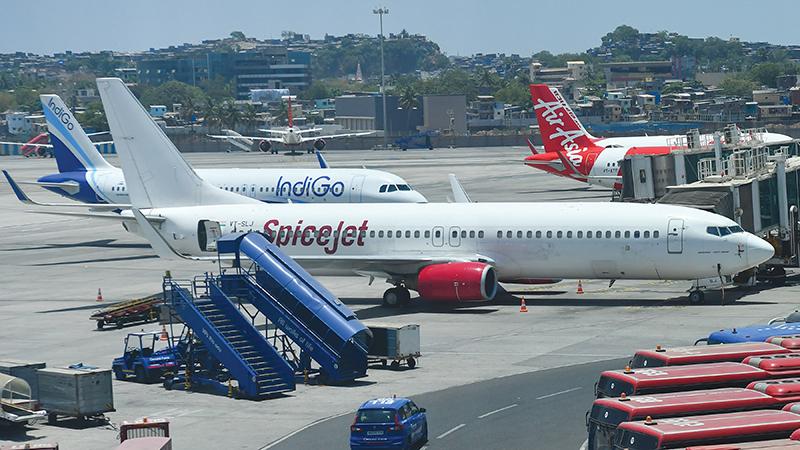
IndiGo’s average fleet age is about a decade younger than that of SpiceJet.
India’s Directorate General of Civil Aviation has proposed amending its rules for importing used aircraft as the country’s carriers seek fleet options amid global supply chain delays.
Under the proposed changes, pressurized aircraft up to 20 years old could be imported. That is two years beyond the maximum age of 18 under the existing rule. In addition, if further performance and maintenance safeguards are in place, the rule would raise the unpressurized aircraft maximum age to 25 years.
If implemented, these changes could reshape how Indian airlines manage fleet acquisition and maintenance over the medium to long term.
Indian airlines already have large aircraft backlogs, and now they face pressure to find alternative sourcing options, such as leased or secondhand aircraft to fill the gaps due to production delays. The increased age limit should give airlines more flexibility to tap into a broader used-aircraft market.
To prevent the purchase of aircraft that have been grounded for extended periods, the draft Civil Aviation Requirement proposes requiring aircraft to have flown at least 50 hr. in the past six months.
Airline Perspective
Examining Indian airlines’ fleet composition shows the potential effect of the rule changes.
Air India operates roughly 190 aircraft with an average fleet age of about 8.1 years. Some 35% of the current fleet, or 66 aircraft, are more than 10 years old; they include Boeing 777s and 787s and Airbus A321s.
IndiGo has one of the youngest fleets in the world, with an average age of 4-5 years. Only a small fraction of its aircraft are older; its most mature Airbus A320ceo is about 19 years. IndiGo has less need in the short term to rely on older imports, but it might still benefit strategically in constrained markets.
SpiceJet’s fleet is older, with an average age at approximately 14.4 years, making the carrier more reliant on importing older aircraft or scheduling heavier maintenance as parts of its renewal strategy. While IndiGo is a younger airline, both Air India and SpiceJet are exposed to asset age risk, especially because some of their aircraft might approach or exceed the new import thresholds.
Airlines typically experience several advantages from a higher age cap, including expanded sourcing opportunities and enhanced leasing flexibility. The increased age limit provides them with greater freedom to lease or acquire used aircraft as interim capacity solutions. This approach can help address route disruptions or capacity shortfalls during periods of delivery delays from OEMs.
Older aircraft typically demand more frequent inspections, replacements of life-limited parts and more intensive predictive maintenance. In the near term, airlines will need to ensure robust records and traceability of parts and components, implement tighter inspection schedules, secure spare parts availability (particularly for models nearing end-of-support status) and deploy more sophisticated condition-monitoring systems.
Even though used aircraft may come at lower capital cost, the savings can be eroded by increased maintenance, lower fuel efficiency and higher downtime. Some older airframes may not include upgrades such as avionics and cabin retrofits. So airlines should assess the operational cost uplift very carefully.
The Longer Term
One of the most important long-term considerations of a higher age limit is increased demand for maintenance services, as a greater proportion of older aircraft in service will drive requirements for frequent heavy maintenance procedures (C/D checks), structural repairs and component overhauls. MRO providers should prepare for increased volume in fatigue and corrosion inspections, engine shop visits, landing gear refurbishment and issues involving avionics obsolescence.
This could be an opportunity but also a capacity challenge for the Indian MRO ecosystem to scale up.
Given that many Indian airlines have large orderbooks, the extended import window might act as a buffer rather than a long-term model. Investments will likely tilt toward modern aircraft like A320neos because of fuel efficiency, emissions and customer preference. Yet the buffer is expected to help manage transitions more smoothly.
For operators with aging fleets like Air India and SpiceJet, the change can provide some breathing room. For IndiGo, which operates a younger fleet, the effect is less urgent but remains a strategic option. In all cases, airlines must balance short-term sourcing flexibility with long-term cost and safety imperatives.
Still the MRO sector will need to gear up for heightened demand in overhaul, structural checks and life-cycle services tied to older imported aircraft. The shift offers opportunities to players that can maintain high standards, reliability and compliance as regulators heighten scrutiny.