This article is published in Aviation Week MRO part of Aviation Week Intelligence Network (AWIN), and is complimentary through Mar 20, 2026. For information on becoming an AWIN Member to access more content like this, click here.

Tackling Aircraft Recycling’s Persistent Roadblocks

aircraft
Credit: AELS

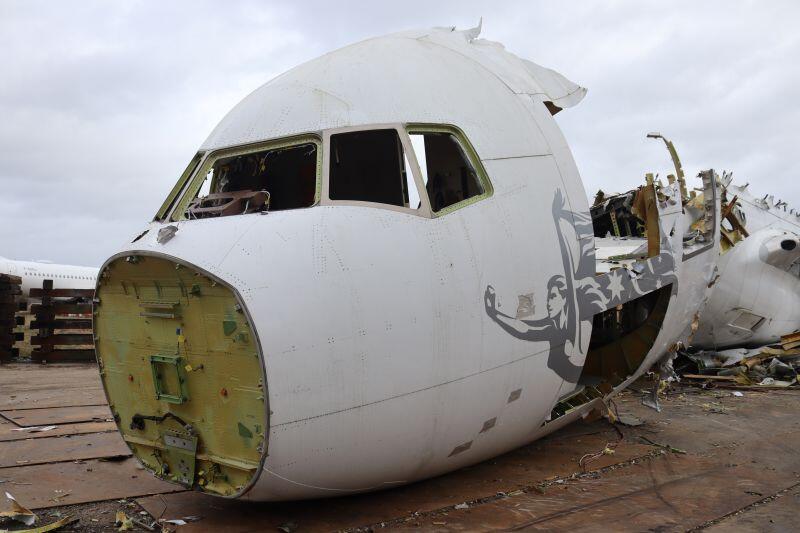
Much of the aviation industry’s sustainability efforts have focused on reducing carbon emissions by using lighter materials and sustainable aviation fuel (SAF). A recently formed nonprofit foundation wants to shift attention to the environmental benefits that could be achieved through greater investment in recycling end-of-life aircraft.

Aethos was founded in 2023 by Derk-Jan van Heerden, former president of the Aircraft Fleet Recycling Association and founder and CEO of aircraft disassembly specialist Aircraft End-of-Life Solutions. Although he stepped away from his previous roles due to a brain cancer diagnosis, van Heerden wanted to continue his work to “help the aviation world score an environmental performance step forward—one that can happen today instead of one that will take many years.”

The organization is focused on building a bridge between the aviation industry and the recycling and research sectors to improve these processes. Van Heerden tells Aviation Week that aircraft recycling must still overcome obstacles such as processing carbon-fiber reinforced polymer materials, navigating legislation for transporting waste and achieving true upcycling.

Currently, van Heerden says most scrap material from aircraft is downcycled, such as processing aluminum for other products that do not have the same stringent requirements as aviation.

“Upcycling is very difficult. There are some who use the word ‘upcycling’ if they turn a piece of an aircraft into a hanger or keychain, but that is not upcycling—that is repurposing,” he says, although he notes that “it’s way better than incinerating or landfilling.”

Determining what is considered waste from a regulatory standpoint and who is responsible for its handling is another big challenge the industry faces, says van Heerden. “In Europe, there is a reason why the ‘waste’ definition starts at the moment that somebody decides that the airplane is going to stop being an airplane. It’s before the last flight, so if an airline is based in a European country and they want to fly to a location in another country where they can disassemble it, in theory, that flight could be considered a waste transport flight,” he says. Beyond this, he poses the question of which party is considered responsible for making sure the end-of-life aircraft is handled correctly.

“Is it the OEM that manufactured the aircraft 30 years ago? Is it the operator that flew the aircraft for 20 years but not the last 10 years? Is it the operator that flew it for the last time? Is it the company that bought it for spare parts and then donates or sells the remaining airframe to a scrapper?” van Heerden says. Regardless, he says the party transporting the aircraft should have the necessary information on which materials are part of the aircraft and how they can be handled safely and appropriately.

Since Aethos’ launch, the foundation has sponsored several projects to tackle these types of challenges. As battery technology becomes more prominent with the advent of electric aircraft, Aethos researched what happens to batteries removed during aircraft maintenance and disassembly, and whether they are processed in a circular manner. The project examined the various recycling processes used for different battery types based on their composition and what types of recoverable materials are extracted.

Aethos concluded that recycling technology must evolve to sustainably recycle certain battery types and reduce waste generated from current processes.

Aethos is also working with the Netherlands Aerospace Center on a project to address the handling of hexavalent chromium in painted aluminum, which poses environmental and health risks and limits safe handling and transportation of scrap material. While the aviation industry has now reduced or eliminated most hexavalent chromium, van Heerden says Aethos wants to focus on “finding solutions for choices made decades ago.”

The project, which will run through 2027, aims to determine hexavalent chromium exposure risk at each stage of the scrap handling process and investigate reduction methods. The project partners will also evaluate current Dutch and European Union regulations around chemical restrictions for any gaps or discrepancies.

Van Heerden is also seeking industry support for Aethos to help it continue its mission after his death. “I’m hoping that aviation is not only focused on money but also focused on showing the world that we can also improve on environmental performance,” he says.

“This is an area where we can easily make steps, but that does require some extra funds. If a seller [of a used aircraft] is only looking for a person who pays the most money, some [buyers] can pay more because the local environmental regulations [don’t require them] to meet certain environmental performance on how to deal with those materials that are left. I hope that with our story, we can shake them up and get them to consider not just ‘Who is going to buy my airplane and what are they paying for it?’ but also, ‘What are you going to do with materials you can’t reuse? Can you explain to me what your recycling rate is and what percentage you can reach?’”
 

Lindsay Bjerregaard

Lindsay Bjerregaard is managing editor for Aviation Week’s MRO portfolio. Her coverage focuses on MRO technology, workforce, and product and service news for MRO Digest, Inside MRO and Aviation Week Marketplace.