This article is published in Aviation Week MRO part of Aviation Week Intelligence Network (AWIN), and is complimentary through Feb 25, 2026. For information on becoming an AWIN Member to access more content like this, click here.

Pegasus Adds Maintenance Capacity In Turkey

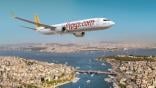
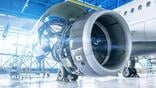
Pegasus aircraft
Credit: Airbus

Turkish LCC Pegasus Airlines has increased its in-house narrowbody maintenance capacity by completing the first phase of building new multi-aircraft maintenance facilities in Istanbul.

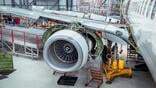
The first two hangars at Sabiha Gökçen Airport in the city have space for five narrowbody aircraft simultaneously and can provide line and base maintenance services. Aircraft covered in the maintenance approval include Boeing 737 NGs and Airbus A320/A321 Ceo and Neo aircraft.

In addition, the airline has opened a paint hangar to complement its maintenance facilities. The hangars took around one year to complete. Pegasus disclosed it has invested $40 million in the first phase of its maintenance center project.

The first-phase hangars support line maintenance, engine and landing gear replacements, avionics and structural modifications, base maintenance procedures, full aircraft painting and livery design and coating, as well as component maintenance and training activities.

In the last quarter of 2026, an additional base maintenance hangar for five more narrowbody aircraft will commence operations. In the longer term, in phase three, this hangar will be expanded to accommodate 10 narrowbody aircraft over the next 4-5 years, marking the completion of the aircraft maintenance center project.

In a statement released Feb. 18, Pegasus said the hangars will aim to “optimize time and resources in maintenance processes, enhance operational efficiency, and reduce maintenance-related aircraft downtime.”

“Our new hangars will not only enable us to manage the maintenance needs of our growing fleet more effectively, but also accelerate our transformation focused on digitalization and efficiency,” Pegasus Airlines CEO Güliz Öztür said. “By managing our aircraft maintenance processes more quickly and in a more optimized way, we aim to provide our guests with an ever more seamless travel experience.”

As part of its digital investments, in line with broader digital maintenance and sustainability strategies, Pegasus said the new hangars will deploy paperless maintenance processes, a digital warehouse and tool management system, unmanned personal protective equipment dispensers, and artificial intelligence-driven occupational health solutions. The carrier has also invested in preventive maintenance and data analytics systems to anticipate maintenance planning needs.

Pegasus has previously stated its intention to build up its own internal maintenance capacity to address the lack of slot availability and ongoing supply chain challenges as it moves forward with a large fleet expansion.

The airline has experienced challenges with the delivery of specific aircraft and engine types, which have led to difficulties in planning its summer schedules, typically done 6-7 months in advance of the peak travel season, when it commences selling passenger tickets. Pegasus stated that Airbus’ inability to source engines for its A320neo-family aircraft—for which Pegasus was a launch customer in 2016—has impeded that planning.

As of February, Pegasus operates 127 aircraft, the majority of which are A320ceo, A320neo, and A321neo variants; it also has a small fleet of 737-800s. The airline abandoned plans for an all-Airbus fleet last year, opting to continue its mixed-fleet business model.

In late 2024, the airline ordered up to 200 737-10 aircraft—comprising 100 orders and 100 options. Deliveries of the initial 100 -10s are expected to begin in 2028 and continue through 2035. Pegasus also anticipates delivery of 44 A321neos.

James Pozzi

As Aviation Week's MRO Editor EMEA, James Pozzi covers the latest industry news from the European region and beyond. He also writes in-depth features on the commercial aftermarket for Inside MRO.