This article is published in Aviation Week MRO part of Aviation Week Intelligence Network (AWIN), and is complimentary through Jun 15, 2026. For information on becoming an AWIN Member to access more content like this, click here.

ExecuJet Sees Rising Workload At New Kuala Lumpur Facility

Dassault Falcon 6X
Credit: Nigel Prevett

Growing demand for business jet maintenance in Asia is yielding increased work for ExecuJet MRO Services Malaysia, and it is also spurring the company to expand into new markets and capabilities.

“I think the [demand] trend is very healthy,” said Ivan Lim, VP-Asia for parent ExecuJet MRO Services. He cites a report from Asian Sky Group showing the business jet fleet in Asia has been climbing for the past two years, which leads to more maintenance needs.

“Over the years, the market [has] matured and operators want in-region support,” Lim said. “You don’t have to fly out of the region any more to get annual base maintenance done, and I think the Asia-Pacific MRO and bizjet market is sustaining that very well.”

The advantage of having MRO operators within the region is underlined when fuel costs are higher, making repositioning aircraft more expensive.

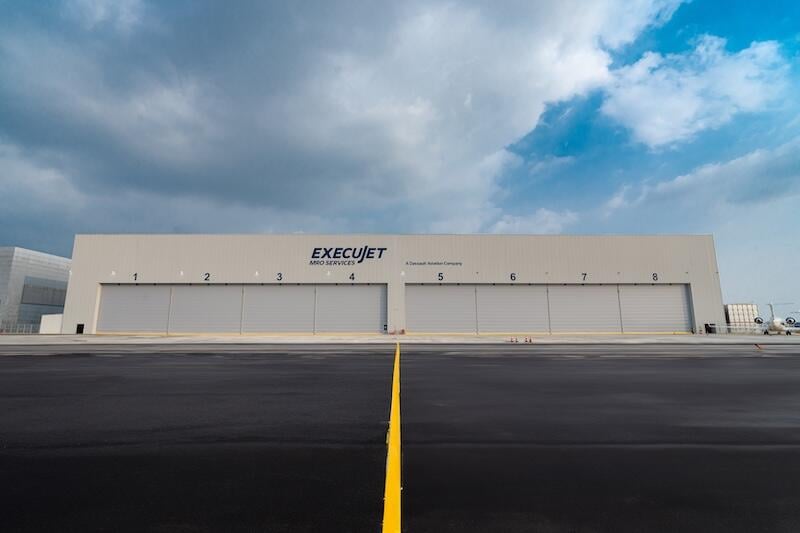
ExecuJet Malaysia is well-positioned to tap into the rising demand, as it moved into a new 149,500-ft.2 facility at Kuala Lumpur’s Subang airport in 2024. ExecuJet MRO Services Group, which has other locations around the world, is owned by Dassault Aviation.

The Malaysian operation was handling 30-35 maintenance events per month about a year ago, and now the total is in the 50s, Lim said. In addition to Dassault aircraft, ExecuJet handles aircraft from other manufacturers such as Gulfstream and Bombardier.

The hangar—which can accommodate 15 business jets at once—is operating at about 80% capacity, so there is “room to grow a little bit further,” Lim said. ExecuJet Malaysia is not yet looking to expand its footprint, but instead is focused on maximizing the capacity in its existing facility.

While demand from China has not been growing well, Southeast Asia has been much stronger, Lim said. Vietnam in particular has been improving as a source market for ExecuJet over the past few years.

There are some untapped markets that ExecuJet Malaysia is looking at, Lim said. The company is aiming to gain approvals to work on aircraft from Papua New Guinea, as there are business jet operators there supporting the government or mining operations.

Another market of interest is Central Asia, where ExecuJet is looking at a couple of countries including Kazakhstan, Lim said.

As a Dassault-owned facility, there has been an increase in heavy checks for Falcon jets, Lim said. There has also been growth in support for Gulfstream aircraft, as there have been more pre-owned Gulfstreams coming into the region.

In terms of new capabilities, ExecuJet will eventually look to add approvals to work on new aircraft such as the Falcon 10X which is in development. The company is approved to carry out line maintenance on the Falcon 6X, but will be seeking to add heavy maintenance for this aircraft.

ExecuJet will also look to add capability for new aircraft types from other OEMs as requests from operators increase. One such example is Bombardier’s Global 7500.

Lim notes that Subang is a favorable operating location, as it has always been “business aviation friendly” with no restrictions for business jets. It also has strong logistics infrastructure, and Malaysia has a talent pool of skilled workers.

There is plenty of potential for broader MRO industry growth at Subang, with lots of land and facilities available, Lim said.

Adrian Schofield

Adrian is a senior air transport editor for Aviation Week, based in New Zealand. He covers commercial aviation in the Asia-Pacific region.