This article is published in Aviation Week MRO part of Aviation Week Intelligence Network (AWIN), and is complimentary through Jan 02, 2026. For information on becoming an AWIN Member to access more content like this, click here.
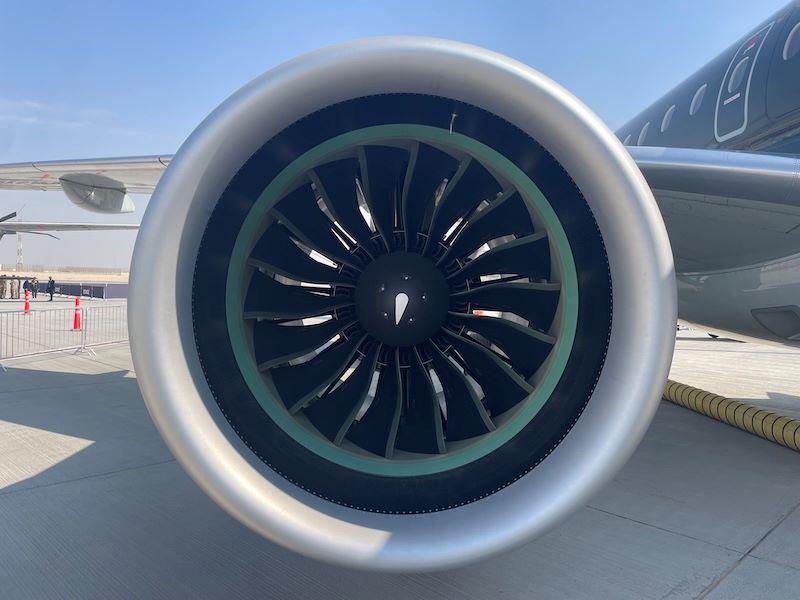
Pratt & Whitney 1900G engine, which powers Embraer E190/E195-E2 aircraft
New generation narrowbody engines are unlikely to match the durability of their predecessors within the next five years, although operators will reap other advantages to ensure that demand for new technology stays strong, according to a leading engine lessor.
“The GTF and Leap engines are unlikely to reach the time-on-wing intervals of their predecessors within the next five years as they remain constrained by LLP limits and thermal stresses,” says Darren Wormald, Chief Operating Officer (COO) of Engine Lease Finance Corporation (ELFC), in an interview for Aviation Week’s Engine Yearbook 2026.
“However, they are expected to stabilize operationally, which is ultimately more critical for reliability and planning,” Wormald continues. “The fuel efficiency benefits these engines deliver will offset the shorter maintenance intervals, preserving their economic attractiveness.”
Wormald notes that leasing demand for the CFM International Leap and Pratt & Whitney GTF is already several times higher than for previous-generation models, which may be down partly to limited shop visit capacity.
“Improvements in shop visit throughput for narrowbody engines has been limited, primarily due to the persistent supply chain constraints that have hindered OEMs’ ability to plan and control turnaround times,” Wormald says. “There continues to be ongoing in-service issues on new-generation engines and a growing concern that the first wave of heavy maintenance visits approaches whilst shops are already stretched coping with the existing backlogs.”
Ireland-based ELFC does not expect huge improvements in this area next year, as short-term fixes rather than systemic solutions will mean, at best, only gradual gains.
“This piecemeal approach means OEMs and MROs continue to face vulnerability to disruptions, as holistic fixes for the entire supply chain are not being developed,” Wormald says.
For the full interview with the ELFC COO—plus more engine finance interviews, reports and opinions—see the forthcoming Engine Yearbook 2026.