Green Taxi Aerospace is advancing its Zero Engine Taxi (eTaxi) retrofit for Embraer’s E175 aircraft, with a detailed FAA certification roadmap that aims to culminate in a supplemental type certificate (STC) by the end of 2027.
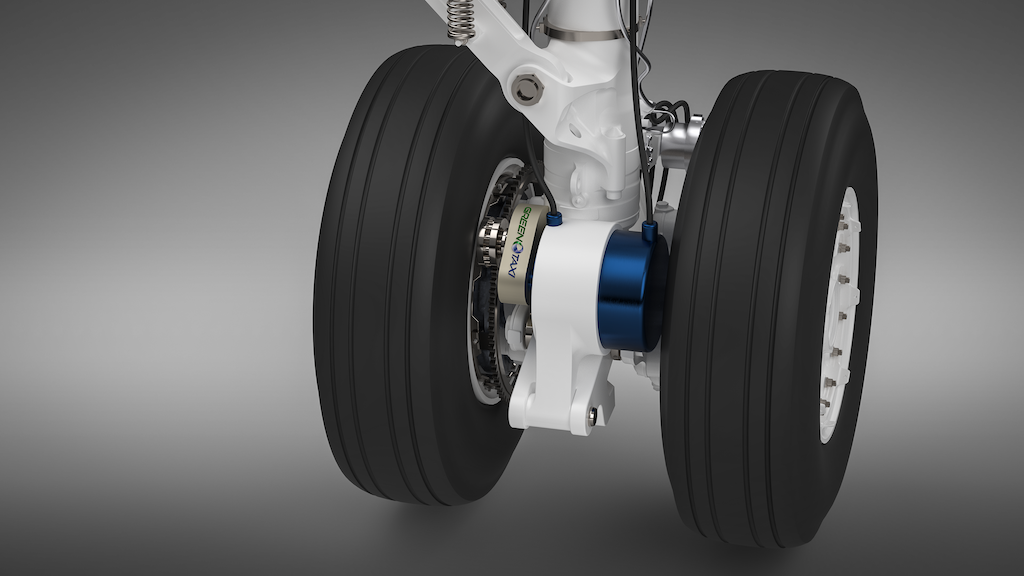
The electric taxiing solution, powered by the aircraft’s auxiliary power unit (APU) and driving motors installed on the landing gear, is expected to yield substantial fuel and emissions savings during ground operations. The certification pathway is built around a sequence of technical milestones that will determine when operators can begin adopting the technology.
The retrofit system, which enables aircraft to taxi without using main engines, is projected to save 80,000 gallons of fuel and $250,000 annually per aircraft, according to internal calculations seen by Aviation Week.
According to Green Taxi Solutions’ president, David Valaer, the FAA certification roadmap has been structured into a seven-step process. The first step will see StandardAero submit the initial certification plan by the third quarter of 2025. This will be followed by FAA approval of that plan before year’s end, establishing the precise certification requirements that will guide subsequent work.
By mid-2026, the program is expected to achieve completion of detailed system design drawings, with the corresponding FAA approval of a full design and data package by the fourth quarter of the same year. This will allow the company to define the system as a ‘type design,’ which is the benchmark for producing conforming hardware.
The creation of a conforming prototype is slated for late 2026. That prototype will undergo installation and extensive ground testing on the E175 by the second quarter of 2027. If the roadmap holds, the program will culminate with the issuance of the STC from the FAA by the fourth quarter of 2027. Parallel approvals from EASA and Brazil’s ANAC are also anticipated to support international deployment.
The retrofit process itself is designed to minimize disruption to aircraft systems and weight distribution. As Valaer explains, the eTaxi system adds less than 300 lbs. and is installed in a way that will not affect the aircraft’s balance. Over time, airlines may choose to carry less fuel for taxiing, which would cancel out the added weight--making the system’s impact on overall aircraft weight essentially zero.
Green Taxi is pursuing concurrent certification for both the E175 and E170 platforms, which share the same type certificate data sheets. “Our exact same system will be certified for the E-170 and E-175 concurrently as per these timelines,” Valaer confirms. This approach simplifies the retrofit strategy and broadens the potential operator base.
While the company has not disclosed specific engagement with Embraer or third-party MROs, the retrofit appears to be designed with type-specific adaptability in mind. Valaer emphasizes that the system is identical across both aircraft models, suggesting minimal variation in installation procedures.
As the industry continues to explore operational efficiencies and sustainability gains, Green Taxi’s eTaxi retrofit could offer a tangible solution for regional operators. However, the path to certification remains complex, and the next 24 months will be critical in determining whether the system can meet FAA requirements and operator expectations.

Related Content