This article is published in Aerospace Daily & Defense Report part of Aviation Week Intelligence Network (AWIN), and is complimentary through Jul 12, 2026. For information on becoming an AWIN Member to access more content like this, click here.

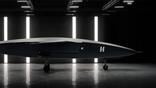
Helsing Targets Electronic Attack Europa CCA For 2031

Stephanie Lingemann

Helsing's Stephanie Lingemann at ILA Berlin.

Credit: BillyPix

BERLIN—Helsing has unveiled an electronic attack version of the in-development CA-1 Europa collaborative combat aircraft (CCA), promising to have the escort jammer ready for service in 2031.

The system would build on the CA-1KA strike version Helsing is also developing and plans to flight-test starting next year, says Stephanie Lingemann, head of air domain at the startup.

Those flight trials, starting in March, involve an optionally piloted configuration that would be flown crewed initially to address local airspace restrictions. Autonomous flights elsewhere in Europe would occur before the end of next year, she said at the ILA Berlin air show.

The first aircraft is in build, with Helsing targeting operational readiness for the production configuration in 2029.

The CA-1EA, for electronic attack, would fly in a pre-series configuration in 2028. An operationally representative system would fly a year later with the goal of having the system fully validated for customer use two years later, she says.

German defense electronics company Hensoldt would provide the Kalaetron electronic attack jammer, says the company’s Chief Digital Officer Sven Heursch. Hensoldt would also provide the electronic countermeasures package for the CA-1KA and the CA-1EA, he says, as well as other sensors. The strike configuration, for instance, would provide a ground moving target indicator radar to spot targets.

The Luftwaffe has expressed interest in fielding a range of airborne electronic attack systems, including an escort jammer to fly along other CCAs or crewed fighters, a standoff and a stand-in system.

While the strike configuration of Europa would have a payload capacity of 500 kg (1,102 lb.), the jammer version would still preserve 250 kg of payload for short-range missiles to take out enemy air defenses. The system would feature a second generator for powering the jammer that could thwart adversary air defenses at a range of up to 100 km (62 mi.), Lingemann said.

One jammer could escort a single CCA to protect it through to a target. When escorting a larger crewed fighter, the ratio would be two crewed aircraft such as a Eurofighter, protected by four CCAs. Because the CCAs are slower than the crewed platforms, they would fly ahead to electronically create a corridor to keep the piloted aircraft safe.

Robert Wall

Robert Wall is Executive Editor for Defense and Space. Based in London, he directs a team of military and space journalists across the U.S., Europe and Asia-Pacific.