This article is published in Aerospace Daily & Defense Report part of Aviation Week Intelligence Network (AWIN), and is complimentary through Jul 12, 2026. For information on becoming an AWIN Member to access more content like this, click here.

Rohde & Schwarz Eyes Flight Trials For New Multi-Domain Comms Network

rohde and schwarz promo pic
Credit: Rohde & Schwarz

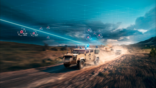
BERLIN—Rohde & Schwarz is looking to begin flight trials for its new multi-domain secure communications network architecture as early as next year, with the goal of having key elements customer-ready by the end of the decade.

The German defense electronics specialist a few years ago embarked on a push to explore communications systems for next-generation combat to provide enhanced security and throughput and deal with the increasing electronic warfare (EW) efforts that make the digital environment heavily contested. It has now refined its approach into what it calls the Multi-Domain Directional Communications System.

“You can really apply all the EW ideas of low probability of intercept, low probability of detection, you can really tune who is going to see you, who is going to hear you. You can hide away,” Andreas Domann, vice president of multi‑domain communications at Rohde & Schwarz, said in an interview. “If someone jams you, most of the time it doesn't bother you, because you just ignore it because it's directional communication with a fairly small beam.”

Focusing the beam also provides communication range benefits, he added.

Among the applications in the air domain is to allow stealthy fighters to communicate with each other without the risk of detection, or to network crewed and swarms of uncrewed platforms to share information. The goal is to have abundant bandwidth and a self-healing network, Domann said.

As part of the Franco-German-Spanish Future Combat Air System program, the partners have pledged to build such a combat cloud to link various platforms. Although the fighter portion of FCAS is in doubt, French and German officials have said they want to preserve the networking concept.

To underpin the concept, Domann said Rohde & Schwarz has made a significant investment in the technology that is key to making the system work, including heavy use of active, electronically steered antennas. Each platform will likely need several to allow full coverage.

Among the challenges to overcome are having people join and exit the network, verifying they are legitimate and sharing information across the users. The company would also provide a communications subsystem to manage the entire network and its links with other communications systems operating, for instance, in Ku, C and L band, as well as UHF and VHF radios. The company will not integrate the communications architecture into the aircraft mission system to reduce the integration burden.

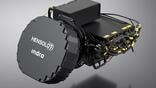
At the ILA Berlin air show, Rohde & Schwarz is introducing its Network Multipoint Array Communications System brand that aims to make this all happen. The various devices are scalable, depending on the size, weight and power requirements of different platform types. All systems will operate on the same waveform.

The company has validated the technology in a laboratory environment and demonstrated it to the German government. “We are running full steam,” Domann said, with flight demonstrations in 2027 and real products about two years later, with demonstrators and prototypes in between, well ahead of the timeline for the German new-generation fighter, which might feature embedded antennas.

Another feature will be the ability to swap range for bandwidth. For instance, Domann said, the system may have almost 1 megabit per second of bandwidth at 200 nm, while at around 30 nm the throughput may be 50-60 megabits.

The company is also looking at applying this to the space domain, as well as to land and maritime arenas.

Robert Wall

Robert Wall is Executive Editor for Defense and Space. Based in London, he directs a team of military and space journalists across the U.S., Europe and Asia-Pacific.