This article is published in Aerospace Daily & Defense Report part of Aviation Week Intelligence Network (AWIN), and is complimentary through Jul 15, 2026. For information on becoming an AWIN Member to access more content like this, click here.
NATO Allies Commit To Saab GlobalEye, Airbus A400M, Triton UAS
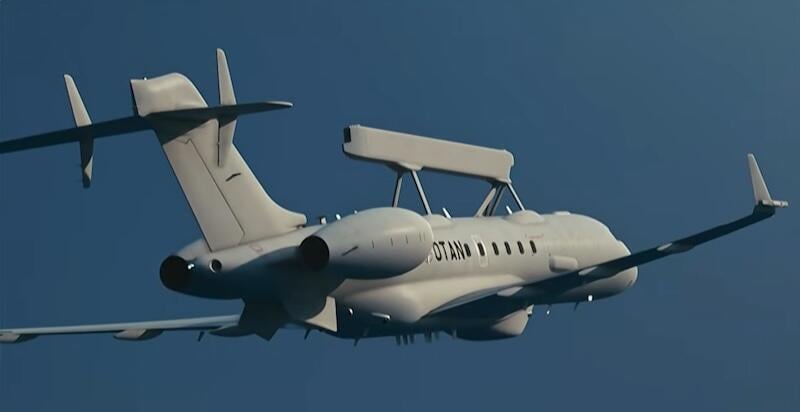
A NATO Saab GlobalEye.
Credit: Saab
NATO allies have committed to strengthening key support capabilities with plans to field Saab GlobalEye airborne early warning systems and Northrop Grumman MQ-4 Triton uncrewed air systems, while working collectively on Airbus A400M transports.
NATO Secretary General Mark Rutte said the alliance members would jointly buy up to 10 GlobalEye systems. The core members of the Alliance Future Surveillance and Control program supporting the effort include Belgium, Canada, Denmark, Germany, Latvia, Lithuania, Luxembourg, the Netherlands, Norway, Romania and Sweden.
The fleet is due to replace the alliance’s Boeing E-3A airborne early warning and control system. NATO initially planned to buy Boeing E-7s but changed course after the U.S. pulled out of the collective purchase.
“This will ensure we keep NATO’s owned and operated surveillance and early warning capability strong and credible for decades to come,” Rutte said on the opening day of the NATO summit in Ankara.
Rutte was eager to underscore the transatlantic nature of GlobalEye at a time when the relationship with Washington has been strained. The alliance’s new airborne early warning system is not just a Canadian platform since it contains U.S. content, too, he noted.
“GlobalEye is a testament to partnerships,” Swedish Prime Minister Ulf Kristersson said at the Defense Industry Forum during the NATO summit.
Swedish GlobalEyes bought separately will be operating in support of the alliance from next year, he said, while noting that Canada and France were also buyers of the system outside of the alliance. NATO joining, he added, “will strengthen our collective ability to deter aggression.”
Saab said it would now proceed to formal negotiations with the NATO Support and Procurement Agency to finalize the contract.
Deliveries of the GlobalEyes to the alliance could start as early as 2030, Saab CEO Micael Johansson said, but that depends on whether “NATO contracts us quickly.” He said GlobalEye costs between $400 million and $450 million per aircraft.
Saab would have to expand its capacity to produce the GlobalEye platform, Johansson added, further leaning on its existing facilities in Linkoping and Gothenburg, but also through a new industrial arrangement in Canada and with Sabena Technics in France.
In addition, several other countries launched the Crewed Airborne Warning Initiative, a multi-nation effort to field additional GlobalEyes or other systems. Participants include Germany, Denmark, Finland, France, Poland, Spain and Turkey.
To further strengthen alliance intelligence gathering, Denmark, Finland, Germany and Norway are spearheading a NATO effort to buy five Northrop Grumman MQ-4 Tritons.
The MQ-4s will join NATO’s Intelligence, Surveillance and Reconnaissance (ISR) Force and operate alongside the NATO Alliance Ground Surveillance fleet of ground surveillance radar-equipped RQ-4 Global Hawks based at Sigonella AB in Italy.
Those, Rutte said, “will help us detect threats early, protect our sea lines of communication and support operations in demanding regions, such as the high north.“
The alliance also is looking to plug key logistics gaps. Belgium, Croatia, France, Poland, Spain, Turkey and the UK are supporting a collective fleet of Airbus A400Ms, Rutte said.
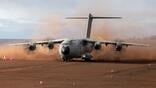
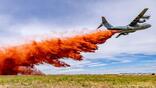
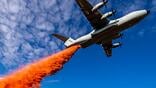
Airbus said the shared fleet of A400Ms would provide Europe with specific capabilities comprising more than just air transport, like air-to-air refueling, disaster relief, medical evacuation and firefighting.
The development builds on the success of the Multinational MRTT Fleet (MMF) flying the A330 Multi-Role Tanker Transport. The alliance also is using the gathering to tout its continued expansion of the collective tanker fleet, with the delivery of the 10th of 12 planned A330s.
Finland also used the summit to formally join the MMF program, following in the footsteps of Denmark and Sweden, which signed up earlier this year. Other members of the MMF are Belgium, Czech Republic, Germany, Luxembourg, the Netherlands and Norway.