This article is published in Aerospace Daily & Defense Report part of Aviation Week Intelligence Network (AWIN), and is complimentary through Aug 24, 2026. For information on becoming an AWIN Member to access more content like this, click here.

Patriot Builders in Early Stages Of Ukraine Production Planning

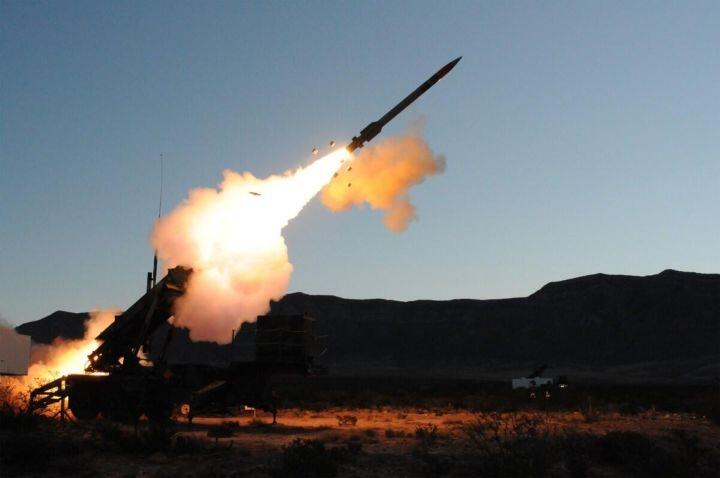
Patriot PAC-3 MSE

Patriot PAC-3 MSE.

Credit: U.S. Army

FARNBOROUGH, England—The two prime companies that produce Patriot interceptor missiles are in the early stages of determining how they could be built in Ukraine, just weeks after President Donald Trump made the promise, but they warn it is far too early for a plan to come together.

Trump, speaking with Ukrainian President Volodymyr Zelenskyy in Turkey, said, “We're going to give a license to you to make Patriots. That's pretty cool, right? This way you can't complain that we're not giving them enough.”

Ukraine has relied heavily on the high-end interceptors to counter Russian attacks, though the expensive missiles are also in high demand in the U.S. and by several other countries.

In conversations with reporters at the Farnborough Airshow, both RTX and Lockheed Martin said they are in talks with the U.S. government on how this could come to fruition.

“All I could say is it's early, and we're having discussions with the U.S. Army and, basically, we're going to support the U.S. Army and the administration on what they want to go do,” says Tim Cahill, president of Lockheed Martin Missiles and Fire Control. “So, I believe they're evaluating options, and we will support each of those options and do what needs to be done based upon that. But it's just too early to tell.”

Lockheed Martin manufactures the Patriot Advanced Capability-3 Missile Segment Enhancement (PAC-3 MSE) interceptor, along with a seeker provided by Boeing. The company also announced on July 20 that it is creating the lower-cost PAC-3 Advanced Capability Effector (ACE), targeting a cost of less than half that of the PAC-3 MSE.

Cahill says the plan is to produce the new missile in Europe, or in other partner nations, using components that are less complex than those used in the PAC-3 MSE. This includes finding a new provider for the missile's seeker. Cahill declined to speculate whether ACE could be connected to Ukraine's license to build Patriots.

RTX also is in early discussions on how it could be involved, as the company builds both the launcher and the PAC-2 Guidance Enhanced Missile-Tactical (GEM-T) interceptor. Tom Laliberty, Raytheon's president of Land and Air Defense Systems, told reporters July 20 that the process has just begun and the company will follow the U.S. government's lead.

Laliberty says the company has different levels of its supply chain worldwide, including suppliers that build components, maintenance facilities where interceptors are updated and recertified, and all-up-round production.

“With Ukraine, working with the United States government, we are working on all three of those kinds of lines of effort to determine what is feasible and what is best for Ukraine,” he says. “That process has just started, and we'll of course be following the United States government's lead.”

Raytheon has been awarded a contract to build 600 PAC-2 GEM-T missiles for Ukraine, with some of that production going to its joint venture with MBDA Germany, COMLOG, and the rest being built in the U.S.

Brian Everstine

Brian Everstine is the Pentagon Editor for Aviation Week, based in Washington, D.C.