This article is published in Aerospace Daily & Defense Report part of Aviation Week Intelligence Network (AWIN), and is complimentary through Nov 20, 2025. For information on becoming an AWIN Member to access more content like this, click here.

Lockheed Unveils Combined-Cycle PrSM Missile Variant

peepee

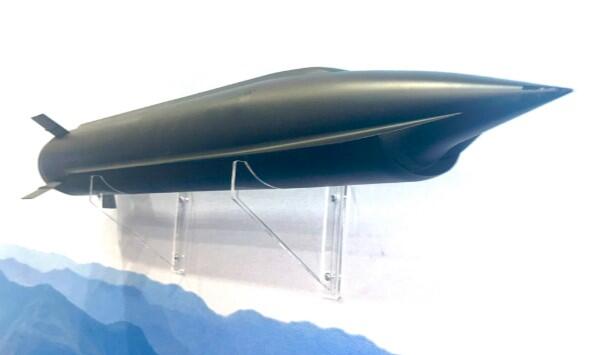
Precision Strike Missile.

Credit: Steve Trimble

Lockheed Martin has unveiled its once-secret concept for the proposed, extended-range variant of the Precision Strike Missile (PrSM), which is known as Increment 4.

The company’s Missiles and Fire Control division displayed a one-quarter scale model on its booth in the exhibit hall of the Association of the U.S. Army’s (AUSA) annual convention on Oct. 13.

The model was displayed with no identification, but Lockheed officials confirmed that it was PrSM Inc. 4.

As expected, the missile design integrated a ramjet with a solid rocket motor, forming a combined-cycle propulsion system to extend the range to up to 1,000 km (621.3 mi.). A ventral air scoop is positioned forward, slightly behind the nose cone.

The missile body also features mid-body aerodynamic strakes, a blister fairing running lengthwise from nose to tail and four aft-mounted control surfaces.

Lockheed offered little evidence of the nature of the “enhanced seeker” tied to PrSM Inc. 4 in Army budget justification documents. A small radome-like fairing is installed on the nose of the missile, which indicates perhaps an active or passive radio frequency seeker.

“We’ve had some very significant subcomponent tests over the last several months, starting in the last year. We’ll begin flight testing in the very near future,” said Paula Hartley, Lockheed’s general manager of Tactical Missiles.

Hartley said that PrSM Inc. 4 “remains in competition, you would say,” without elaborating.

The Army also plans to test the Blackbeard missile designed by Castelion, a startup defense company, as a low-cost alternative to the PrSM Inc. 4.

Brian Everstine contributed to this article.

Steve Trimble

Steve covers military aviation, missiles and space for the Aviation Week Network, based in Washington, DC.