This article is published in Aerospace Daily & Defense Report part of Aviation Week Intelligence Network (AWIN), and is complimentary through Jul 12, 2026. For information on becoming an AWIN Member to access more content like this, click here.
Debrief: New Environment Awaits As Israel Nears Arrow 4 Production Start
Arrow Weapon System
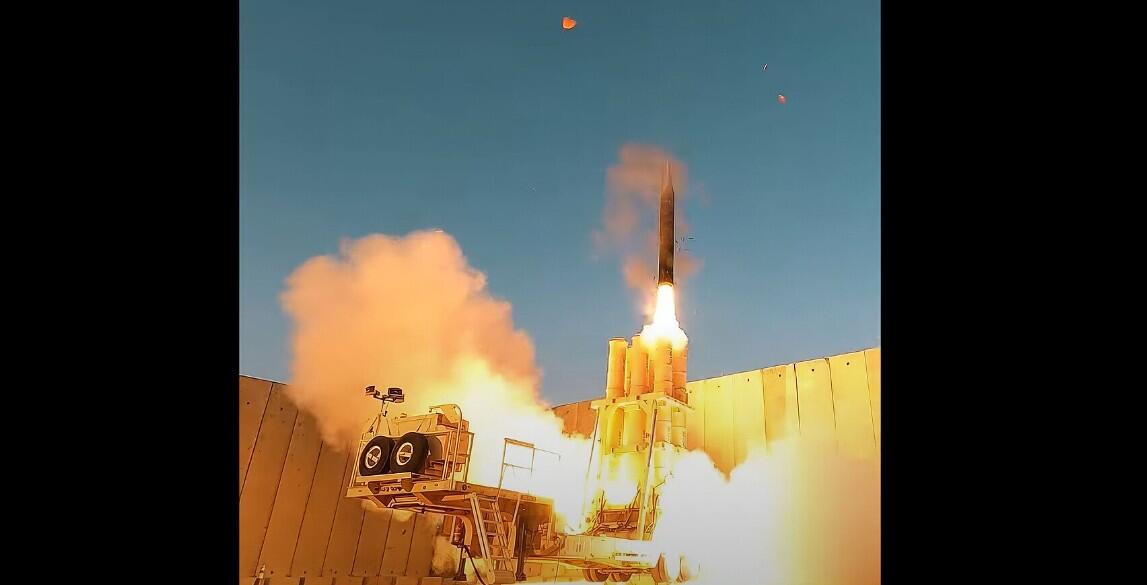
BERLIN—At some point in 2027, Israel is scheduled to start producing a new workhorse for the Arrow Weapon System, the country’s only homegrown defense against the waves of Iranian attacks since 2024 of medium- and intermediate-range ballistic missiles.
To succeed, the Arrow 4 will need to boast levels of agility beyond that of the 28-year-old Arrow 2, which it replaces.
The Arrow 4, which entered development in 2021, not only needs the speed and nimbleness required to catch up with and outmaneuver the same endo-/exo-atmospheric threats as Arrow 2.
In an era of warfare that emphasizes the Arrow 4 must be able to do so at a unit cost that will allow Israel to produce the new interceptor in mass quantities.
To keep the interceptor updated and relevant, the Israel Missile Defense Organization (IMDO) must also adapt to a new way of doing business. Israeli and American defense officials are negotiating an agreement to phase out the $3.8 billion that the U.S. government provides to Israel’s military every year, which includes $500 million earmarked for Israeli missile defense technology.
The five-year Arrow 4 development project is scheduled to be complete later this year, according to budget justification documents released in April by the Missile Defense Agency, which partially funded the work. Production is scheduled to begin in 2027.
Moshe Patel, the IMDO director, says Arrow 4 is ready to take on the challenge.
Although not the primary design driver, the Arrow 4 will perform better than the Arrow 2, Patel said in a June 10 interview at the ILA Berlin Air Show here.
“We are going to have a better capability against the evolving threats,” Patel said. “It will have a much wider threat capability.”
The Israeli press has reported that Arrow 4 will feature hit-to-kill intercept technology, which Israel introduced in 2017 with the high-exoatmospheric Arrow 3. Hit-to-kill technology provides better assurance that a successful intercept will destroy the incoming missile’s warhead at high altitude.
But the innovation of the Arrow 4 program is a low unit cost in a traditionally high-cost air defense sector. Patel declined to provide a cost target for Arrow 4, but said it would be much cheaper than the Arrow 2 after adjusting for inflation. Israeli news outlets have estimated the modern cost of the Arrow 2 at $1.5 million each.
In a break from interceptor development, Israel set a low unit cost for Arrow 4 as a design requirement. Interceptors are traditionally designed to shoot down the most difficult threat. Meeting that challenge then drives the unit cost.
Instead, the Arrow 4 was designed to achieve a unit cost goal as well reach certain levels of performance.
“We had the design goal of the unit price from the beginning, because we wanted to produce it in much larger volumes,” Patel said.
As the IMDO focuses on capping the unit cost of the Arrow 4, the cost structure that has contributed to Israel’s innovations in defense technology for several decades is changing.
Last December, Prime Minister Benyamin Netanyahu announced that he wants to phase out direct U.S. financial aid for Israel’s military by the mid-2030s. On June 5, formal talks began between U.S. and Israeli defense officials on a new security cooperation agreement to take effect after 2028. The goal is to transition from an aid-based structure to a “completely reciprocal partnership,” Israel’s Ministry of Defense said in a statement.
Few areas of the Israeli defense market have benefited as much from the U.S. provision of financial aid as air and missile defense. In addition to $3.3 billion in annual financial donations, the U.S. government provides another $500 million in assistance for Israel’s missile defense program. The U.S. further chipped in $1 billion for the Iron Beam laser weapon system in 2025.
But the IMOD is preparing for the transition. Instead of money, the Israelis expect to still benefit from a reciprocal exchange of technical information between the two governments. The future agreement will expand on how the Israelis and Americans trade information on missile defense operations today, Patel said.
“They learn from our mistakes, we learn from their mistakes,” Patel said. “So it’s something that everybody wants to enlarge and to take this model and maybe extend it to other areas.”