This article is published in Aerospace Daily & Defense Report part of Aviation Week Intelligence Network (AWIN), and is complimentary through Jul 18, 2026. For information on becoming an AWIN Member to access more content like this, click here.

Debrief: Nammo Aims For SFRJ-Powered Counter-Air Missiles

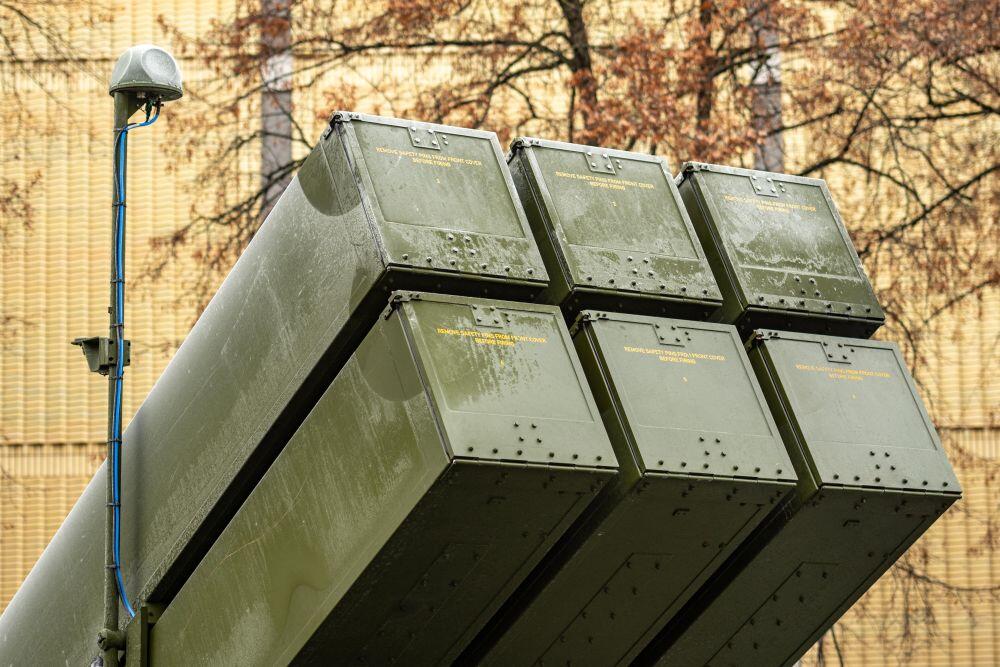
nasams

NASAMS

Credit: Alamy

A high-speed, extended-range air intercept missile based on solid fuel ramjet propulsion could soon enter development in Norway.

Nammo, the Norwegian ammunition and rocket producer, will offer its decade-old solid fuel ramjet technology to extend the reach of the Kongsberg/RTX Norwegian Advanced Surface-to-Air Missile System (NASAMS) on the ground and combat aircraft in the air.

“Nammo plans to work cooperatively with a defense contractor to initiate this development project in the near term,” Erland Ørbekk, Nammo’s vice president for Advanced Propulsion Technology, tells Aviation Week in a statement.

The project builds on the same propulsion technology that Nammo is contributing to the binational 3SM Tyrfing land attack and anti-ship supersonic cruise missile, which is being jointly developed by Norway’s Kongsberg and Germany’s MBDA and Diehl. The Tyrfing missile is scheduled to enter service in the 2030s.

But Nammo has broader plans for the underlying solid fuel ramjet propulsion system.

The company quietly revealed the plan to develop a missile for high-speed and long-range counter-air missions in June during the Eurosatory trade exhibition.

A previously overlooked poster on the booth advertised plans to offer a missile with greater range than the Amraam-ER, which RTX produces for NASAMS. Although called the Amraam-ER, the missile combines the motor and 10-in.-dia. body of a RIM-162 Evolved Sea Sparrow Missile (ESSM) with the guidance system from the AIM-120C-8 Amraam.

In a poster titled, “Closing the Range Gap,” Nammo declared that “a rocket motor with 10 inches diameter gives a significant range increase for the Amraam-Extended Range (ER). The next step will be [the] introduction of a Solid Fuel Ramjet (SFRJ) propulsion section.”

Nammo also displayed a model of an ESSM missile body attached to a front end with the familiar air intake of Nammo’s SFRJ propulsion system.

The idea follows the Norwegian company’s decade-old campaign to usher SFRJ technology into combat service.

An SFRJ ideally combines the advantages of a rocket motor’s power with a ramjet engine’s efficiency, resulting in a missile with high-supersonic speed with a range beyond what a rocket or missile powered by an air-breathing engine could in the same size package.

A booster rocket propels an SFRJ-powered missile to about Mach 2.5. At that speed, the exhaust from the rocket mixes with a solid fuel propellant loaded into the combustion chamber. The hot exhaust causes the propellant to burn, producing a gas. The ramjet inlet then opens, mixing the compressed airflow with the gas to ignite and produce thrust.

If Nammo can master the stability of the combustion process, an SFRJ-powered missile can fly significantly farther than alternatives. The energetic loaded into the combustion chamber is composed purely of propellant. By contrast, solid fuel rockets need a blend of around 20% propellant and 80% oxidizer. But a ramjet harvests the oxidizer for an SFRJ from the atmosphere. So Nammo’s solid fuel can be composed of nearly 100% propellant.

In addition to the 3SM Tyrfing cruise missile, Nammo also has been testing the SFRJ system to significantly extend the range of artillery shells, starting with the Norwegian army’s S9 Vidar howitzer produced by Hanwha Aerospace.

Nammo also received support from the U.S. Navy. In 2020, the Navy agreed to invest in testing of the SFRJ system as part of the Tactical High-speed Offensive Ramjet for Extended Range (THOR-ER) program, which led to successful test flights in August 2022 from the Andøya launch site in northern Norway.

Steve Trimble

Steve covers military aviation, missiles and space for the Aviation Week Network, based in Washington, DC.