This article is published in Aerospace Daily & Defense Report part of Aviation Week Intelligence Network (AWIN), and is complimentary through Apr 08, 2026. For information on becoming an AWIN Member to access more content like this, click here.
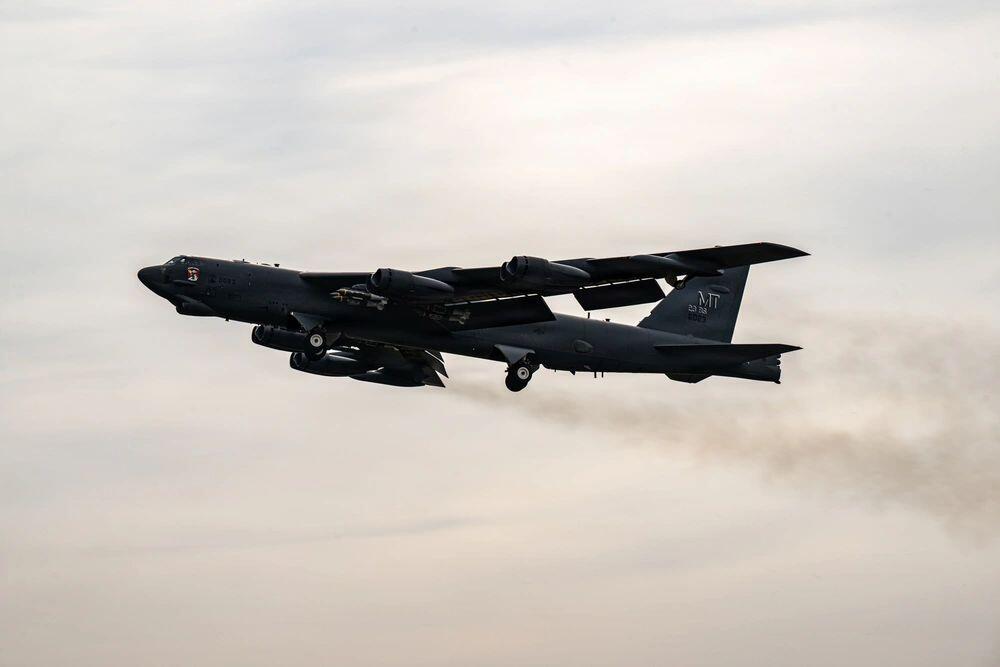
A U.S. Air Force bomber laden with guided bombs takes off March 22 for operations in Iran.
Commanders at U.S. and allied installations are calling for rapidly fielding more bunkers and increasing air defenses as Iranian drones and other munitions have targeted American installations—and led to the loss of a critical aircraft.
Defense Secretary Pete Hegseth told reporters March 31 that he recently visited American service members in the Middle East, and in talking to base commanders he said that fielding and improving bunkers and other defenses “is a theater priority.”
Iran scored a key hit on March 27, destroying a U.S. Air Force Boeing E-3G Sentry airborne warning and control system (AWACS) at Prince Sultan Air Base, Saudi Arabia. The same installation has also seen Iranian attacks that killed one service member and left others injured.
Hegseth, without addressing the E-3 incident directly, said the Pentagon is also working to increase air defenses in the region, including more fighter patrols and defense systems.
The U.S. Air Force, meanwhile, is continuing to reinforce its aerial contingent. Two more squadrons of Fairchild A-10s are due to arrive in the coming days via the UK, and the service appears to be deploying the EA-37B Compass Call electronic warfare platform to the theater despite not yet being declared operational. Two of the aircraft arrived at RAF Mildenhall, England, on March 31, and are expected to continue eastbound imminently. The USAF had been using the aging C-130H Hercules-based Compass Call platform in the region.
The UK Defense Ministry declared it was sending more air defense equipment to the Middle East region, Defense Secretary John Healey announced after meeting regional leaders on March 31.
A deployment of Eurofighter Typhoons to Qatar is being extended at the Dukhan air base from where the aircraft have been performing combat air patrols alongside their counterparts from the Qatar Emiri Air Force.
In Saudi Arabia, the UK will deploy a Sky Sabre ground-based system battery that uses the MBDA Common Anti-Air Modular Missile. The system will be integrated into the wider Saudi air and missile defense system, the UK Defense Ministry said.
Additional personnel equipped with the Thales Lightweight Multirole Missile (LMM) have also been deployed to Bahrain, and Rapid Sentry, a ground-based short-range air defense system that also uses LMM, has been sent to Kuwait.
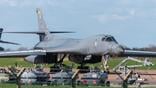
But Healey reiterated that the UK would not be drawn into the wider conflict. He also said that U.S. basing of Boeing B-52s and Rockwell B-1B bombers in the UK had only been approved for “specific and limited defensive operations,” including the degrading of missile sites.
While base defenses have remained a priority, U.S. officials say Iran’s own air defenses have been severely depleted. Proving that point, Chairman of the Joint Chiefs of Staff Gen. Dan Caine told reporters March 31 that U.S. Air Force B-52 bombers have begun flying over Iranian soil.
The large, heavy bombers would typically be susceptible to Iranian air defenses—but the systems have “largely been destroyed,” U.S. Central Command (CENTCOM) boss Adm. Brad Cooper said in his own update on March 31.
Having bombers like the B-52 in Iranian skies means the U.S. can better strike mobile targets and conduct more dynamic strikes, Caine says.
Cooper said the air campaign was making “undeniable progress,” and “eliminating Iran’s ability to project power in meaningful ways outside its borders.
“We don’t see their navy sailing or their aircraft flying and their air defense and missile defense systems have largely been destroyed,” Cooper said in an online update issued by Centcom.
As of March 31, American forces have struck more than 11,000 targets and hit more than 150 Iranian ships.