This article is published in Aviation Week & Space Technology and is free to read until Aug 13, 2026. If you want to read more articles from this publication, please click the link to subscribe.
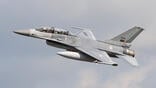
Although slated to be replaced by GCAP in the 2040s, the Eurofighter will continue to be upgraded and also is to link with collaborative combat aircraft.
As the UK Royal Air Force looks to the future, its leaders’ thinking is being shaped as much by events in the Middle East as the war closer to home in Ukraine.
Two strategic realities are driving Royal Air Force (RAF) considerations on next-generation platforms and weaponry: Israel’s ability to project airpower deep into Iran—beyond 1,000 mi., with minimal opposition—and Iran’s capacity to hold the entire Middle East region at risk.
- The RAF and Royal Navy are working on collaborative combat aircraft
- Studies are underway on Future Air Effectors and an air-to-air missile family
- The RAF is pursuing synthetic fuels to boost resilience and meet net-zero targets
Looking to the 2040s, the RAF sees the combat aircraft emerging from the Global Combat Air Program (GCAP) as its principal deep-strike platform—a stealthy fighter with the range and payload to strike hundreds of miles inside hostile territory.
“If we hold at risk what is most valuable to adversaries—their own backyard—then range is crucial if we are to offer credible deterrence,” Air Vice-Marshal James Beck, the RAF’s director of capabilities and programs, tells Aviation Week.
One focus of Ukraine’s war effort has been to destroy what it calls the “archers,” the launch platforms for ballistic and cruise missiles that have targeted the country’s civilian and energy infrastructure.
GCAP is designed to go after those “making the arrows,” Beck says, delivering the kind of “punch” that can set the long-term objectives of a conflict.
Like other European countries, the UK is investing heavily in deep-strike capabilities, the Defense Investment Plan (DIP) confirmed in June. The British Army is acquiring one-way effectors in the form of the U.S. Precision Strike Missile. Work is underway on a new generation of air-launched cruise missiles—called Stratus—with France and Italy, and ground-launched missiles with a range of more than 2,000 km (1,200 mi.) are being developed with Germany.
Furthermore, the RAF is rebuilding its air-launched nuclear deterrence capability after a gap of nearly 30 years by buying Lockheed Martin F-35A Joint Strike Fighters. The service is offering them for NATO’s dual-capable aircraft mission, although this is not likely to begin until the early 2030s.
“There are different ‘deeps,’” Beck says. “[The RAF] will go beyond the line of sight of the world being round.” That ability to go as deep as possible forces the adversary to spread its defensive assets to protect its backyard.
GCAP is not intended to fight alone. It is to operate alongside F-35s and collaborative combat aircraft (CCA), another major investment backed by £300 million ($400 million) in the DIP.
Beck says GCAP is to be a more “benevolent” information-sharing platform than what he jokingly calls “selfish” fifth-generation aircraft that collect valuable data but do not share all of it with other platforms.
GCAP will orchestrate the CCAs and collect data even if it has no direct use for it and then send the data to inform a wider audience of allied platforms, he says.
“Sixth-gen is about being operationally aware and benevolent to the operational demand,” Beck says.
He asserts that the U.S. Air Force’s Next-Generation Air Dominance concept—rather than simply the Boeing F-47 fighter—should mirror the RAF’s thinking, in which crewed aircraft, CCAs and other capabilities operate as an integrated system.
Before GCAP arrives, introducing a CCA will be the service’s next major step. Like other air forces, the RAF wants to accelerate the entry of CCAs to add combat mass and complement Eurofighter Typhoons and F-35Bs as part of the UK’s broader Future Combat Air System plans.
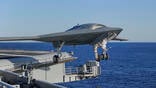
The service is working “hand in glove” with the Royal Navy, which also wants to demonstrate the flight of a jet-powered uncrewed aircraft system (UAS) from its carriers as part of a demonstration of a hybrid air wing. The DIP calls for a CCA demonstrator to be flying by at least 2030.
The UK wants to avoid being a Foreign Military Sales customer for CCAs, Beck says. However, he notes that the U.S. investment in the development of these systems has delivered a reference architecture for CCAs that is as “profound” as the USB industry standard for transmitting digital data and power between electronic devices. Beck sees that architecture as an interface for the global CCA market into which the UK could tap by building CCAs or elements of them that can use it.
“If we want to remain a nation that designs and builds combat aircraft—and we do—we have to bring something distinctive to the market,” he says. “If we don’t, then we will just be an end producer. We will be an offset taker, and we do not want that.
“[The UK produces] world-class combat systems, and if we get this right, we can be a global leader,” Beck says.
He points to Rolls-Royce’s development of the Orpheus turbofan demonstrator. Beck suggests its core could be easily scaled up for different CCA platforms and would be more cost-effective than reusing business jet engines, as many CCAs do now.
He also says that nations might want to partner with the UK because of the country’s experience in low-observability technologies, thanks to platforms like BAE Systems’ Taranis uncrewed combat air vehicle demonstrator.
“We understand what autonomous systems can do, and what good, very high-quality stealth can be,” he says. “What we haven’t done is bring all these things together.”
The UK came close to producing a CCA demonstrator through Project Mosquito, which was canceled in the spring of 2022 as assembly of the aircraft began. Nonetheless, valuable lessons were learned from the exercise, Beck says. “We realized we were overengineering this platform,” he says. “Overengineering is no bad thing until you need to spend the money on something more lethal or that engineering compromises lethality and range.
“Today, we are in a confident position, and I have no issue with building something that is only fit for war,” Beck adds. However, he suggests that more capable CCAs could perform the role of Quick Reaction Alert some day.
Experimentation with smaller autonomous collaborative platforms (ACP) such as the StormShroud, a derivative of the Tekever AR3 UAS designed to carry an electronic warfare payload to confuse enemy air defenses, also has allowed the RAF to understand how to make best use of the UK’s industrial base in wartime.
“The industrial base is a weapon system in itself,” Beck says. “We need to understand what we cannot build in wartime, probably the higher-end stuff, and then in war build what you didn’t in peacetime.”
Production of platforms such as the StormShroud or one-way effectors could be scaled up rapidly in wartime using so-called shadow factories or existing industries, such as automotive. Rather than stockpiling thousands of rapidly aging drones, Beck advocates investing in industry’s ability to produce them quickly during wartime. Projects like the StormShroud and small ACPs that will follow it are seen as a means of making industry “match fit” and “primed,” he says.
“You send [industry] on small runs; you do not send them on marathons,” Beck notes, explaining that this helps to “germinate” the industrial base so it can be ready to scale up rapidly.
Beck says he has provided requirements to companies to build systems that may have compromises in their designs but could be assembled in the thousands quickly with automation.
Having relied on families of so-called exquisite, complex weapons, the RAF is preparing to embrace cheaper weapons to create a high-low mix. One example is the recent introduction of the Advanced Precision Kill Weapon guided rocket system on the Eurofighter to give the aircraft the ability and combat persistence to down low-cost, one-way attack drones such as the Iranian Shahed. Advances in propulsion and guidance are extending missile range while reducing cost compared with previous generations, Beck says, and the cost for that range is also lower than for previous generations of missiles. New one-way effectors can be equipped with different payloads for an “orchestrated” effect.
In particular, the RAF is looking ahead to the introduction of the MBDA Spear 3 mini cruise missile on the F-35, which Beck suggests will be widely exported once integrated. The UK also has started work conceptualizing a family of air-to-air missiles under the Future Air Effectors initiative.
Beck describes this project as “insanely ambitious,” because the service will need large stockpiles of the weapons, requiring them to be less expensive than previous generations of air-to-air missiles—and they must not only equip GCAP and the F-35 but also be CCA-compliant.
The RAF’s future planning extends beyond combat capability. The service’s war on emissions also continues as it aims to become a net-zero force by 2040. Prior to the war in Ukraine, the RAF was exploring the development and use of sustainable and synthetic aviation fuels and experimenting with electric training aircraft.
While net zero may have dropped off the list of the service’s public talking points, achieving a more sustainable RAF remains high on its agenda, and energy resilience is seen as a “crucial military capability,” Beck says.
“The more resilient you are, the more capable you are,” he notes. “This is increasingly relevant now because we do not want to be reliant on the fossil fuels of other countries.”
A particularly important program for the service has been Project Njord, an initiative to mitigate the impact of offshore wind farms on the radar installations that provide early warning. Rotating turbine blades degrade radar performance, especially against small targets, so the RAF will introduce new radar sets and passive detection capabilities to mitigate the effect of the blades. The issue was a stumbling block for several offshore wind farm projects, but these are now able to move ahead. The RAF is exploring modular synthetic fuel production systems for combat zones that avoid large facilities and could be hidden from missile strikes.
The RAF is no longer planning simply for its next fighter. It is redesigning the entire ecosystem that will allow UK airpower to fight—and endure—in future conflicts.