This article is published in Aerospace Daily & Defense Report part of Aviation Week Intelligence Network (AWIN), and is complimentary through May 17, 2026. For information on becoming an AWIN Member to access more content like this, click here.

Debrief: Army Aviation Left Out Of Pentagon Budget Boost

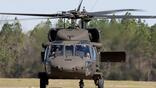
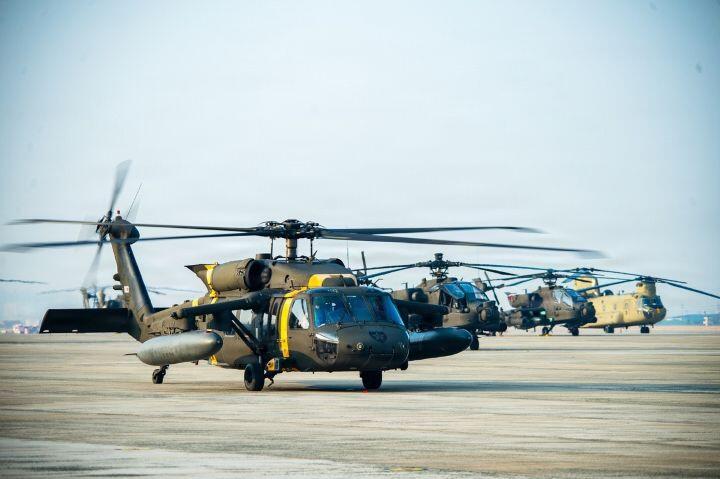
Army Black Hawks
Credit: U.S. Army

NASHVILLE, Tennessee—The Trump administration’s fiscal 2027 budget request of $1.5 trillion for the Pentagon raises spending across the board for major priorities at a level officials have said is generational—except for one area that has seen some hits in recent years.

U.S. Army Aviation is set to see its procurement spending drop by more than half in fiscal 2027 compared to 2026—falling to $1.93 billion from $4.065 billion. This as the other services are seeing high levels of aircraft procurement spending. The U.S. Navy is the biggest winner, jumping to $34.4 billion from 2026’s $17.748 billion.

The budget hit is the third year in a row the Army’s aviation branch has taken a punch. In 2024, the service announced it was canceling the Future Attack Reconnaissance Aircraft—previously its top modernization priority. Last year, the Army rolled out a series of additional changes, including cutting all AH-64D Apaches to fly only AH-64Es, which led to the shuttering of air cavalry units and reassignment of hundreds of personnel, along with a proposed ending of the effort to reengine the Sikorsky Black Hawk and Apache fleet, retirement of MQ-1C Gray Eagles, and other changes.

Congress came to the rescue for some of the programs, including continuing funding for the Improved Turbine Engine Program, but other cuts are continuing. The full fiscal 2027 budget request will be publicly presented April 21, with additional justification for proposed changes. But documents published so far by the Pentagon’s comptroller and the Office of Management and Budget (OMB) show the priorities within Army aviation.

Largely, this is all on the current top program—the Bell MV-75 “Cheyenne II.” It is the biggest funding priority in the Army’s aviation research, development, test and evaluation request, with $2.14 billion for fiscal 2026. This is a bump from last year’s $1.53 billion and comes as the service is pressing as hard as it can to accelerate the fielding of the tiltrotor. It is still about half of the Air Force’s Boeing F-47, for example, and about the same as that service’s E-4C Survivable Airborne Operations Center.

Longer-term estimates published by OMB show procurement increasing as the MV-75 comes online, topping at about $5.5 billion. The request includes limited procurement of existing platforms, including one UH-60 Black Hawk and five Boeing CH-47 Chinooks.

Brett Ingraham, assistant secretary of the Army for acquisition, technology and logistics, would not get ahead of the full budget briefing. But he said the service is putting forward a “very consolidated plan” to both introduce the new MV-75 and keep existing platforms that will be in the fleet for years to come. “I think you’ll see as … the full budget rolls out, we’re focused on not only introducing this new aircraft but ensuring that we maintain and keep the operational fleet that we’ve got today,” he says.

The Army Aviation Association of America’s (AAAA) 2026 Army Aviation Warfighting Summit is taking place April 15-17 here.

Brian Everstine

Brian Everstine is the Pentagon Editor for Aviation Week, based in Washington, D.C.