This article is published in Aerospace Daily & Defense Report part of Aviation Week Intelligence Network (AWIN), and is complimentary through Mar 14, 2026. For information on becoming an AWIN Member to access more content like this, click here.

Air National Guard Raises Concerns About Losing Fighter Missions

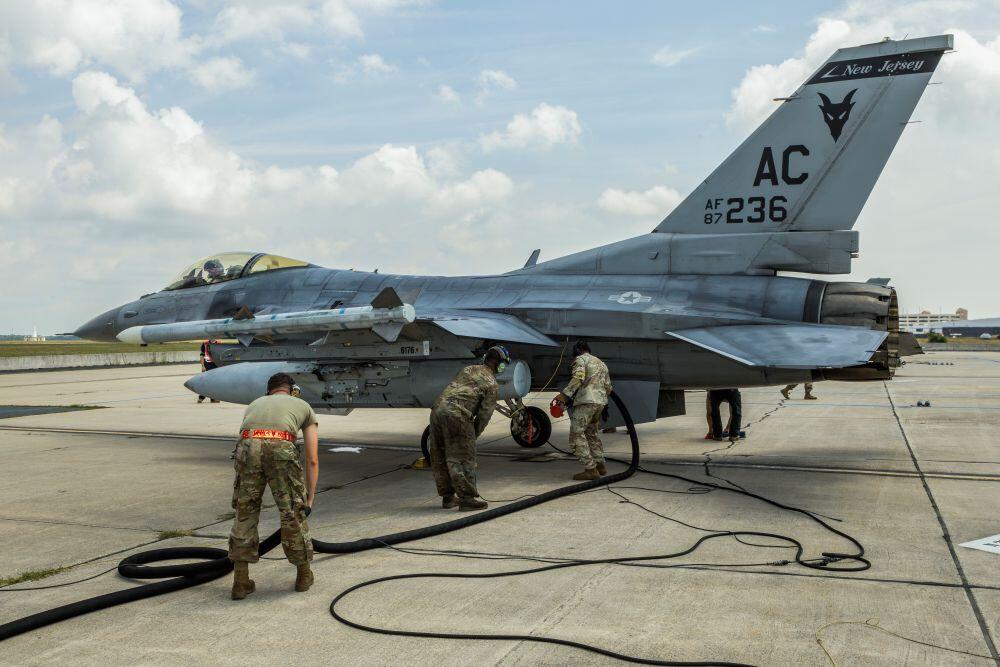
An F-16 from the New Jersey Air National Guard. Credit: Air National Guard

An F-16 from the New Jersey Air National Guard.

Credit: Air National Guard

AURORA, Colorado—The Air National Guard is facing uncertainty in how it will meet some of its homeland defense requirements as the U.S. Air Force retires aging aircraft with some of the squadrons not assigned a follow-on mission.

Specifically, four pre-block F-16 fighter units across the U.S. are set to lose their aircraft with no set recapitalization plan—Atlantic City, New Jersey; Buckley, Colorado; Kelly Field, Texas; and Tucson, Arizona, says Maj. Gen. Bryony Terrell, the special assistant to the director of the Air National Guard.

The Guard and the Air Force headquarters are still figuring out what could be next for those units, but the component is concerned about the uncertainty, she says.

“If we don’t have a strong recapitalization plan, those units may be looked at to divert into other missions outside of a flying mission,” she told reporters during a Feb. 25 briefing at the Air and Space Forces Association’s Air Warfare Symposium.

Losing a fighter unit, or transitioning to a different mission, forces the Guard and the rest of the Pentagon to figure out how to keep aircraft on alert. This could require active duty Air Force units to serve on homeland defense alert, or a “joint force solution”—potentially involving U.S. Navy aircraft.

“This is really an enterprise challenge that we have to work through,” she says.

The Air National Guard regularly competes with the broader Air Force for modernization funding, and it has been a “decisive challenge,” Terrell says. Thirteen of 24 fighter squadrons have no advanced recapitalization plans, she says.

“The Air National Guard must modernize alongside the Air Force, not after it,” she says. “We cannot buy down risk in the active component by cascading aging platforms into the Guard.”

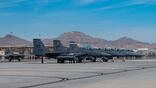
The Air National Guard is the first adopter of one new platform, the Boeing F-15EX. The Oregon Air National Guard at Portland is the first unit operating the type and has been working through how to bring on a new jet while also meeting its aerospace alert mission with older F-15C/Ds. One uncertainty with the aircraft is the status of the backseat of the two-seater, with the Guard not set yet on if it will add weapons systems officers (WSO) to its ranks. The Guard does not fly the F-15E Strike Eagle and has not had WSOs before.

Terrell says there is still uncertainty across the whole Air Force on what will happen with the backseat space, as Air Combat Command is deliberating for the active force as well. The Guard’s position for now is that it would rather use that space and resources for other priorities, she says.

Brian Everstine

Brian Everstine is the Pentagon Editor for Aviation Week, based in Washington, D.C.

Comments

1 Comment
"The Guard does not fly the F-15E Strike Eagle and has not had WSOs before." What about F-4s?