Boeing’s Generational Win
Boeing was selected over Lockheed Martin in March to develop the U.S. Air Force’s F-47 Next-Generation Air Dominance fighter, with first flight planned in 2028. Also expected that month, a choice between Boeing and Northrop Grumman to develop the U.S. Navy’s F/A-XX was put on hold by concerns over U.S. industry’s capacity to develop two sixth-generation fighters at the same time.
Reusable Hypersonic Testbeds
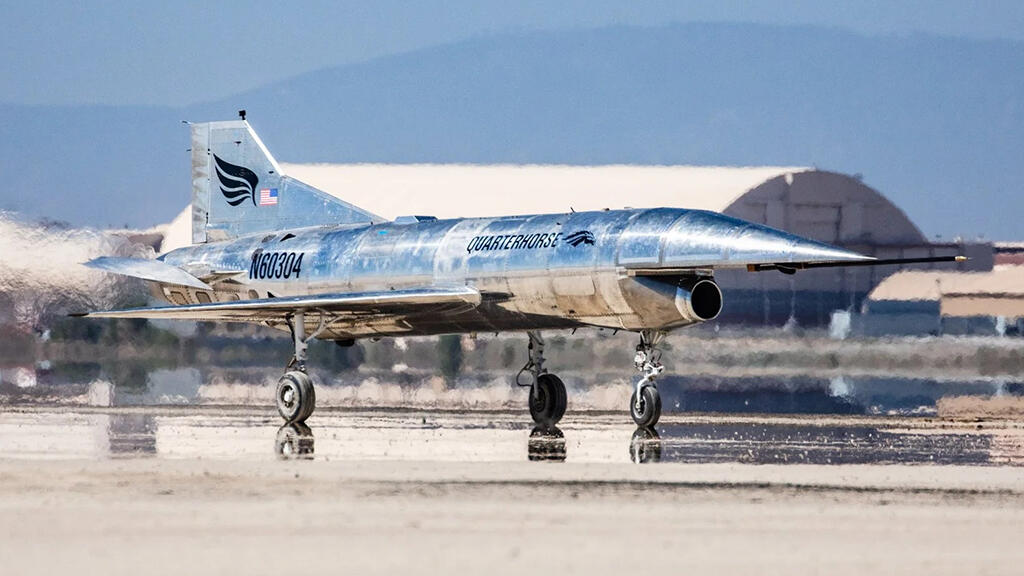
Kratos Defense was awarded the five-year, $1.45 billion contract for the MACH-TB program (Multi-Service Advanced Capabilities Hypersonic Testbed) to develop affordable flying testbeds to allow for more frequent and cost-effective hypersonic testing. Kratos has teamed to use Stratolaunch’s reusable air-launched Talon-A, Hermeus’ supersonic Quarterhorse Mk. 2 and Firefly Aerospace’s Alpha rocket.
In the Skyraider’s Shadow
Christened the Skyraider II to commemorate the versatile and long-lived Douglas A-1 Skyraider, the first missionized OA-1K was delivered to U.S. Air Force Special Operations Command on April 3. It is based on the Air Tractor AT-802 agricultural aircraft modified for close air support and armed overwatch missions.
Competitive Collaborators
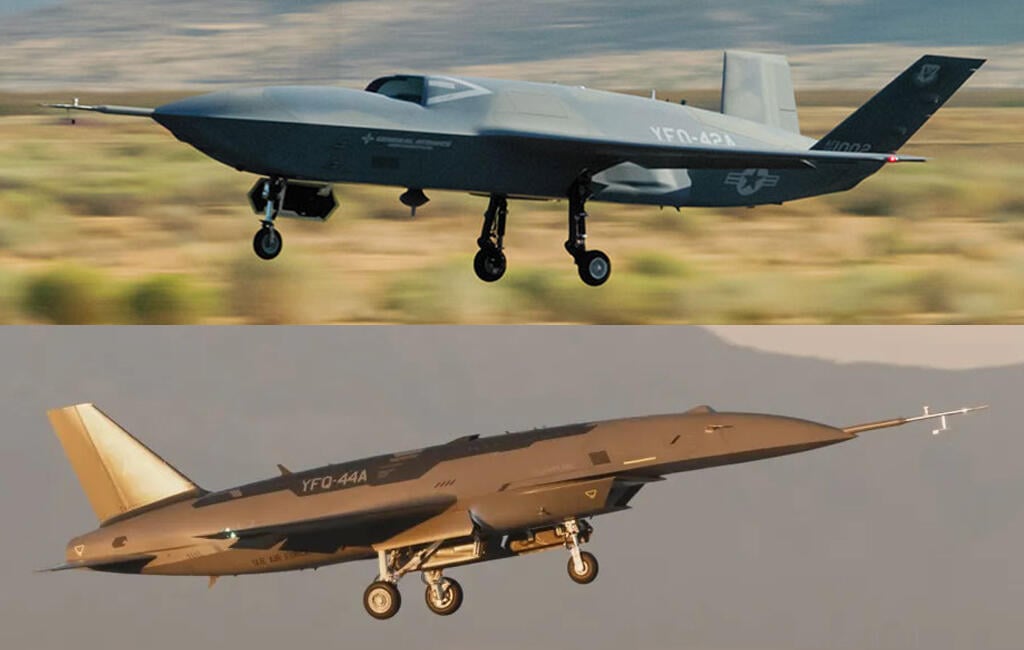
The U.S. Air Force’s competing Increment 1 Collaborative Combat Aircraft took flight during 2025, General Atomics Aeronautical Systems Inc.’s YFQ-42A (top) in August and Anduril Industries’ YFQ-44A in October. A production decision on the initial jet-powered autonomous wingmen and release of requirements for the more capable Increment 2 are planned for 2026.
Fighters to the Fore
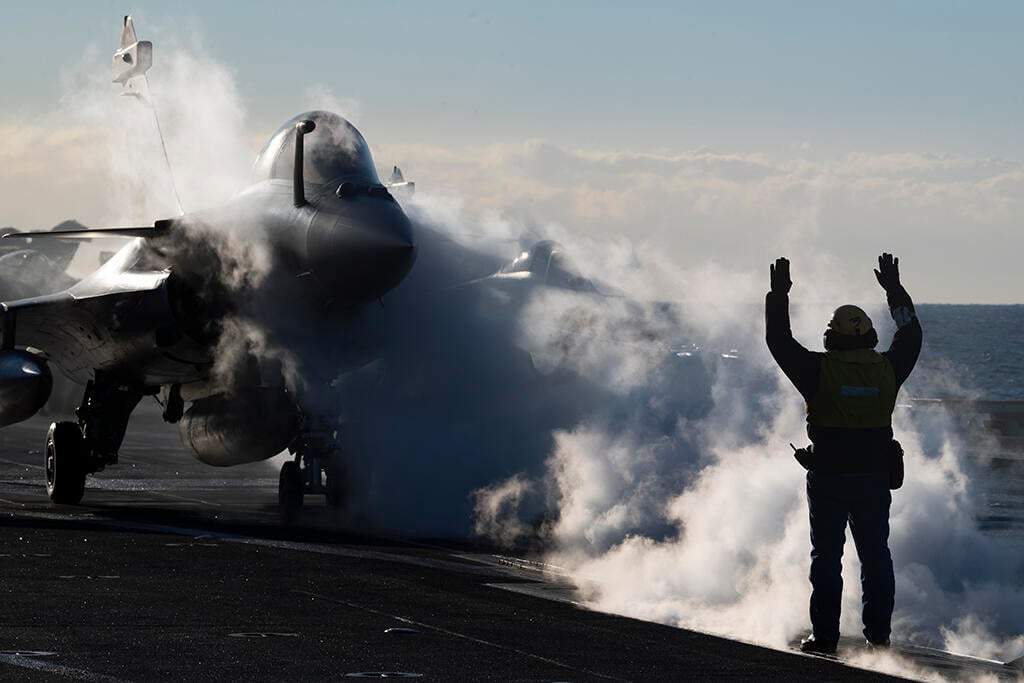
It was a year of strong international fighter sales. The Saab Gripen E/F prevailed in Colombia (17 aircraft) and Thailand (four), the Eurofighter Typhoon in Turkey (20) and Dassault’s Rafale added the Indian Navy as a customer (26). The United Arab Emirates signed a cooperation agreement on South Korea’s KAI KF-21 and Indonesia a purchase commitment for Turkey’s TAI Kaan.
Trainer Makeover
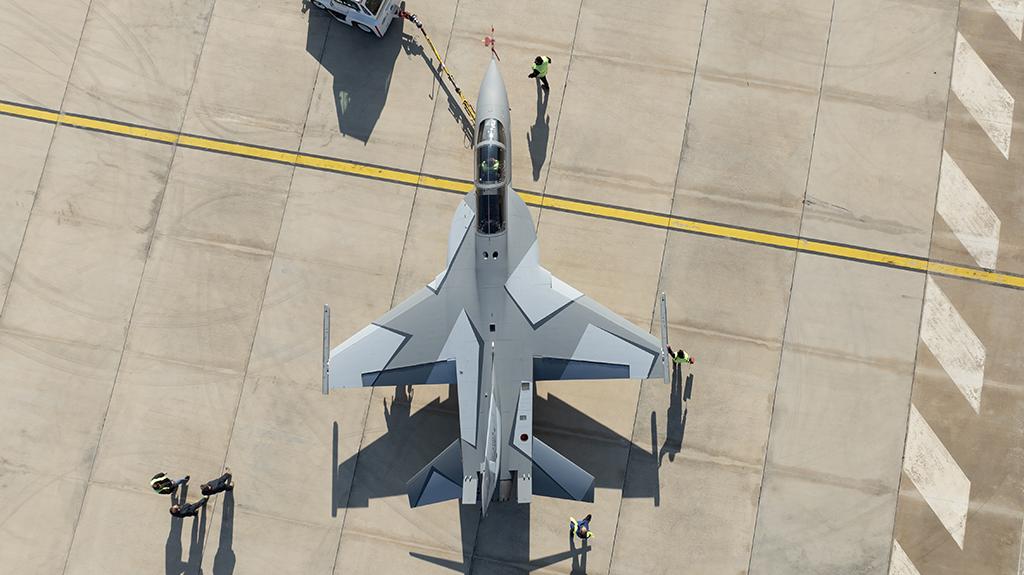
Renewal of aging trainer fleets continued in 2025 as Austria finalized a contract for Leonardo’s M-346 (12 aircraft), Pilatus’ turboprop PC-7 MKX prevailed in Belgium (18) and France (22), and Spain approved the planned purchase of Turkey’s TAI Hurjet (45). Boeing teamed with BAE Systems, which produced the widely exported Hawk trainer, to offer the T-7 as a replacement for the UK Royal Air Force trainer.
AEW&C Renewal
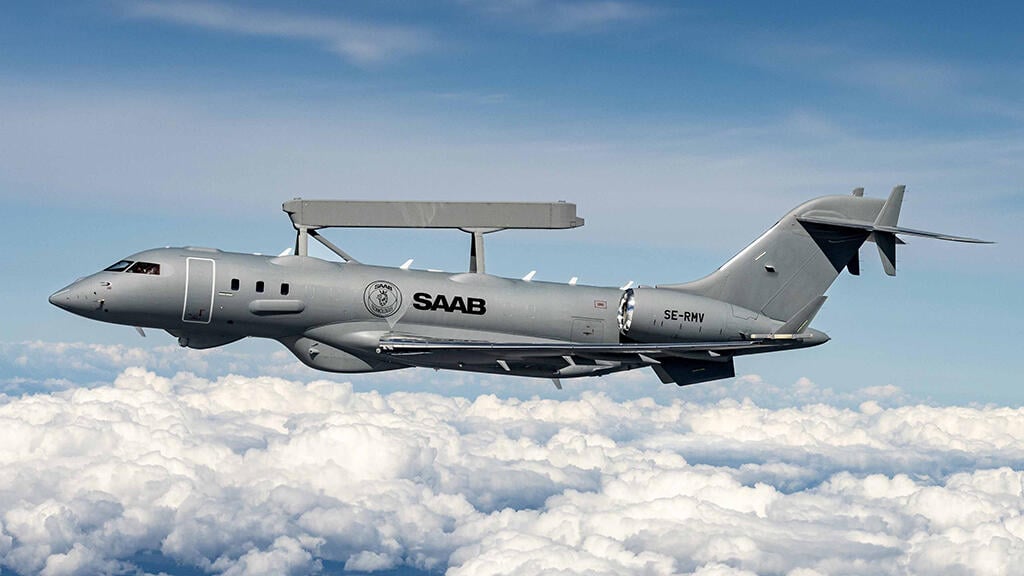
France in June signed a declaration of intent to procure two Saab GlobalEye airborne early warning and control aircraft, with an option for two of the Bombardier Global 6500-based aircraft to replace its Boeing E-3Fs. In October, South Korea selected L3Harris Technologies to supply four AEW&C aircraft based on the Global 6500 with Elta Systems radars. Another opportunity opened in November, when NATO dropped plans to acquire Boeing E-7s to replace its E-3s after the U.S. withdrew.
Trinational Fighter Firms Up
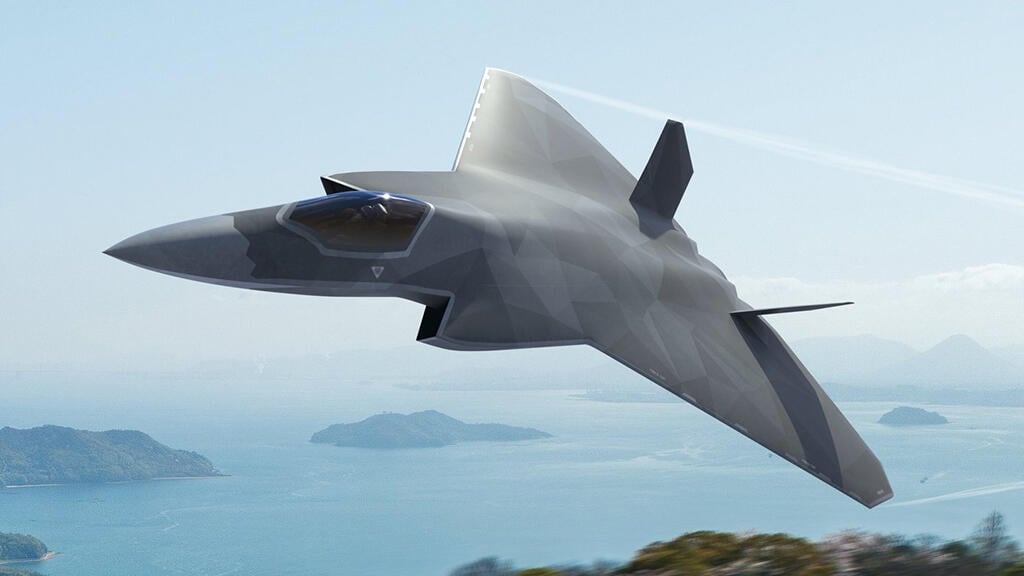
The Edgewing joint venture was launched in June by the UK’s BAE Systems, Italy’s Leonardo and Japan Aircraft Industrial Enhancement to develop a next-generation fighter under the Global Air Combat Program (GCAP). Rolls-Royce, Avio Aero and IHI transitioned to an integrated collaboration to develop the clean-sheet engine, and Leonardo, ELT Group and Mitsubishi Electric formed the GCAP Electronics Evolution consortium to develop the integrated sensing and communication system.
Autonomous Engagement
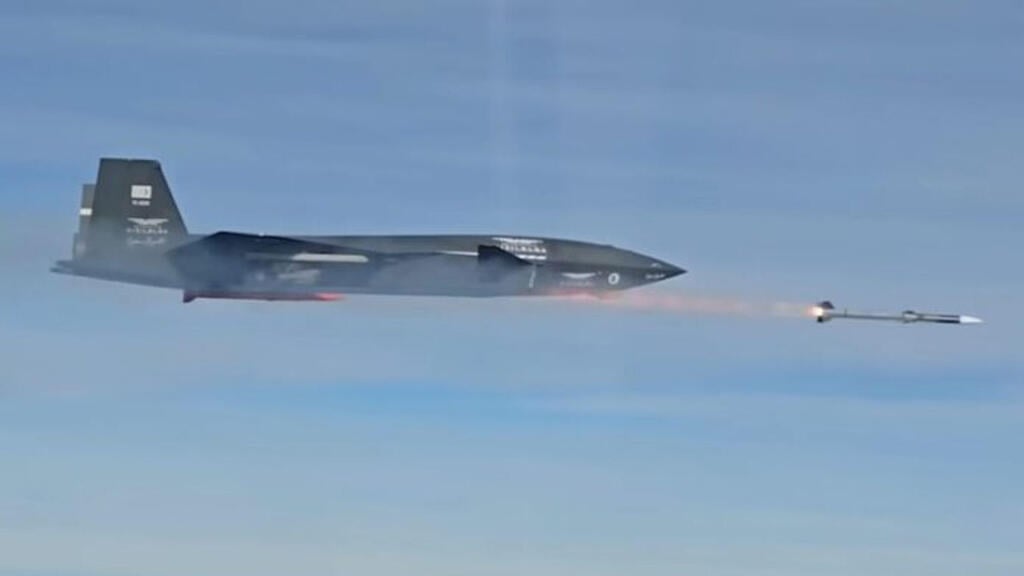
Autonomous combat aircraft took a step forward in November. Turkey achieved the first successful beyond-visual-range (BVR) air-to-air missile engagement from an uncrewed aircraft: Baykar’s Kizilelma downed an aerial target. Boeing and the Royal Australian Air Force conducted the first air-to-air firing from the MQ-28 Ghost Bat on Dec. 8—the uncrewed aircraft launched an AIM-120 missile against an aerial target while flying as a loyal wingman to a Boeing E-7A.
The year was dominated by Boeing’s turnaround win in the U.S. Air Force’s Next-Generation Air Dominance competition, but globally multiple fighter deals were struck in 2025. Trainers and airborne early warning platforms were ordered, too, while the nascent field of autonomous collaborative combat aircraft saw substantial strides over the year.