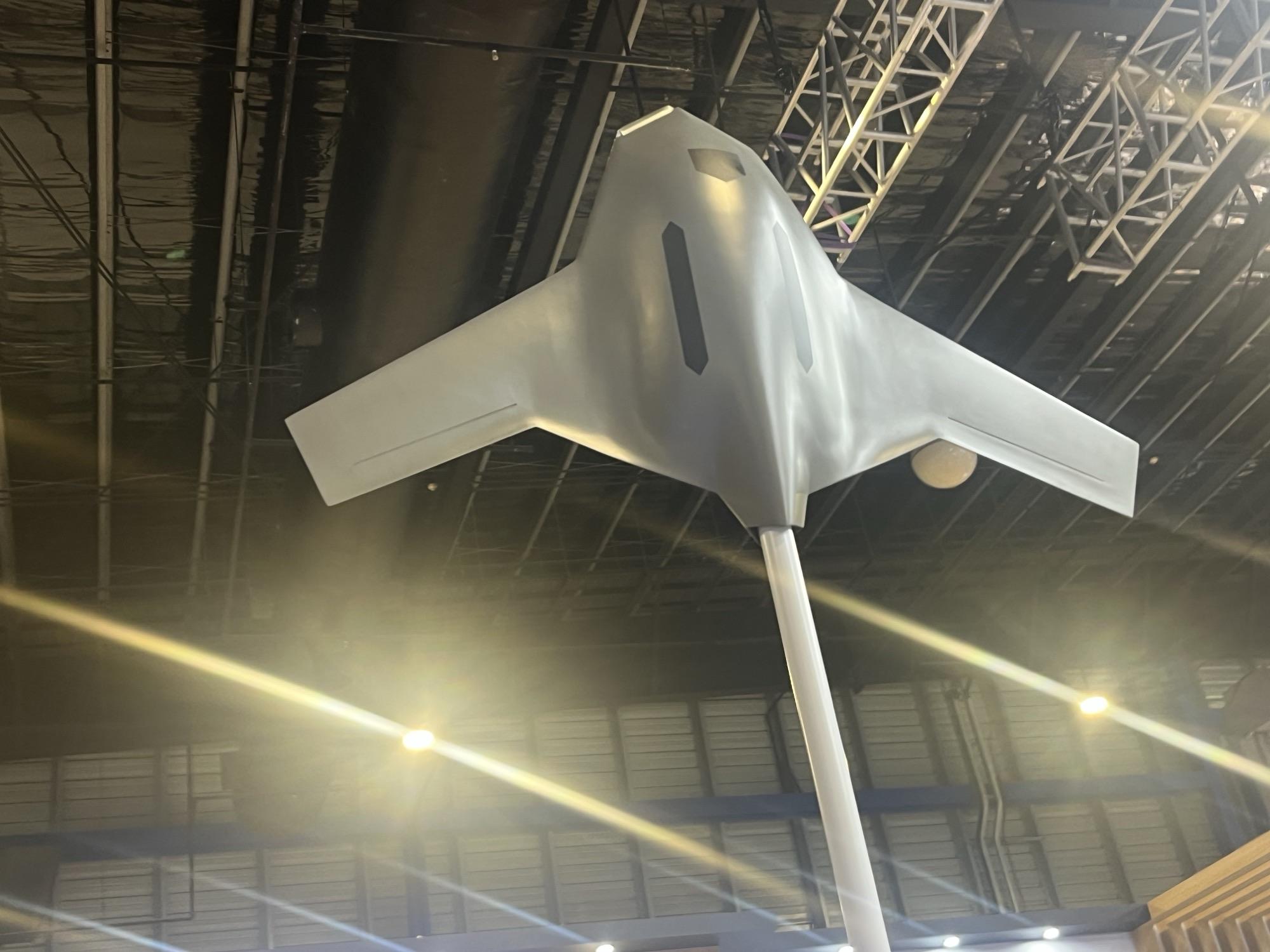
A model of Shield AI's X-BAT at the Singapore Airshow.
Credit: Robert Wall/Aviation Week
SINGAPORE—The adoption of artificial intelligence will by 2030 have moved from an ambition to a reality, industry officials said here at the Singapore Airshow. “In 2030 I think we won't be having a discussion like today, where autonomy is something that we want to add on. I think autonomy and AI...

Subscription Required
Where’s Military AI Headed In 2030? is published in Aerospace Daily & Defense Report, an Aviation Week Intelligence Network (AWIN) Market Briefing and is included with your AWIN membership.
Already a member of AWIN or subscribe to Aerospace Daily & Defense Report through your company? Login with your existing email and password.
Not a member? Learn how you can access the market intelligence and data you need to stay abreast of what's happening in the aerospace and defense community.
Related Content