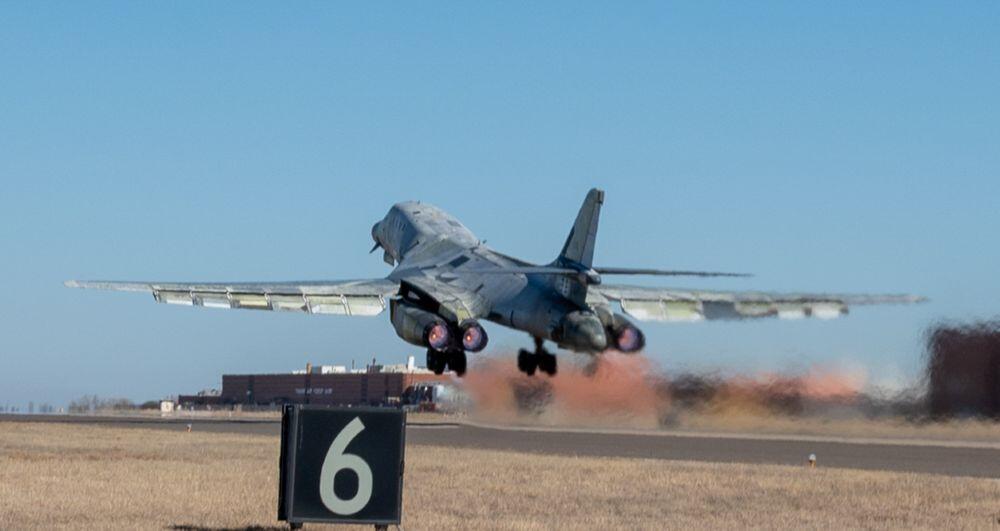
A B-1B in bare metal takes off for a check flight as part of a process to unretire the aircraft.
Credit: U.S. Air Force
The U.S. Air Force has revived a retired Rockwell B-1B Lancer as it reversed its long-term plan for the swept-wing bomber fleet. The service announced May 6 that a B-1B retired in 2021 and sent to the “boneyard” at Davis-Monthan AFB, Arizona, has returned to flight after an extensive regeneration...

Subscription Required
USAF Unretires B-1B As It Changes Bomber’s Long-Term Plan is published in Aerospace Daily & Defense Report, an Aviation Week Intelligence Network (AWIN) Market Briefing and is included with your AWIN membership.
Already a member of AWIN or subscribe to Aerospace Daily & Defense Report through your company? Login with your existing email and password.
Not a member? Learn how you can access the market intelligence and data you need to stay abreast of what's happening in the aerospace and defense community.
Related Content