This article is published in Aerospace Daily & Defense Report part of Aviation Week Intelligence Network (AWIN), and is complimentary through May 17, 2026. For information on becoming an AWIN Member to access more content like this, click here.
Bidders advance in the U.S. Army’s Flight School Next competition.
At least three of the four remaining bidders for a contract to transform U.S. Army rotary-wing training have advanced to the fourth and final phase of the competition.
Bell and M1 Support Services both confirmed they have been selected to proceed to the final stage of the U.S. Army’s Flight School Next program.
Bell is proposing its 505 JetRanger X single-engine light helicopter, while M1 Support Services is offering the Robinson R66 Turbine.
Industry sources told Aviation Week that two R66-based bids have advanced to the final round. The third offer is believed to be from AAR, although the company has not responded to requests for comment.
Lockheed Martin, which was also offering the R66, was not selected to continue, a Lockheed Martin spokesperson confirmed in a statement.
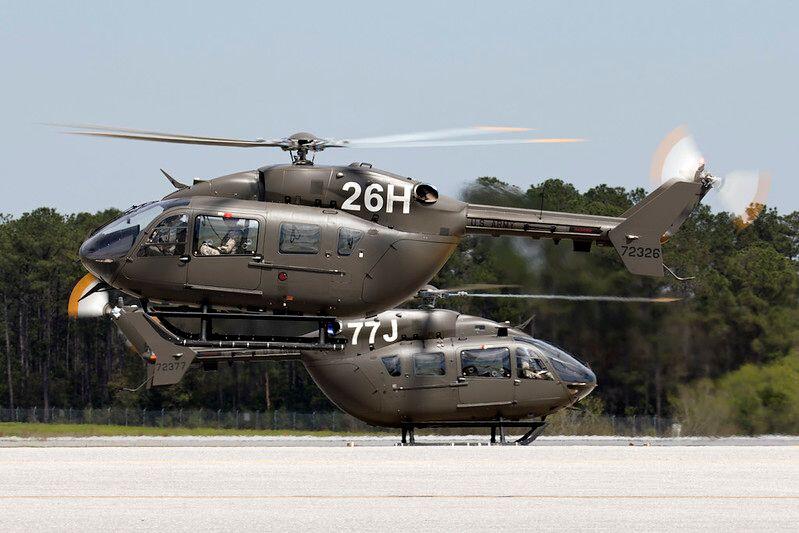
Flight School Next calls for the introduction of a Contractor-Owned, Contractor-Operated training system to replace the Army’s Airbus UH-72 Lakota fleet used for Initial Entry Rotary Wing training at Fort Rucker, Alabama.
The program would introduce a new fleet of lower-cost, single-engine turbine helicopters and consolidate aircraft supply, maintenance, training and simulation under a single 26-year contract.
If implemented, it would mark the second major overhaul of Army helicopter training in just over a decade.
All three bidders are expected to demonstrate their training solutions and aircraft later this month.
However, a legislative hurdle remains. The National Defense Authorization Act, signed into law in December, includes a provision preventing funding from being used to solicit proposals or award a contract until lawmakers are briefed on the results of trial training initiatives and the Army submits a formal report justifying the proposed changes.
“In this next phase, Team M1 will demonstrate our comprehensive, innovation-rich solution to produce more proficient Army aviators on time and on budget,” said George Krivo, chairman and CEO of M1 Support Services.
M1 already supports a large operation at Fort Rucker, maintaining around 500 aircraft across Rucker’s network of airfields.
M1’s bid team includes General Dynamics Information Technology, Robinson Helicopter Company, Quantum Helicopters and the University of North Dakota Aerospace Foundation.
Bell, meanwhile, is seeking to re-enter the Army training mission after its TH-67 Creek and OH-58 Kiowa helicopters were replaced by the Lakota in the 2010s.
Its team includes DigiFlight, Delaware Resource Group, V2X, Alpha 1 Aerospace, Semper Fly and TRU Simulation.