This article is published in Aerospace Daily & Defense Report part of Aviation Week Intelligence Network (AWIN), and is complimentary through Oct 19, 2026. For information on becoming an AWIN Member to access more content like this, click here.
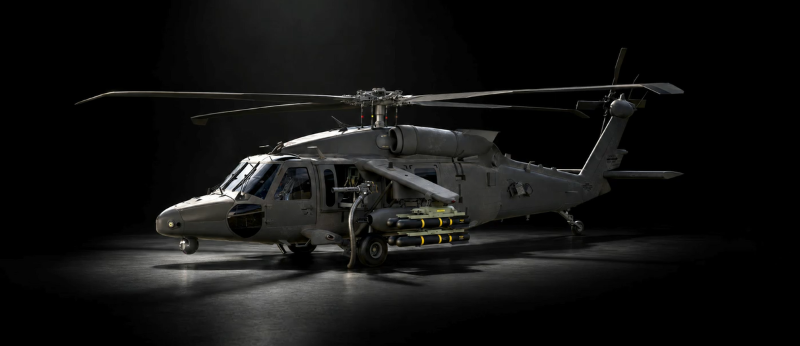
With decades of operations ahead, Sikorsky is laying out a multiphase approach to expanding H-60 Black Hawk capability for the U.S. Army and potentially other operators.
The Army has formally announced plans to fly Black Hawks through 2050, and potentially as long as 2070. This comes as the Navy is flying their MH-60R/S through at least 2040, and the Air Force is still fielding its new Combat Rescue Helicopter. Richard Benton, Sikorsky vice president and general manager, says the new Black Hawk Next approach is a way to expand the fleet’s ability by flying farther and carrying new systems, with introduction possible within the next few years.
“The -60 will continue to evolve,” Benton says. “It won’t be the same -60 platform it has been for the last few years.”
Black Hawk Next includes four types of upgrades: the GE Aerospace T901 engine that has been in testing, enhancements to the helicopter’s airframes, a new digital backbone and autonomy upgrades.
While the bulk of these have been known, Sikorsky, ahead of the Association of the United States Army, unveiled a new modular nose that will enable flexible mounting of new sensors and avionics, says Jason Wrigley, the Army and Air Force Systems director of business development at Sikorsky.
Additional airframe enhancements include expanding internal fuel tanks without impinging on cabin volume and strengthening the aircraft’s structure to carry a larger payload, Wrigley says.
These changes, coupled with integration of the T901, would increase the payload by 1,000 lb. or more and extend the range by 100 nm. and add 45 min. time on station, he says.
The program has flown more than 70 hr. of test using the T901 Improved Turbine Engine. Sikorsky Test Pilot William Fell highlighted recent flights, including flying the helicopter at 19,000 ft. with its collective “all the way up,” and the chopper was still climbing in excess of 1,000 ft./min.—potentially double that.
“And that is not normal for helicopters,” he says.
Other tests have included flying at 17,000 ft. and climbing at more than 500 ft./min. at the helicopter’s maximum gross weight of 22,000 lb.
The autonomy focus for Black Hawk includes integration of the company’s Matrix software, which has been flying on an experimental helicopter for DARPA and will be offered on the uncrewed S-70UAS U-Hawk.
Long term, Sikorsky and H-60 operators have opportunities to increase collaborative sustainment of the newly fielded helicopters for each military service, along with the U.S. Coast Guard, Benton argues. Modernization through the new proposals could be done in depot or at the company’s line in Stratford, Conn.
Sikorsky is in talks with the U.S. Air Force for the next lot of the HH-60W Jolly Green II combat rescue helicopter, bolstered by a recent Air Force decision to use the helicopters for VIP transit missions in Washington. By moving these helicopters to Washington, there’s a chance to backfill other bases and increase the total number of aircraft, Benton says.
Sikorsky is looking at how it can extend production of the helicopter and slow down the rate to give the Air Force and potential foreign military sales customers time to “get their funding and their procurement in place,” he says.
Sikorsky and the U.S. Army on Sept. 30 announced a new “Novel Production Agreement,” starting with $254 million for 16 initial aircraft. Under the agreement, the total number of helicopters could grow to more than 100, Sikorsky says.

Related Content