This article is published in Aerospace Daily & Defense Report part of Aviation Week Intelligence Network (AWIN), and is complimentary through Aug 12, 2026. For information on becoming an AWIN Member to access more content like this, click here.
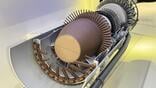
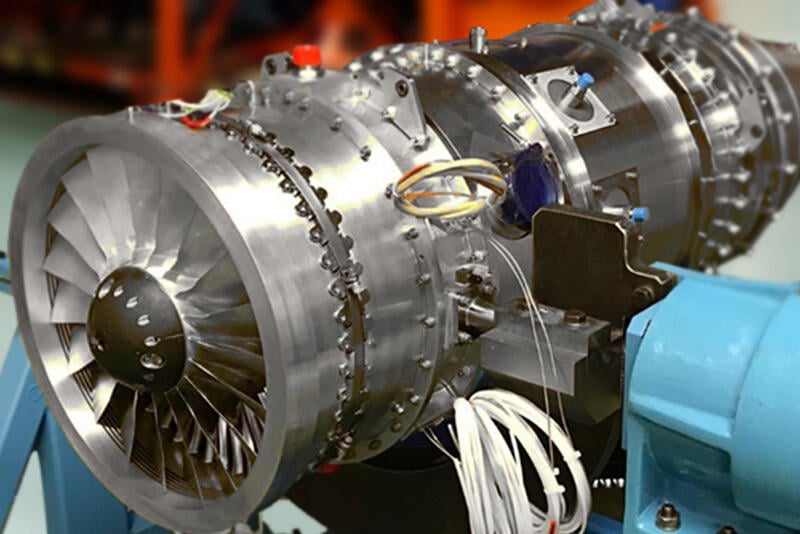
FARNBOROUGH/LONDON—Rolls-Royce's rapidly developed Orpheus demonstrator engine is now evolving into a family of propulsion systems with a particular focus on autonomous collaborative combat aircraft (CCAs).
The aero-engine manufacturer wants to use Orpheus to grow its existing autonomous platform engine capability. It already supplies the U.S.-made AE3007, while in Germany, Rolls-Royce is under contract to develop an engine concept that could power a range of collaborative combat aircraft, CEO Tufan Erginbilgiç said July 30.
Orpheus’ development was revealed for the first time in 2022 and has served as a testbed for high-risk, high-reward technologies for both military and commercial programs. But now Rolls-Royce is putting in place the technical, commercial and program structures needed to enable Orpheus to respond to future CCA requirements. The company also refers to the "Orpheus Engine Family" on its website.
The company developed the twin-spool turbofan in just 18 months under the UK's Future Combat Air System Technology Initiative (FCAS TI) to explore whether such an engine could be developed rapidly using a different supply chain.
Since then, 28 engine builds have supported more than 140 test events that have included exploration of new materials and manufacturing means to bring down the cost of production and boost engine performance.
The company had previously suggested that Orpheus would merely inform a future family of engines, but the Orpheus branding has stuck and resonated with airframers, company officials say.
The push toward developing a family of engines comes as the UK defense ministry outlined plans to develop a sovereign CCA program called Storm Fighter with £300 million ($400 million) from the Defense Investment Plan, which also said that UK CCAs will “exploit a sovereign, world-leading propulsion system.”
The Royal Air Force plans to demonstrate the CCA's potential using BAE Systems' new Brontanax platform, which was unveiled at the show. Although this will initially fly with a Williams International turbofan, BAE Systems executives have expressed interest in using Orpheus derivatives in future iterations, and MGI Engineering also has suggested it would like to use Orpheus in its proposed Vortex CCA.
John Wardell, Rolls-Royce OrpheusWorks senior vice president, told Aviation Week at the Farnborough Airshow that once the new arrangements are in place, Rolls-Royce believes it could deliver such an engine in a similar time frame to the original Orpheus demonstrator engine.
“It’s a different approach to traditional engine development,” Wardell says. “A CCA engine may only need to fly 100-200 hours, but it still has to start first time, run safely and perform as expected ... It's not simply a case of throwing everything out and producing a cheap solution.”
A particular challenge facing the company is how to test the engine at altitude either in the air on a testbed or in an altitude test chamber—a facility the UK currently lacks—requiring the company to look at using facilities in Europe or North America.
Wardell believes Rolls-Royce has an advantage over startups looking to get into the small turbofan engine business.
The company’s OrpheusWorks has adopted the mindset of a startup, but it also has the advantage of being able to lean on the company's decades of experience, Wardell says. Furthermore, Orpheus currently leans on 30 UK-based suppliers and Wardell says many of them could be ready should the program ramp up to deliver CCA engines. “Some [suppliers] are already serving high-volume markets,” Wardell says. So even CCA engine production would still be relatively low volumes for them, but he says there is further work to do on industrialization.
“Having the long-term defense investment plan will really help shape those investments and give everybody the confidence they need,” he added.
Meanwhile, the company continues to test different technologies. Among the more recent experiments has been the use of chopped carbon fiber vanes for the front (cold end) of the engine as a means of reducing engine costs. The company also is using the engine to build up what Wardell calls a “materials database” to understand how new materials operate under high temperatures.
Orpheus’ namesake, the Bristol Orpheus turbojet, also was developed at a rapid pace in the 1950s to squeeze inside the Folland Gnat jet trainer, but later became the core of the transformative Pegasus engine that powered the Harrier.