This article is published in Aviation Week & Space Technology and is free to read until Feb 08, 2026. If you want to read more articles from this publication, please click the link to subscribe.
Opinion: Could The Global Combat Air Program Become A Monster Success?
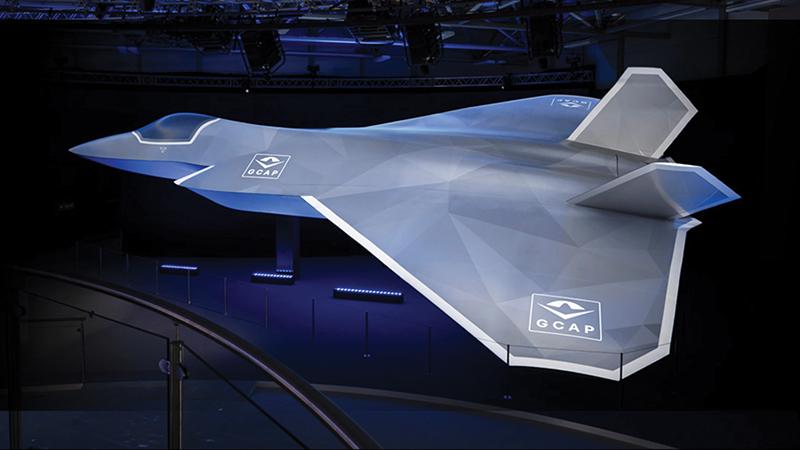
When Europe’s two next-generation fighter programs began, their futures seemed predictable. The French-German-Spanish program known as the Future Combat Air System looked unlikely to succeed for political and economic reasons (AW&ST March 25-April 7, 2019, p. 10), and the British-Italian-Japanese Global Combat Aircraft Program had a promising future. A few years later, the programs’ paths have further diverged.
While the Future Combat Air System (FCAS, or SCAF in French) program gained momentum from European defense spending increases after Russia’s invasion of Ukraine, the inevitable bickering over workshares and Dassault Aviation’s profound disinterest in working with anyone other than French suppliers has led the program into a dead end.
Germany looks set to exit, and the FCAS/SCAF will morph into a French fighter or perhaps more Rafale derivatives. The Super Hornet was mostly new; why not a mostly new Super Rafale? Spain, NATO’s biggest defense spending laggard, is rumored to be interested in Turkey’s KAAN fighter and so may stay with Germany, France, go Turkish or, given its budget, do nothing.
Germany will resume its normal course of working with the UK on the Global Combat Aircraft Program (GCAP), as it did on the Panavia Tornado and Eurofighter Typhoon. Sweden is likely to follow, unless Saab is allowed to continue on its remarkable path of developing light fighters with minimal nonrecurring costs. But they will not be alone. Italian Defense Minister Guido Crosetto said in December that discussions were being held not just with Germany but with enough others to present an embarrassment of riches for the GCAP’s Edgewing joint venture.
Canada was the most notable country on the minister’s list. The Trump administration’s threats against Canada have produced a rethink of the country’s Lockheed Martin F-35 commitment, and Saab’s Gripen could inherit some or most of the 88-aircraft requirement. Committing to GCAP development would send a further message. Every fighter Canada has imported to date has come from the U.S.
Australia was also on the list, which is hardly surprising after the U.S. unilaterally launched a review of Australia’s high-priority AUKUS submarine program and slapped tariffs on Australian goods. Even without the U.S.’ neglect of its alliance partner, the GCAP design should appeal to Canberra. It is being designed to handle Pacific ranges—perfect for the only export customer of the near-strategic General Dynamics F-111.
If Canada and/or Australia joins, they would not be the first GCAP partners leaving the U.S. military aerospace galaxy. The program would be the first time Japan has partnered with a non-U.S. company on a combat aircraft since World War II.
Then there are potential export customers seeking to join in exchange for more modest workshares, or at least early delivery positions. Crosetto said that Saudi Arabia, the biggest customer for both the Tornado and Typhoon, had expressed interest in joining and would be at the top of this list. The United Arab Emirates could be interested, too.
This partner expansion potential would complicate established industrial arrangements. In-country final assembly lines and fleet sustainment structures can be added for any customer wishing to pay a premium over the aircraft’s base price. But for meaningful technological participation and manufacturing workshares, there is only so much to go around, and production arrangements will need to be set in stone soon.
U.S. companies will find this program difficult to navigate. They can offer first-rate technology at competitive prices, but their products will have to rely on legal entities enabling them to be built outside the U.S. to avoid International Traffic in Arms Regulations (ITAR) and other restrictions. Boeing Defense Australia, whose MQ-28 Ghost Bat collaborative combat aircraft provides a solid example of working with international customers without ITAR restrictions, provides a possible template for U.S. companies.
U.S. suppliers in particular need to think about competing for GCAP contracts, which might represent the largest volumes of any new fighter program. The Boeing F-47 and the F/A-XX will be U.S.-only systems, built in small numbers. There will not be an F-35 follow-on anytime soon. The GCAP aircraft could become the joint global fighter purchased by many countries in large quantities.
The F-35 harnessed the tremendous U.S. network of alliance partners and soft global power. The GCAP partnership looks poised to thrive in a world where the U.S. has effectively abandoned these things and alienated its best friends.