This article is published in Aerospace Daily & Defense Report part of Aviation Week Intelligence Network (AWIN), and is complimentary through Dec 26, 2025. For information on becoming an AWIN Member to access more content like this, click here.
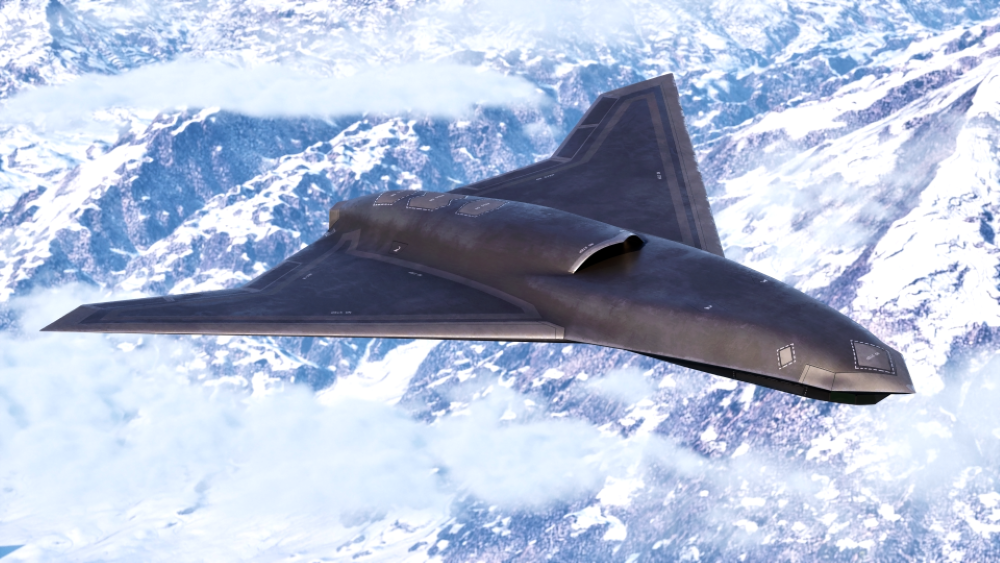
Skunk Works rendering of Vectis collaborative combat aircraft.
DUBAI—A Hanwha turbofan engine scheduled to complete development in 2028 is a candidate to re-engine the Lockheed Martin Vectis, a Skunk Works-designed collaborative combat aircraft (CCA) pitched to foreign buyers.
Lockheed plans to fly the Vectis in 2027 powered by a Williams International FJ44-4A turbofan, a popular powerplant already chosen by several competing CCA aircraft and a host of small commercial and private jets.
Lockheed is looking at alternatives with greater production availability, which also may offer purpose-built designs for uncrewed aircraft systems (UAS) and CCAs, Steve Sheehy, vice president of international business development for Lockheed’s Aeronautics business, told reporters on Nov. 19.
South Korean defense company Hanwha is developing an engine in a similar thrust class as the 3,600 lb.-thrust FJ-44A but dedicated to the market for CCAs and UAS. Hanwha managers at the Dubai Airshow briefed a group of reporters about the HAF4500, a 4,000-4,500-lb.-thrust turbofan that also offers 100 kW of electrical output.
In addition to more availability, the Hanwha engine also may create a path to increasing the speed of the Vectis CCA.
“Right now, it's 0.8-0.85 [Mach speed], so could we get more?” Sheehy asked.
After a reporter remarked that the Vectis configuration looks like it could reach a higher top speed, Sheehy replied: “Because of the Williams [engine], we’re 0.8 to 0.85.”
Hanwha's bid to re-engine Vectis also may offer a clue about Lockheed’s most interested foreign buyers. Lockheed executives say there are 15 interested countries in talks about buying the Vectis, with two countries leading those discussions. In addition to South Korea, Lockheed also started discussing a “next generation UAS” with Poland in 2020.