This article is published in Aerospace Daily & Defense Report part of Aviation Week Intelligence Network (AWIN), and is complimentary through Mar 13, 2026. For information on becoming an AWIN Member to access more content like this, click here.
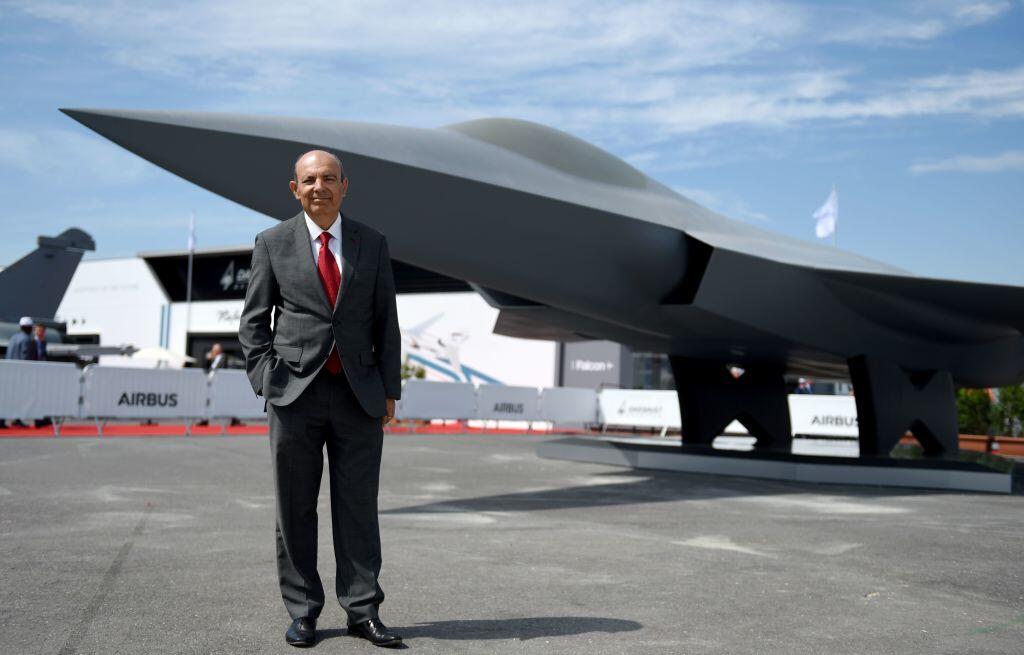
Dassault's Éric Trappier pictured in front of an FCAS fighter model in 2019.
Dassault Aviation CEO Éric Trappier has rejected a German idea for a two-fighter approach in the Future Combat Air System (FCAS) program, marking the latest twist in the Franco-German saga over a way forward for the ambitious project.
“France does not support this idea of two aircraft,” Trappier said days after his Airbus counterpart and the German government suggested such a strategy to break an impasse on the Franco-German-Spanish FCAS program (or SCAF in French).
Dassault is the lead on the new fighter program element of FCAS. The partners have been at loggerheads on the way forward for months. Trappier last June surfaced deep tensions over control of critical elements of the program.
German Chancellor Friedrich Merz recently said a two-fighter approach may make sense because of differing requirements. France wants an carrier-capable aircraft that can deliver nuclear weapons. German does not have those requirements, Merz has noted.
Trappier, speaking to reporters on March 4 after the company posted full-year results, said, “Airbus does not want to work with Dassault,” charging his rival with getting that message out through proxies.
The Dassault boss has asserted that Airbus has not respected his company’s leadership on the fighter program. Airbus officials have argued Dassault is not respecting workshare-allocation agreements and is effectively trying to turn the fighter into a Franco-French project funded in part by Germany.
“If Airbus persists in not being willing to work with Dassault, the matter is dead,” Trappier said.
The FCAS program is nearing the end of what is called Phase 1B that runs to the end of September, at which point the core development phase would start. “If we are stalling now, that may be an issue for the beginning of Phase Two,” Trappier said. Among the issues still undecided, for instance, is who will be the lead on flight trials, he said.
“We’re lagging behind,” Trappier added.