This article is published in Aerospace Daily & Defense Report part of Aviation Week Intelligence Network (AWIN), and is complimentary through Feb 17, 2026. For information on becoming an AWIN Member to access more content like this, click here.
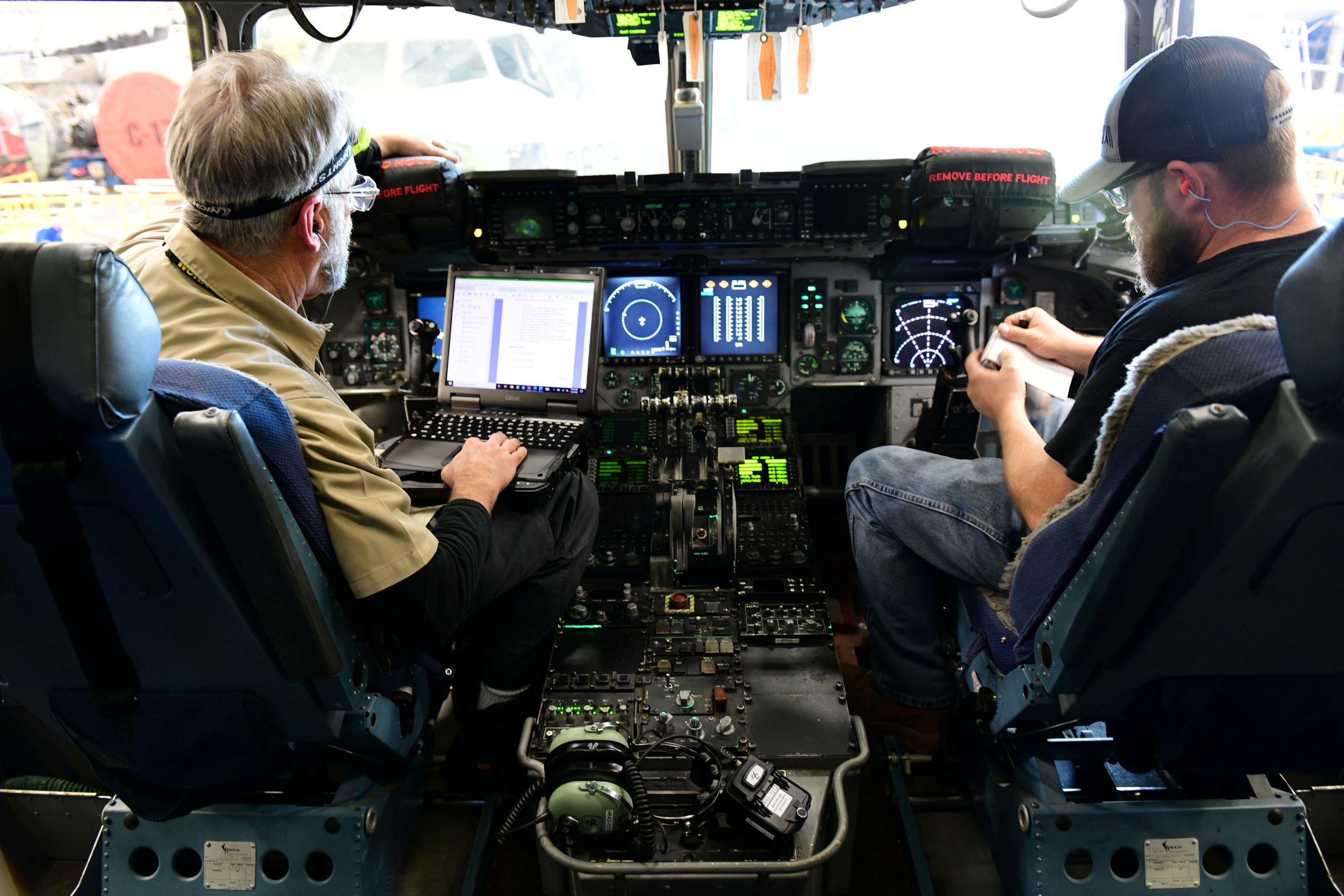
The U.S. Air Force has picked Boeing to update the flight deck of the company’s C-17 Globemaster III as the service expects to keep the airlifter flying for decades to come.
Boeing on Feb. 9 announced the award, which covers design, manufacture, integration qualification and certification of a modernized flight deck. It will replace avionics and other mission equipment with a new system designed for plug-and-play updates using a modular open systems architecture (MOSA). The award has an estimated lifetime value of more than $400 million.
“With the U.S. Air Force requirement to keep the C-17A viable through 2075, we already have a clear and achievable road map to support their needs and the needs of our international partners around the globe,” said Travis Williams, vice president of U.S. Air Force mobility and training services at Boeing. “By resolving avionics obsolescence and introducing MOSA, we’re preserving a proven, highly dependable, heavy airlifter and keeping it at the forefront of performance and efficiency for decades to come.”
Also Feb. 9, Curtiss-Wright announced it was selected by Boeing to supply mission computers for the upgrade.
The Air Force in November announced its intent to keep the C-17 operating through 2070 and has said other options are in play to keep the aircraft viable, including a potential re-engining. The service plans to begin a study in 2027 for its replacement, the Next Generation Airlift, with the first aircraft to be produced as early as 2038.