This article is published in Aerospace Daily & Defense Report part of Aviation Week Intelligence Network (AWIN), and is complimentary through Dec 21, 2025. For information on becoming an AWIN Member to access more content like this, click here.
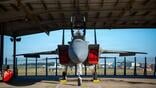
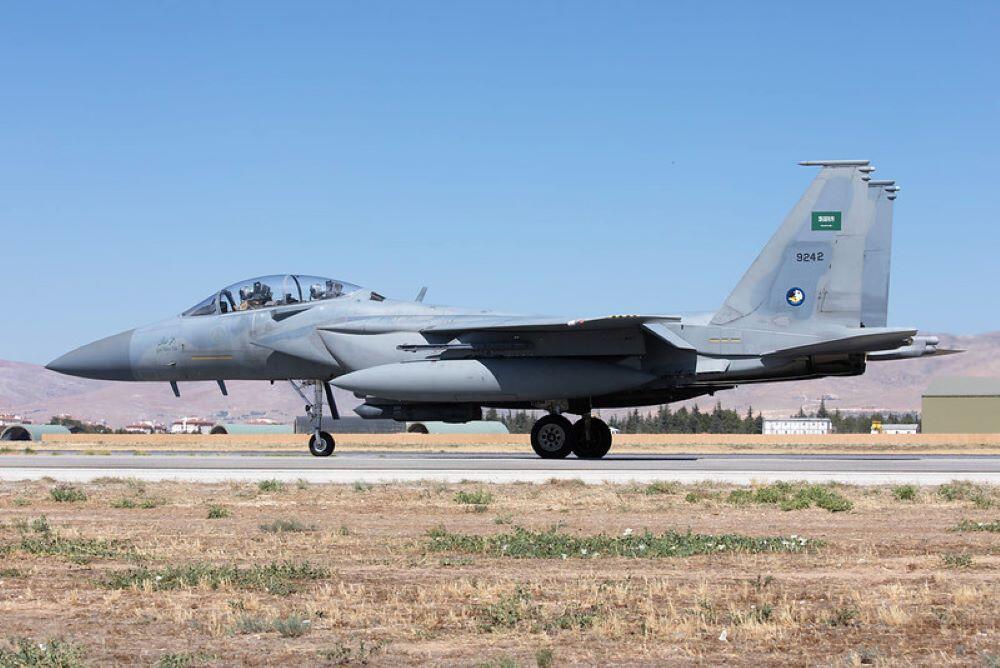
Boeing is hoping to secure sales of the F-15EX in the Middle East. The EX-model is derived from the Advanced Eagle derivatives developed for Saudi Arabia, like the F-15SA pictured here.
DUBAI—Boeing has high hopes of securing more F-15 Eagle orders in the Middle East, specifically targeting Saudi Arabia for potential sales of the F-15EX and upgrades of the country’s C/D model fleet.
Having recently completed final deliveries of F-15QAs to neighboring Qatar, Boeing is hoping Riyadh, as the largest customer for the big twin-engine fighter outside the U.S., might be tempted by proposals for fresh deliveries of the F-15EX and the upgrading of the country’s aging C/D model to the EX standard.
“We believe the F-15EX is a perfect fit for the Kingdom,” Vincent Logsdon, Boeing vice president of International Business Development and Strategic Partnerships, told Aviation Week ahead of the Dubai Airshow.
“The F-15EX has 95% commonality with the current F-15 fleet, so that would reduce their need for infrastructure and retraining, and it enhances the RSAF’s [Royal Saudi Air Force’s] ability to deter threats and maintain air superiority,” Logsdon added.
Development of the EX owes much to a Saudi-funded development effort to bring new capabilities to the country’s F-15S fleet, essentially a Saudi variant of the Strike Eagle delivered during the 1990s. Work to add fly-by-wire controls and a more advanced active electronically scanned radar and mission system resulted in the F-15SA. The existing F-15S fleet is being upgraded to the SA standard through the F-15SR program, with much of this activity taking place in Saudi Arabia. From the SA-model, Boeing has developed the QA for Qatar, the proposed IA for Indonesia and the EX for the U.S. Air Force.
Potential sales of the F-15EX to Saudi Arabia have previously been linked to possible competition from the Dassault Rafale and Eurofighter Typhoon. But Logsdon would not comment on this question.
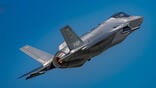
Boeing’s statements on F-15s for Saudi Arabia came amid reports that Riyadh could receive approval for a Lockheed Martin F-35 Joint Strike Fighter buy during a visit by Crown Prince Mohammed Bin Salman this week or next.
Elsewhere in the region, long-awaited deliveries of new-build F/A-18E/F Super Hornets to Kuwait are still yet to take place. These would complement a new fleet of Eurofighter Typhoons delivered from Italy. Deliveries of the F/A-18s “depends on Kuwait,” Logsdon said. “We are still working out the timing of deliveries there.”
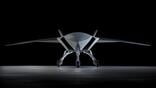
In addition to crewed fighters, Boeing is also seeing regional interest in the emerging collaborative combat aircraft (CCA) market, with Boeing looking to offer the MQ-28 Ghost Bat platform developed with Australia. Logsdon says the MQ-28 is the most “mature” of the CCA platforms currently in development, and it plans to brief on the platform during the show.
Although many nations in the region have settled on their future fighter decisions, Boeing continues to see it as a “major market.”
“There is no sign of a slowdown in the Middle East,” Logsdon says, and notes that regional governments are becoming increasingly bigger players in what he called the “worldwide infrastructure.
“The world is getting smaller and these [Middle East] nations want to play on the world stage,” he says. To do this, Middle Eastern air arms have been investing in enablers, aerial refuelers, multimission platforms and airborne early warning aircraft. Logsdon says there is regional interest in the company’s 767-based KC-46 tanker and 737-based P-8 Poseidon.
Several countries in the region could be potential customers for the P-8, Logsdon suggests, especially given that the aircraft is as at home in the overland intelligence, surveillance and reconnaissance mission as it is over water. “You can do a lot of different things with different sensors, so it is not just an overwater aircraft anymore, and we are seeing that a lot with other customers flying the aircraft.”
Logsdon also acknowledged Saudi interest in the Boeing E-7 as a potential replacement for the country’s existing E-3 Sentry fleet, but notes that much of the talk is occurring on a government-to-government basis. Rotary-wing fleets are also growing in the region, with Logsdon noting the Royal Saudi Land Forces having a requirement for nearly 50 CH-47 Chinook heavy lift helicopters. Eight have so far been delivered.
To support sales, and in recognition of Middle East countries increasingly trying to diversify their economies away from oil, Logsdon says the company is also working to build long-term partnerships in the region with governments, academia and industry.
“We go in and we look at how we can help countries with self-sufficiency and aerospace viability, and it is good for us too, as it helps our supply chain and secures jobs at home,” Logsdon says.