This article is published in Aerospace Daily & Defense Report part of Aviation Week Intelligence Network (AWIN), and is complimentary through Dec 21, 2025. For information on becoming an AWIN Member to access more content like this, click here.
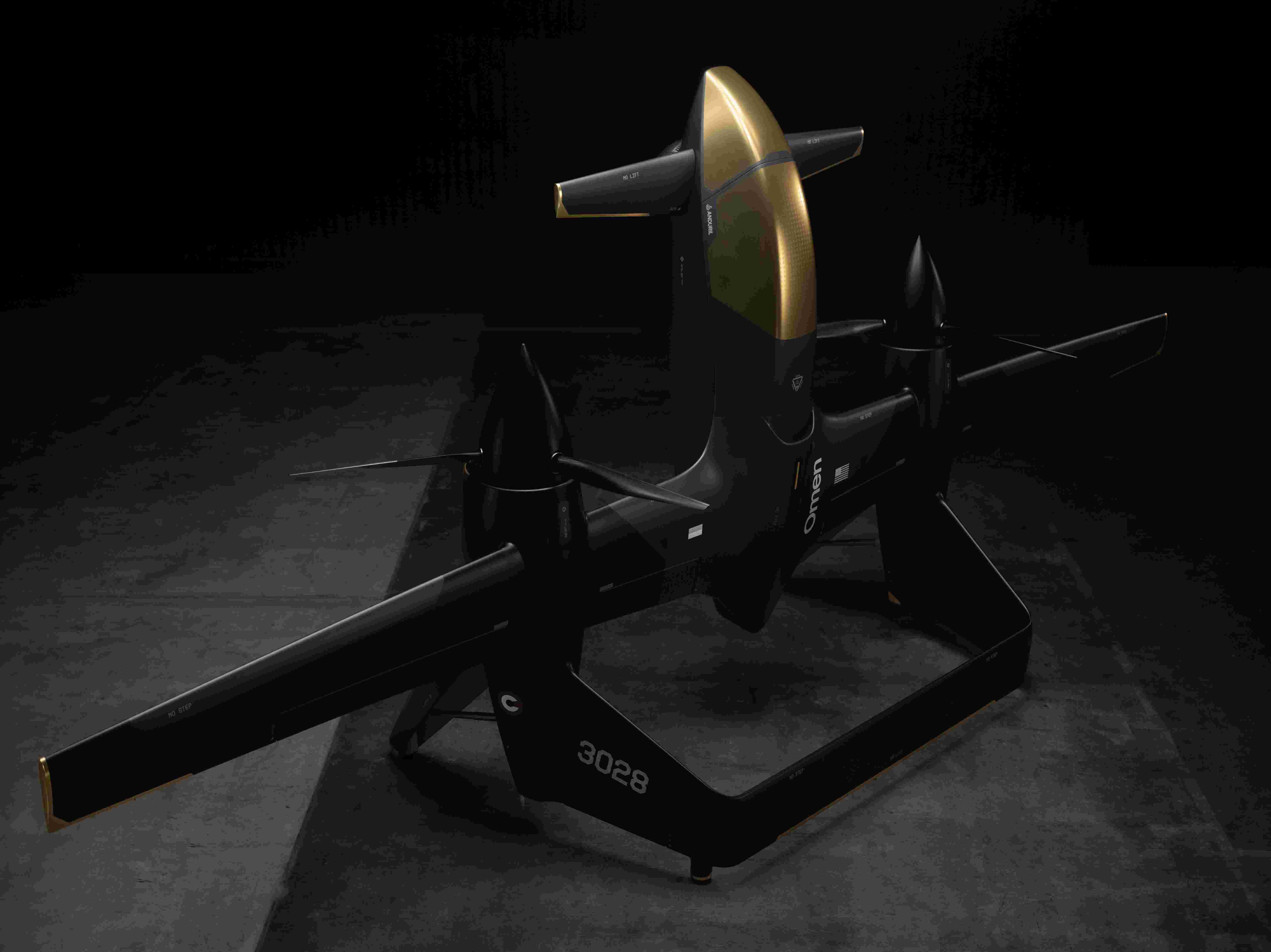
Anduril is drawing on Archer Aviation technology to help power the Omen UAS it plans to build with Edge Group.
UAE-based Edge Group and Anduril aim to produce a roughly 1,000-lb. tailsitter uncrewed aircraft system (UAS) as part of a newly cemented production alliance between the Emirati company and U.S. startup.
The Omen UAS is the first of a series of autonomous systems envisioned by the so-called Edge-Anduril Production Alliance. An undisclosed UAE customer would acquire an initial 50 Omen systems, the companies said Nov. 13.
The Omen design is based on a novel configuration that Anduril founder Palmer Luckey has championed for more than five years, said Shane Arnott, senior vice president of programs and engineering at the U.S. company.
An early demonstrator completed a hover trial in 2019, but “hit a wall” in development due to insufficient propulsion, Arnott said. A partnership to develop a separate military platform forged last year with Archer Aviation, which makes hybrid-electric vertical takeoff and landing aircraft, proved to be the breakthrough for the Omen design.
The Omen features a version of Archer’s hybrid propulsion system, Arnott said, without elaborating. Details of the Anduril-Archer system remain undisclosed,
“This has been one of Palmer's personal projects that we've been working on for quite a while, which is why we've stayed on it. So having the support of a founder goes a long way,” Arnott said.
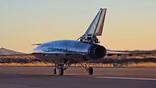
Omen’s tailsitter configuration includes several novel features, including sail-plane wings, canards and propellers mounted on twin-boom nacelles that converge with a horizontal high tail. An artificial canopy is painted on the UAS fuselage, which includes an inlet for the undisclosed core of the air-breathing propulsion system.
The dual-use aircraft is sized to occupy the high-end of the Group 3 UAS category, which ranges up to 1,320 lb., Arnott said.
“We believe this is less about disrupting Group 3. This is more about disrupting current maritime patrol, special mission aircraft, much bigger systems. That's what we're going after,” Arnott said.
Omen’s size is intended to support ranges relevant for the Indo-Pacific theater, while carrying multiple payloads for a variety of missions, including communications relay, Arnott said.
“Omen, being a series hybrid, actually has a lot of excess power,” Arnott said. “That can support electronic payloads that need a lot of power to drive them.”
Arnott also hinted that the Omen configuration can be scaled up. “I won't say that we're announcing a family, but it's certainly — it is a scalable architecture,” Arnott said. “But today we're announcing this one configuration.”
The announcement also establishes a production and engineering alliance between two fast-growing defense technology companies. In addition to production at Edge’s facilities the agreement calls for construction of a 50,000 sq. ft. engineering center staffed by the two companies. Both would be located in the UAE. Edge is underwriting the effort through a $200 million investment, the company disclosed.
Omen UAS built for the U.S. market, which the companies also are targeting, would be made at Anduril’s Arsenal-1 facility in Ohio.
“There's a lot of shared security interests. We see them growing at the moment,” Arnott said. “We would not be making this investment unless we were betting, if you will, on both of those governments continuing to get along and for that partnership to grow.”