This article is published in Aerospace Daily & Defense Report part of Aviation Week Intelligence Network (AWIN), and is complimentary through Apr 15, 2026. For information on becoming an AWIN Member to access more content like this, click here.

Aircraft Involved In U.S. Pilot Rescue In Iran Set For New Upgrades

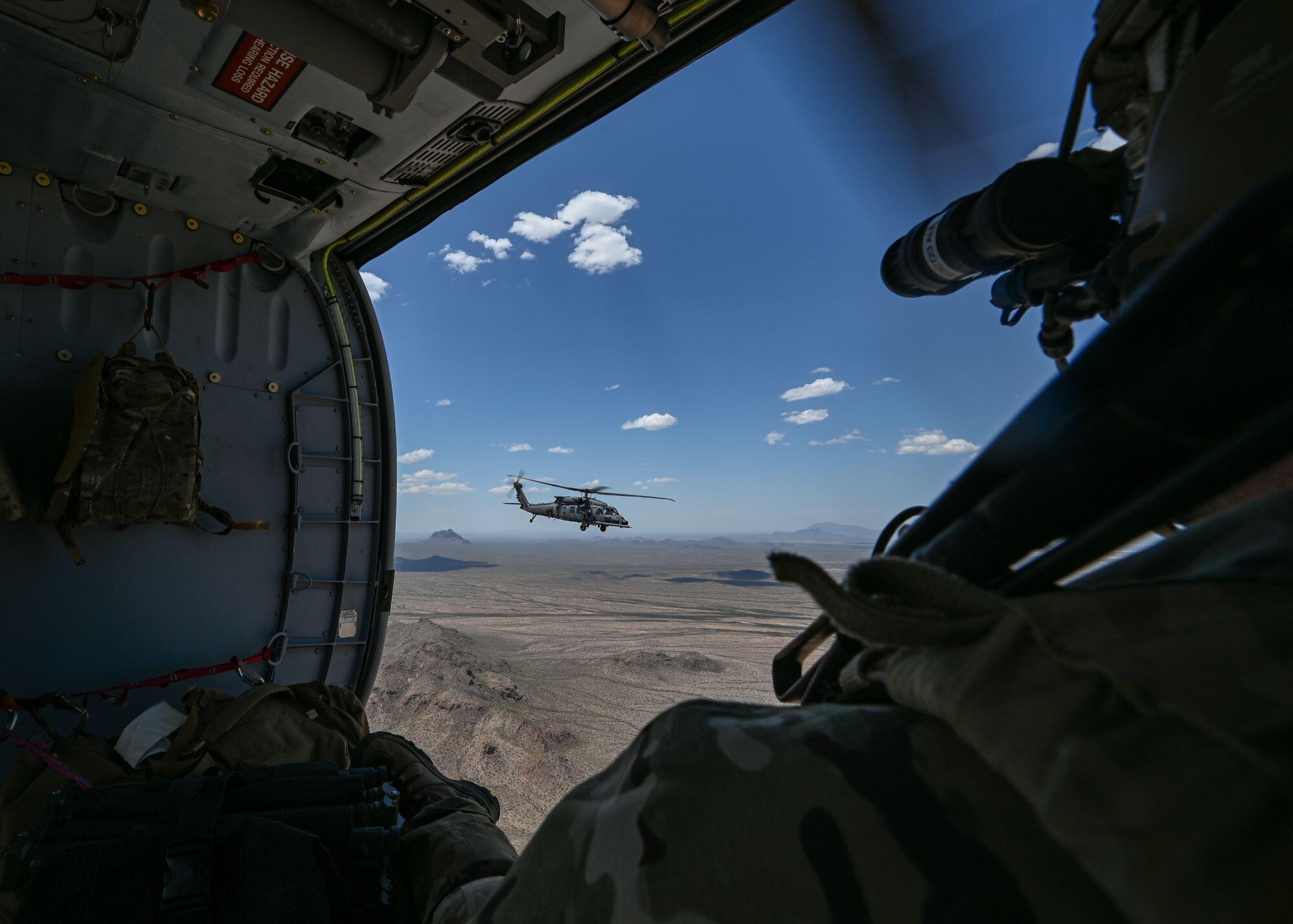
A crew member aboard one HH-60W watches another fly past during an exercise in Arizona in 2023.

A crew member aboard one HH-60W watches another fly past during an exercise in Arizona in 2023.

Credit: Airman 1st Class Paige Weldon

A survivability upgrade is coming for the Sikorsky HH-60W Jolly Green II fleet that rescued the pilot and weapon system officer of a Boeing F-15E that was shot down over Iran on April 2.

The Air Force fielded the HH-60W with an AAR-57 common missile warning system (CMWS), but not a countermeasure system against infrared-guided missiles. That arrangement makes the crew aware if they are being targeted but requires them to maneuver to avoid being hit by a missile.

The Helicopter Sustain Branch now wants to correct that deficiency by adding an advanced infrared countermeasures system (AIRCM).

“The absence of a capable AIRCM system on this platform significantly increases the risk of infrared guided missile engagement, jeopardizing mission success, aircraft survivability, and crew safety,” the Air Force says in a notice announcing a market research survey.

The Air Force would consider the Army’s Northrop Grumman Common Infrared Countermeasures (CIRCM) or the Leonardo DRS Distributed Aperture Infrared Counter Measures (DAIRCM), according to the notice.

Both systems work by directing a low-energy laser into the seeker of an infrared-guided missile, which is intended to blind the incoming threat long enough for the helicopter to escape. Both systems include processors, a pointer/tracker and a laser, which can weigh up to 50 lb.

Crewmembers aboard the HH-60Ws involved in the rescue of the F-15E pilot received heavy small arms fire, resulting in minor injuries onboard, Gen. Dan Caine, chairman of the Joint Chiefs of Staff, said during an April 6 press conference about the mission. It was not clear if any of the helicopters received fire from infrared-guided missiles. 

Steve Trimble

Steve covers military aviation, missiles and space for the Aviation Week Network, based in Washington, DC.