This article is published in Aviation Week & Space Technology and is free to read until Jun 12, 2026. If you want to read more articles from this publication, please click the link to subscribe.

How Air Ambulance Brokerage ParaFlight Took Wing

Sim Shain

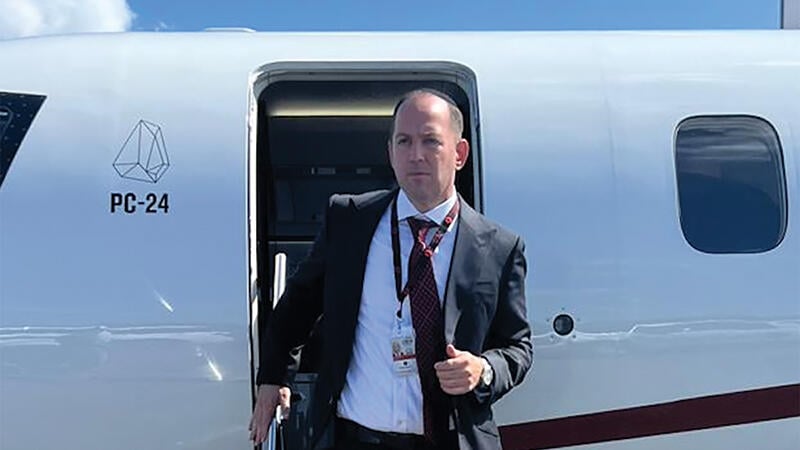
Air ambulance entrepreneur Sim Shain

Credit: ParaFlight

Adults tend to get set in their ways, but occasionally they break the mold and embrace the totally unexpected. That is what 7-year-old Sim Shain discovered when his father, a mortgage broker and real estate manager, decided to become an emergency medical technician and went on to help found a Hatzolah volunteer emergency medical squad in their hometown of Lakewood, New Jersey.

After completing his training and earning his emergency medical technician (EMT) certification, the formerly all-business broker-manager would regularly receive a call, grab his kit and rush out the door to help a person in medical trouble. Shain often rode with him and watched in awe as people stepped back to allow his father access to the person on the ground or in the wreck. Those experiences would direct his life. From that time forward, he says, “My goal was to save lives.”

Thirteen years later, Shain took a key step in achieving that aspiration by following his father’s example and becoming a volunteer EMT. He went on to become a regular member of his father’s squad, among others, even as he made his way professionally in the bail bond industry.

Lakewood is roughly 60 mi. south of Manhattan, a proximity that proved key on Sept. 11, 2001, a day of infamy, pain and mass deaths after hijacked airliners slammed into the World Trade Center towers. When they learned of the attack, the volunteers asked how they might assist and were directed to Brooklyn, whereas most emergency vehicles had been directed to the chaos of Manhattan. Ultimately, Shain—by then a full-fledged paramedic—was assigned to an ambulance heading downtown as well.

The sights, the screams and the suffering he encountered that day had a major effect on Shain, as did Steve Zakheim, a man at the center of those giving aid. Shain learned that Zakheim owned MetroCare, the largest ambulance service in New York state at the time, and had sent most of his units and their crews to help relieve the human devastation.

Over time, Shain got to know Zakheim personally and became an admirer. It turned out that he was a philanthropist and supporter of camps for children with cancer and disabilities. Zakheim’s firm commitment was to help those in need. One helping tool was his Learjet 31, which he outfitted with a stretcher and medical oxygen system. The aircraft had no business or leisure purpose; rather, its role was to transport those in need who lacked resources to receive care at specialized medical or rehabilitation centers.

Zakheim asked Shain if he would like to accompany such a passenger, and he immediately accepted. The patient-passenger was a 9-year-old girl with terminal cancer. A New York hospital had told her family to take her home, since there was nothing more they could do. However, a Minnesota cancer center said it was willing to try to save her, so that was the flight’s destination. The result: Three decades later, that girl is married, the mother of two and cancer-free. The Lear had been a lifesaver. Shain took note, abandoned bail bonding and became an air ambulance regular.

In 2013, Zakheim succumbed to complications resulting from leukemia developed in his monthlong exposure to Ground Zero after 9/11. While hospitalized, he asked Shain to take his jet and begin an air ambulance business. Shain later asked the Zakheim family to keep the aircraft, in 2014, but he did launch an air ambulance charter operation.

The initial results were dubious—just five charters in that first year—but he kept pitching potential users. Then New York’s Montefiore Medical Center reached out, wanting help transporting human organs and transplant teams. The time-critical service—a heart must be transplanted within 4 hr., a lung within 6 hr.—was unfamiliar to Shain, but he learned quickly. And ParaFlight, his brokerage, began to take wing.   

The brokerage operates 24/7 and closed out 2025 with 1,500 flights logged—four per day—carrying transplant teams and organs, patients, corporate executives, government agents, cargo and more throughout the U.S. Many of the flights launched within minutes of receiving the request, often late at night and on weekends or holidays.

ParaFlight accomplished that by reaching out directly to vetted charter outfits and by posting trip requests on OrganFlights.com and UrgentFlights.com, its proprietary platforms that broadcast to hundreds of operators in less than 2 min.

As for saving lives, Shain knows he and his ParaFlight team have done that and more, and their score increases almost daily.

William Garvey

Bill was Editor-in-Chief of Business & Commercial Aviation from 2000 to 2020. During his stewardship, the monthly magazine received scores of awards for editorial excellence.