
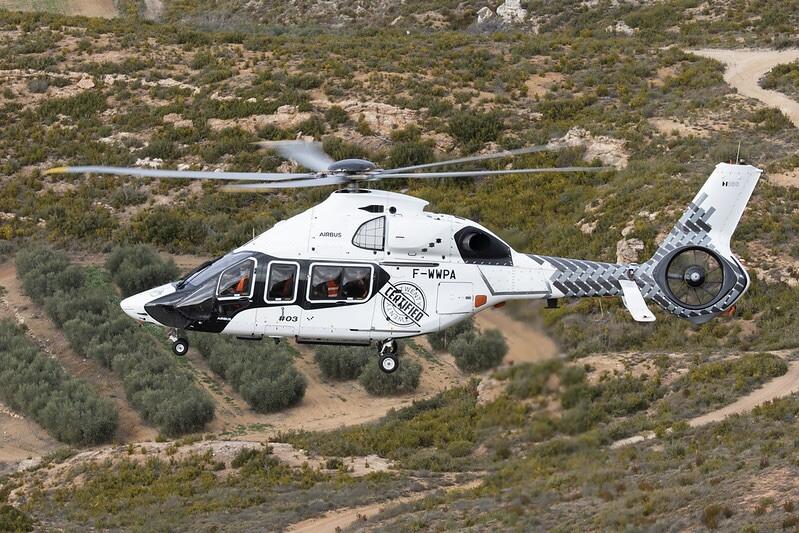
Airbus Helicopters is calling on operators of its H160 rotorcraft to replace main rotor system pitch rods after the rupture of one of the components prompted the crew of one aircraft to ditch in the Atlantic Ocean off Brazil.
In an Emergency Airworthiness Directive published by the European Union Aviation Safety Agency (EASA) Jan. 8, the airframer calls for the replacement of both the main rotor upper pitch rod and the lower pitch rod before the components reach 165 flight hours.
The rupture of one of these components caused “significant vibrations” during cruise flight of an Omni Táxi Aéreo-operated aircraft six days earlier.
A Safety Information Note published online states that preliminary analysis of the fracture surface “seems to indicate fatigue.”
As a precaution, the crew made a landing on water. All eight onboard—six passengers and two crew—safely evacuated the aircraft using the aircraft’s emergency exits and onboard inflatable life raft before being rescued by the Brazilian Navy.
The incident—the first ditching by an H160—is now under investigation by the Brazilian authorities with support from French investigators.
According to Airbus Helicopters, damage was observed on the tail rotor drive line and on the main rotor following the aircraft’s recovery. The aircraft’s cockpit voice and flight data recorders also have been recovered and are now being analyzed.
The EASA directive warns that failure to correct the issue by operators “could lead to loss of control of the helicopter.”
Because the components need replacing every 165 hr., the directive is considered an interim one, and EASA warns further actions may be needed. Any affected parts should be sent to Airbus Helicopters, it states.
In a statement, Airbus says it is “mandating the replacement of this component while the root cause of the fracture remains under investigation.”
Airbus Helicopters ”will be working closely with its customers to support the replacement of the parts,” company officials add.

Related Content


Comments